Every Nigerian Must Declare Their Income — Including ‘Sex Workers and Agberos’, Says Taiwo Oyedele
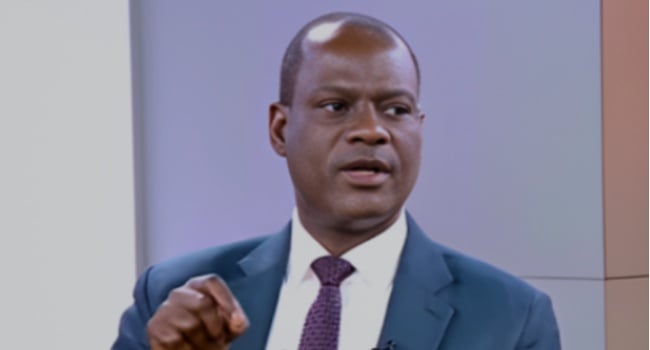

Taiwo Oyedele, the chairman of the Presidential Fiscal Policy and Tax Reforms Committee, has reaffirmed that every Nigerian who earns an income — regardless of their profession or the legality of their trade — is required by law to declare it to tax authorities.
Speaking during an interactive session with journalists, influencers, and public policy analysts on Friday, Oyedele clarified that the new tax laws signed by President Bola Ahmed Tinubu in June 2025 do not introduce new taxes but instead reinforce existing obligations to self-declare income. The reforms are expected to take effect on January 1, 2026.
“The obligation to self-declare income has always existed in Nigerian law,” Oyedele explained. “Sex workers, agberos — everyone who earns must declare. It’s not a new rule; it’s a restatement of what already applies.”
“There’s No Exemption Based on Morality or Legality”
Oyedele emphasized that tax laws do not differentiate between moral or immoral professions. According to him, global tax systems, including those in the U.S. and the U.K., operate on the principle that income — whether legal or illegal — remains taxable.
“In taxation, morality or legality doesn’t exempt you,” he said. “Otherwise, anyone could simply claim their work is illegal to avoid paying tax. The U.S. Internal Revenue Service even instructs that if you steal, you must declare it for tax purposes.”
He argued that the same rule applies in Nigeria: a commercial sex worker, a tout (“agbero”), a waiter, or a corporate accountant all fall under the same principle of income declaration and taxation.
“If I’m an agbero calling passengers into a vehicle and I get paid, how is that different from a waiter earning a salary in a hotel?” Oyedele asked rhetorically. “Everyone who earns income is expected to pay their fair share.”
Related News

Tax Reform Committee Debunks Claims of 25% Levy on Building Materials and Funds Under Nigeria Tax Act 2025
Authorities overseeing Nigeria’s tax reforms have dismissed claims that the Nigeria Tax Act 2025 introduces a 25 percent tax on…
Governor Otti Defends Tinubu’s Tax Reforms, Says Critics Misunderstand Policy Framework
Abia State Governor Alex Otti has defended President Bola Tinubu’s newly introduced tax reform policies, stating that many critics lack…

PAYE Cut Boosts Workers’ Take-Home Pay in January — Oyedele
Chairman of the Presidential Fiscal Policy and Tax Reforms Committee, Taiwo Oyedele, says Nigerian workers are beginning to receive higher…
Undeclared Income Can Be Traced
Oyedele also highlighted that the government now has multiple systems for verifying undeclared income. Whether money is earned legally or not, financial activity often leaves digital or transactional traces.
“When you earn, you can only do three things — spend, save, or invest,” he said. “Each of these leaves a footprint through third-party systems like banks, vendors, or investment platforms. That’s how the system can validate your earnings, even if you don’t declare.”
He assured that the new tax framework aims to improve fairness, compliance, and accountability — not to burden Nigerians. The reforms, he said, are structured to expand the tax net, reduce evasion, and ensure all citizens contribute equitably to national development.
Public Reactions
Oyedele’s comments have triggered widespread debate online. While some Nigerians welcomed the clarity and fairness of universal taxation, others expressed skepticism about the government’s capacity to enforce such laws transparently.
Critics questioned how the policy would affect informal sector workers and low-income earners, while others accused the government of attempting to “tax poverty” without first improving economic opportunities.
“This government wants to tax everything that moves,” one commentator wrote. “If you don’t fix the economy, how do you justify taxing people who can barely survive?”
Still, Oyedele insists the reforms are critical to Nigeria’s long-term fiscal health, arguing that a broader tax base could reduce dependence on oil revenues and fund essential infrastructure and social programs.
Background
President Bola Tinubu signed four major tax reform bills into law on June 26, 2025, as part of his administration’s plan to overhaul Nigeria’s fiscal system. The goal, according to the presidency, is to modernize the tax code, promote voluntary compliance, and close loopholes that allow tax evasion.
With Nigeria’s tax-to-GDP ratio among the lowest in Africa — under 10% — fiscal experts have long urged the government to widen the base and reduce reliance on corporate and oil sector taxation.
As the country approaches 2026, the success of these reforms will depend largely on how effectively the government balances enforcement with transparency, fairness, and public trust.