Tinubu Approves 15% Import Duty on Petrol and Diesel to Align Market Costs with Domestic Realities
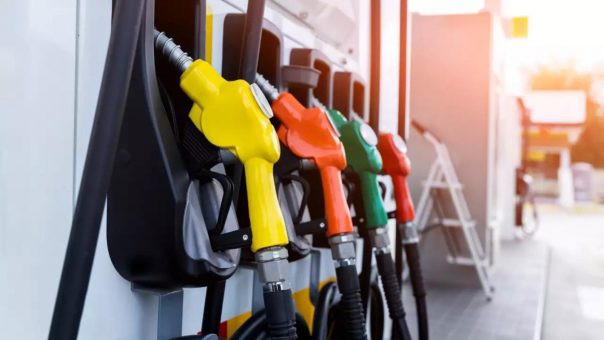

President Bola Ahmed Tinubu has approved the introduction of a 15 percent ad-valorem import duty on Premium Motor Spirit (PMS), commonly known as petrol, and Automotive Gas Oil (AGO), better known as diesel.
The decision, which was communicated in a letter dated October 21, 2025, was conveyed by Damilotun Aderemi, Private Secretary to the President, to the Federal Inland Revenue Service (FIRS) and the Nigerian Midstream and Downstream Petroleum Regulatory Authority (NMDPRA). The approval followed a formal request by the FIRS seeking to apply the 15 percent duty on the cost, insurance, and freight (CIF) value of imported petroleum products, as part of efforts to align import costs with the evolving domestic economic realities.
According to the correspondence seen by TheCable, the new import duty is expected to raise the pump price of petrol by approximately ₦99.72 per litre.
Policy Context and Implications
The new import duty comes at a time when the Nigerian government is intensifying efforts to boost non-oil revenue and reduce dependence on external borrowing. The move is expected to serve multiple policy objectives — including discouraging the importation of petroleum products, supporting local refining capacity, and increasing federal revenue.
However, the development has sparked a wave of mixed reactions across the country. Supporters of the policy argue that it could help level the playing field for local refiners, particularly the newly commissioned Dangote Refinery, which has begun domestic production of refined products. The logic, according to proponents, is that higher import costs will make locally refined fuel more competitive, gradually phasing out the reliance on imported petroleum.
Economists also note that the policy aligns with the government’s broader fiscal strategy of optimizing customs and excise revenue. By adjusting duties on essential imports, the administration aims to close the gap between government spending and revenue generation without reinstating fuel subsidies — a key component of Tinubu’s economic reform agenda.
Related News

Naira Strengthens Below ₦1,350 per Dollar for First Time Since May 2024
Nigeria’s currency appreciated to ₦1,349.5 per dollar at the official foreign exchange market, marking its strongest level since May 2024.

Nigeria’s Foreign Exchange Reserves Rise to $45.9 Billion, Reaching Highest Level Since 2018
Nigeria’s gross foreign exchange reserves climbed to $45.9 billion in January 2026, their highest level in nearly eight years.

Enugu Governor Peter Mbah Presents ₦1.62 Trillion 2026 Budget, Prioritises Education, Infrastructure, and Healthcare
Governor Peter Mbah has presented a ₦1.62 trillion budget for Enugu State’s 2026 fiscal year, outlining an ambitious, development-focused plan…
Public Reaction and Economic Concerns
Despite the government’s justifications, many Nigerians have expressed concern that the import duty will further worsen the cost of living. With inflation already above 30 percent, citizens fear that a rise in petrol and diesel prices will cascade into higher transportation costs, increased food prices, and further pressure on small and medium-sized enterprises (SMEs) already struggling with operational expenses.
On social media, reactions were sharply divided. Some users described the decision as “another tax on survival,” criticizing what they perceive as excessive taxation in a time of economic hardship. Others interpreted the move as a strategic blow to independent fuel importers, arguing that the policy effectively strengthens Dangote Refinery’s market dominance.
A few commentators, however, defended the move as a necessary step toward self-sufficiency. “This should be the final nail in the coffin of fuel importers,” one user wrote, emphasizing that the measure could accelerate Nigeria’s transition from import dependency to domestic production.
Broader Economic Impact
Analysts suggest that while the immediate effect of the new duty will likely increase retail fuel prices, the long-term impact may depend on the ability of local refineries to meet national demand. The Dangote Refinery and the government-owned Port Harcourt Refinery are expected to play a central role in this transition.
Energy experts caution that if domestic production remains insufficient, the higher import duties could lead to supply shortages or smuggling pressures in border communities, potentially undermining the intended benefits of the policy.
In a country where over 90 percent of transportation and logistics rely on petroleum products, any upward adjustment in pump prices tends to ripple across all sectors of the economy. Manufacturers, transporters, and consumers may bear the brunt of the cost shifts, unless local supply stabilizes quickly.
Policy Outlook
President Tinubu’s administration has consistently emphasized the need for fiscal discipline and economic restructuring. Since subsidy removal in May 2023, the government has sought alternative mechanisms to stabilize revenue, including tax reforms, customs modernization, and incentives for domestic manufacturing.
The new 15 percent import duty represents another step in that direction — one that underscores the government’s commitment to aligning Nigeria’s fiscal and energy policies with global market realities.
Whether this measure delivers sustainable economic benefits or deepens the burden on citizens will depend largely on its implementation and the pace of local refining progress in the months ahead.