When Praise Becomes Therapy: How Nigerians Dance Their Pain Away in Church
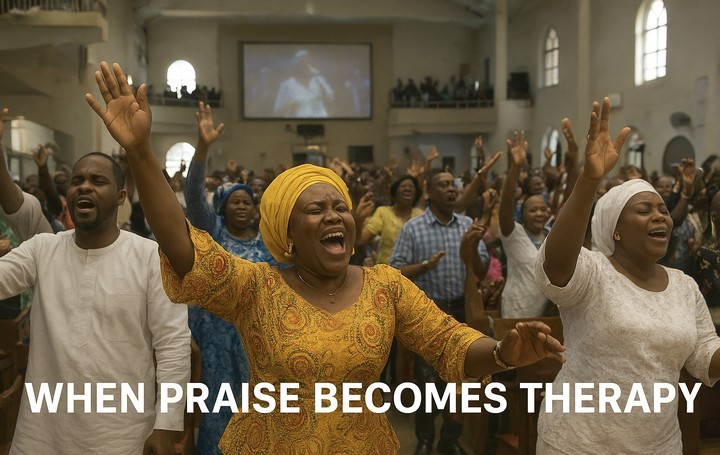

In Lagos, Sundays are more than a religious routine; they are a deep exhale after six days of tension. In churches from Surulere to Lekki, worship transforms into therapy. The choir begins, the drums roll, and within seconds, bodies move as if by instinct. Worshippers clap, spin, leap, and cry not just in reverence but in release.
For many Nigerians, praise is more than a spiritual expression; it is emotional medicine. In a nation defined by economic hardship, social instability, and relentless stress, church services have evolved into communal spaces of catharsis, places where pain is danced away rather than buried.
Psychologists describe music and movement as natural stress relievers, and Nigerian churches have embraced that truth long before it was given academic language. The combination of rhythm, community, and shared energy creates a rare emotional outlet, one that unites spirituality and psychology in a distinctly African way.
The Healing Power of Praise
Chidinma, a banker from the Lagos Mainland, recalls her lowest moment, a period of deep depression following personal tragedy. “That Sunday, I walked into church feeling empty,” she says. “But when the choir started and people began dancing, I couldn’t resist. By the end of the service, I felt something lift. I was lighter.”
Such testimonies are common. The collective sound of voices singing and bodies moving generates a powerful feedback loop of joy. The music doesn’t erase pain, it transforms it into motion. In this motion lies therapy, not the clinical kind, but the kind born from shared humanity.
Cultural Roots of Joyful Worship
African spirituality has always been embodied. Across tribes and traditions, movement is a form of communication with the divine. In Nigeria, this translates to worship that engages the whole body. Drums, shakers, and call-and-response singing invite full participation, the antithesis of the restrained solemnity found in many Western churches.
Related News
Femi Otedola Joins Aliko Dangote and Family for Iftar in Abu Dhabi
Nigerian billionaire businessman Femi Otedola was pictured alongside Africa’s richest man, Aliko Dangote, and members of his family during an…
Ramadan and Lent Commence Simultaneously as Muslims and Christians Begin Sacred Observances
Muslims and Christians across Nigeria and around the world have begun significant periods of spiritual reflection as Ramadan and Lent…
Ramadan 2026: Sultan of Sokoto Urges Muslims to Begin Crescent Moon Search Across Nigeria
The Sultan of Sokoto has called on Muslims across Nigeria to begin searching for the crescent moon that will signal…
Pastor Samuel Obafemi, who leads a popular church in Lagos, explains it this way: “When we dance, we surrender. The body becomes part of the prayer. The spirit moves, and so do we. That is worship.”
This style of worship blurs the line between religion and culture. It’s not just praise; it’s performance, therapy, and social bonding. The entire congregation becomes a single instrument of expression — healing together through rhythm.
Resilience in Rhythm
For people like Ayo, a trader from Oshodi, dancing in church has become an anchor. “I lost someone dear to me,” he says, “but every Sunday, when I dance, it’s like I’m shaking off the pain.” Fatima, a university student, echoes this: “After a stressful week, clapping and singing with everyone makes me feel free again.”
Experts note that collective movement fosters community resilience. Shared emotional expression, like singing and dancing, strengthens social ties, making individuals feel less isolated in their struggles. For many Nigerians, this communal joy is the antidote to the country’s collective fatigue.
More Than Ritual It’s Therapy
In a society where mental health conversations are still taboo, praise functions as an informal form of therapy. Churches have become emotional sanctuaries — offering a space to cry, shout, laugh, and let go without judgment.
While critics dismiss such expressions as mere showmanship or escapism, for millions, it’s survival. A few hours of ecstatic worship provide a rare mental reset — a momentary escape from bills, inflation, and traffic jams.
Every dance step, every shouted “Hallelujah,” becomes a small act of defiance — a way to say, “I’m still here.”
In Lagos, praise is not only worship; it’s a language of resilience. To the untrained eye, it may look like chaotic bodies flailing, feet stomping, hands lifted high. But beneath the movement lies something profound: a collective act of healing.
When Nigerians dance in church, they aren’t ignoring their pain; they’re transforming it. Praise becomes therapy, and worship becomes a mirror of hope, proof that even in struggle, there’s rhythm, there’s joy, and there’s life.