DSS Directors Meet in Kaduna, Develop Fresh Counter-Terrorism Strategies Amid Rising Insecurity
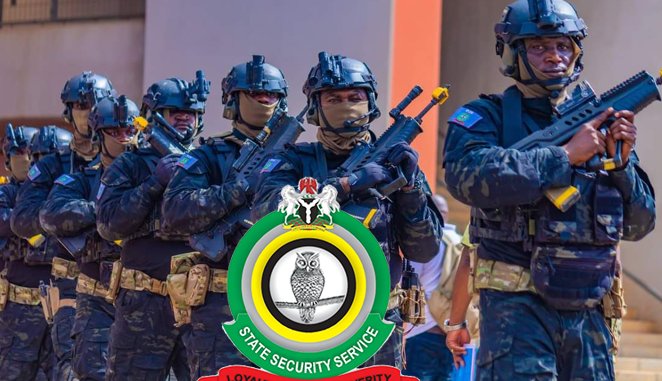

Directors of the Department of State Services (DSS) from the North-West zone, along with their counterparts from the Federal Capital Territory (FCT), Niger, and Plateau States, held a crucial strategy meeting in Kaduna on Thursday to review the nation’s evolving security landscape and design fresh counter-terrorism frameworks.
The closed-door session, hosted by the Kaduna DSS Command, comes at a time of growing domestic and international concern over Nigeria’s security situation. The gathering aimed to refine intelligence-sharing mechanisms, strengthen inter-agency collaboration, and integrate both kinetic and non-kinetic approaches to addressing terrorism, banditry, and other violent crimes.
Governor Uba Sani of Kaduna State, represented by the Commissioner for Internal Security and Home Affairs, Sule Shuaibu (SAN), declared the meeting open, commending the DSS for its vital role in safeguarding the nation’s democratic stability. He described the service as “a cornerstone of Nigeria’s internal security architecture,” emphasizing that intelligence-led collaboration remains the most effective tool against complex security threats.
Governor Sani urged the DSS and other agencies to enhance analytical capacity and adopt technology-driven intelligence systems to predict and prevent attacks before they occur. He also called for greater trust-building between the security establishment and local communities, highlighting the importance of peacebuilding initiatives, preventive diplomacy, and social inclusion as long-term tools for achieving sustainable security.
Related News
Many Feared Dead as Boko Haram Fighters Overrun Military Base and IDP Camp in Borno
Suspected militants from the Islamic State West Africa Province launched a coordinated early-morning assault on a military base and an…

Gun Attack on ADC Leaders in Edo Raises Fears of Violent Election Season
A gun attack on African Democratic Congress leaders in Benin City, including Peter Obi and Chief John Oyegun, has heightened…

Nigeria Issues Travel Advisory as Israel-US and Iran Conflict Escalates in Gulf Region
The Federal Government of Nigeria has issued a travel advisory urging Nigerians in Iran and neighbouring Gulf states to exercise…
The Emir of Zazzau, Ambassador Ahmed Nuhu Bamalli, who was present at the meeting, praised the DSS for maintaining strong ties with traditional rulers. He revealed that the agency’s engagement with community leaders and use of alternative dispute resolution mechanisms had significantly reduced local conflicts and legal backlogs. The Emir further noted that the ongoing vetting of district and village heads, supported by the DSS, had improved accountability and helped curb infiltration of criminal networks into traditional structures.
The General Officer Commanding 1 Division of the Nigerian Army, Major General Mohammed Wase, represented by Brigadier General Mohammed Kana, reaffirmed the Army’s commitment to inter-agency cooperation. He underscored that military operations across the North-West heavily rely on DSS intelligence inputs, describing the agency’s work as “central to operational success.”
In his remarks, Kaduna DSS Director Hakeem Abiola stated that the conference was convened to strengthen collective responses to cross-border crimes and close operational gaps. He outlined the agency’s ongoing initiatives under the leadership of Director-General Oluwatosin Adeola Ajayi, including the use of both kinetic (combat) and non-kinetic (peacebuilding and dialogue-based) measures to restore stability.
Abiola cited the Kaduna Peace Model, a community-driven security framework, as a major success story in improving safety along critical routes such as the Kaduna–Abuja highway, Kaduna–Kachia axis, and Birnin Gwari corridor. He revealed that recent joint operations led by the DSS and other agencies had resulted in significant arms seizures, the rescue of abducted citizens, and the disruption of several planned terror attacks.
To further consolidate progress, Abiola proposed the creation of a Regional Security Coordination Forum, involving the DSS, the military, traditional rulers, and political leaders. According to him, such a body would ensure unified and rapid responses to emerging threats while enhancing intelligence coordination across state boundaries.
The Kaduna meeting is seen by analysts as a signal of renewed urgency within Nigeria’s security architecture, especially in the wake of increasing international scrutiny. The discussions reportedly focused on aligning intelligence operations with President Bola Tinubu’s national security reforms, which prioritize proactive intelligence, community resilience, and joint force deployment.
While the DSS has faced criticism in recent years for being reactive or politically influenced, the agency appears determined to reposition itself as a proactive player in national security. With terrorism and banditry continuing to destabilize large parts of northern Nigeria, Thursday’s meeting in Kaduna marks a strategic step toward rebuilding trust, efficiency, and synergy among Nigeria’s frontline security institutions.