Enugu Governor Peter Mbah Presents ₦1.62 Trillion 2026 Budget, Prioritises Education, Infrastructure, and Healthcare
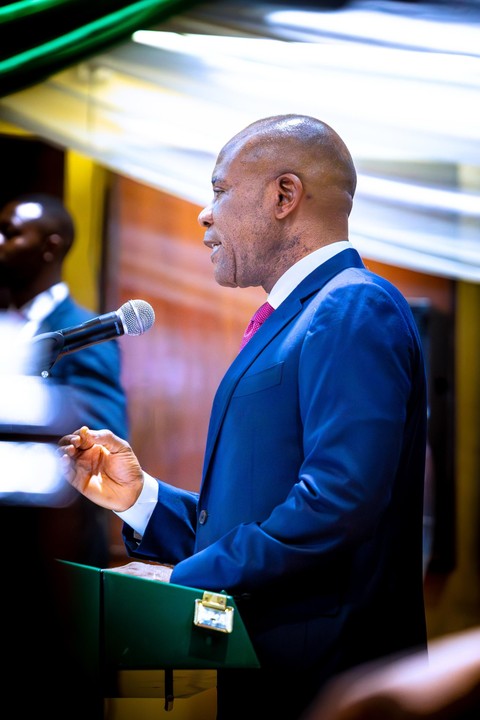

Governor Peter Mbah on Tuesday formally laid before the Enugu State House of Assembly a proposed ₦1.62 trillion budget for the 2026 fiscal year, marking one of the most expansive financial plans in the state’s history. The proposal—described as a blueprint for “full-scale development”—reflects a 66.5 percent increase over the 2025 budget, signalling the administration’s intention to intensify ongoing reforms and scale up capital-intensive projects across all sectors.
According to the governor, the significant expansion is not arbitrary but a product of strengthened revenue performance and new economic engines activated over the last two years. The state anticipates ₦870 billion in Internally Generated Revenue, ₦387 billion from FAAC, and ₦329 billion in capital receipts, figures the administration insists are grounded in realistic projections.
A defining feature of the 2026 proposal is its aggressive capital investment plan. Eighty percent of the entire budget is dedicated to capital expenditure, while only 20 percent is allotted to recurrent costs. Mbah reiterated that this allocation pattern reflects his commitment to development-oriented governance—one that prioritises physical infrastructure, social services, and economic assets capable of delivering long-term gains.
Related News

Naira Strengthens Below ₦1,350 per Dollar for First Time Since May 2024
Nigeria’s currency appreciated to ₦1,349.5 per dollar at the official foreign exchange market, marking its strongest level since May 2024.
Nigeria’s Foreign Exchange Reserves Rise to $45.9 Billion, Reaching Highest Level Since 2018
Nigeria’s gross foreign exchange reserves climbed to $45.9 billion in January 2026, their highest level in nearly eight years.
NNPC Targets 20% Stake in Dangote Refinery to Strengthen Nigeria’s Oil Sector
NNPCL plans to increase its equity stake in the $20 billion Dangote Refinery from 7.2% to 20% as part of…
Just as in the 2025 budget, education remains the single largest beneficiary, receiving over 30 percent of total allocations for the second year in a row. The funds will be channelled into scaling the Smart Schools initiative, completing the rollout of Smart Secondary Schools, modernising technical institutions, and introducing learning facilities capable of preparing young people for an innovation-driven global economy. Mbah emphasised that his administration intends to position Enugu as a leader in 21st-century education.
The healthcare sector takes 10 percent of the budget, with major projects including the completion of 260 Type-2 Primary Healthcare Centres, upgrades to 51 secondary hospitals, and the advancement of the 300-bed Enugu International Hospital, a flagship facility expected to elevate healthcare delivery across the Southeast. Reforms at Parklane Teaching Hospital will also continue.
Infrastructure development forms another major pillar of the budget. The 2026 proposal includes extensive urban and rural road construction, rehabilitation of existing routes, expansion of transport terminals, an enlarged taxi fleet, and enhanced operational capacity for Enugu Air, the state-backed airline. Mbah stressed that efficient mobility is essential for commerce, market access, and regional competitiveness.
In agriculture, the administration plans to complete and equip all 260 Farm Estates, installing irrigation systems, warehouses, tractor sheds, and dedicated energy sources to support mechanised farming and agro-processing. The initiative aims to boost food production, strengthen rural economies, and generate thousands of jobs.
Tourism is expected to receive further momentum through ongoing upgrades at Awhum, Ngwo, Okpatu, Nsude, and Akwuke. These sites are being positioned as world-class destinations capable of attracting up to three million visitors each year. The housing sector, which has been allocated more than 15 percent, will focus on delivering 15,000 mass housing units in 2026, advancing the state’s plan for 30,000 units overall. The New Enugu Smart City is projected to fully come online once its infrastructure is completed, with an anticipated economic impact exceeding ₦300 billion.
On security, the governor announced new investments in surveillance technology and intelligence systems to expand coverage across more local government areas. Mbah reaffirmed that security remains the backbone of all development initiatives.
He also acknowledged the support of President Bola Ahmed Tinubu’s administration in fiscal reforms, infrastructure collaboration, and national security efforts that create a more stable environment for subnational development.