Five Key Moments Nigeria Intervened to Stop Coups in Other African Countries
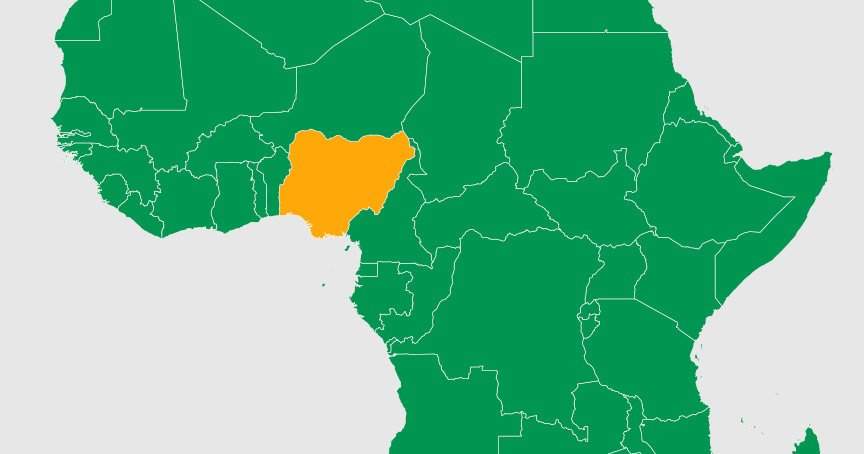

Nigeria’s reputation as a major stabilising force in Africa has been built not only on its population size and economic weight, but also on its history of regional military interventions. Through bilateral action and under the framework of ECOWAS and the African Union, Nigeria has repeatedly intervened during moments of political instability to prevent the overthrow of civilian governments. Five key cases illustrate the scope and impact of these interventions.
One of Nigeria’s earliest foreign stabilisation missions occurred in Tanganyika, now Tanzania, in 1964. Following a mutiny by the Tanganyika Army in January of that year, British Royal Marine commandos were initially deployed to restore order. In April, Nigerian troops from the 3rd Battalion of the Nigerian Army replaced the British forces as part of an African-led peacekeeping effort approved after an emergency meeting of the Organisation of African Unity (OAU). The Nigerian troops carried out both internal security and training duties, helping to rebuild the Tanganyikan armed forces. By September 1964, President Julius Nyerere formally honoured the Nigerian contingent during a farewell parade in Dar-es-Salaam, marking one of Nigeria’s earliest multinational peace operations on the continent. This intervention came at a critical political moment, shortly before Tanganyika united with Zanzibar to form Tanzania.
Related News
Two Accused of Financing Alleged Coup Plot Against Tinubu Identified – PREMIUM TIMES
Security agencies investigating an alleged coup plot against President Bola Tinubu have identified two individuals accused of funnelling ₦835 million…
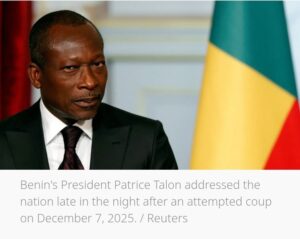
President Talon Assures Beninese Citizens as Government Declares Failed Coup Attempt Fully Contained
Benin Republic’s President Patrice Talon has addressed the nation following an attempted military takeover, assuring citizens that the situation is…
Nearly four decades later, Nigeria again played a pivotal role during a coup attempt in São Tomé and Príncipe in 2003. The coup occurred while President Fradique de Menezes was attending a summit in Nigeria. President Olusegun Obasanjo publicly condemned the takeover and issued a strong demand for the restoration of civilian rule. Nigeria also warned the coup leaders against harming foreign nationals and applied diplomatic and regional pressure through ECOWAS. Within days, the coup leaders surrendered and power was returned to the elected government. President de Menezes, who had taken refuge in Nigeria, later returned to São Tomé aboard Nigeria’s presidential aircraft. The episode underscored Nigeria’s willingness to act swiftly when constitutional order in neighbouring states is threatened.
In 2004, Nigeria was drawn into one of Africa’s most high-profile mercenary-backed coup plots, this time in Equatorial Guinea. Following the discovery of significant oil reserves, the small Central African country became the target of an alleged foreign-backed plot led by mercenary commander Simon Mann. Intelligence linked the operation to international financiers and foreign fighters recruited in southern Africa. As reports of the plot emerged, President Obasanjo ordered Nigeria’s naval flagship, NNS Aradu, toward Equatorial Guinea to deter any attempted takeover. Several conspirators were arrested in Zimbabwe and South Africa, while Equatorial Guinean authorities detained local collaborators. The coup was successfully prevented, and Mann was later extradited and imprisoned. Nigeria’s swift naval deployment was widely viewed as a critical deterrent.
Nigeria also played a central role in resolving the Gambian political crisis of 2016–2017. After longtime ruler Yahya Jammeh lost the presidential election to Adama Barrow, he refused to relinquish power. Following failed diplomatic efforts, ECOWAS authorised military action. Nigeria deployed a naval warship, NNS Centenary, while Nigerian Air Force jets carried out aerial patrols over Banjul. At the same time, Senegalese troops massed at the border. Faced with overwhelming regional pressure, Jammeh stepped down and went into exile, allowing the peaceful inauguration of President Barrow. The operation became one of ECOWAS’ most cited examples of coordinated regional enforcement of democratic outcomes.
The most recent reported intervention occurred in Benin Republic in December 2025, when mutineering soldiers announced the overthrow of President Patrice Talon following attacks on key government installations. After Beninese forces repelled the initial assault, the government formally activated ECOWAS security agreements and requested air support from Nigeria and Côte d’Ivoire to prevent further escalation. Nigerian and Ivorian fighter jets reportedly targeted armoured positions held by the coupists, while Ivorian special forces provided ground assistance. The intervention contributed to the suppression of the uprising and restoration of full government control.
These interventions have generated varied reactions within Nigeria. Supporters argue that Nigeria’s actions reinforce regional stability and prevent the spread of military rule across West Africa. Critics, however, question why similar levels of military effectiveness have not fully eliminated domestic security threats such as insurgency and banditry. Despite the debate, Nigeria’s role in countering coups remains one of the most consistent features of its foreign and regional security policy.
From Tanzania in the 1960s to Benin Republic in 2025, Nigeria’s military and diplomatic influence has repeatedly shaped political outcomes beyond its borders, reinforcing its long-standing identity as a central security actor in Africa.