Atiku Accuses EFCC of Politically Motivated Arrest of Former Attorney General Malami
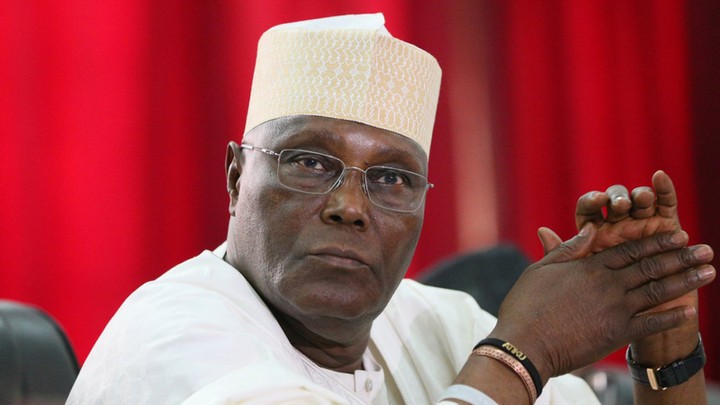

Former Vice President Atiku Abubakar has condemned the arrest of former Attorney General of the Federation, Abubakar Malami (SAN), describing the development as a disturbing sign that Nigeria’s anti-corruption agencies have derailed from their core mandate. In a strongly worded statement issued through his media office and circulated by adviser Paul Ibe, Atiku alleged that the Economic and Financial Crimes Commission (EFCC) and other institutions have “mutated into tools for political witch-hunt,” targeting opposition figures while shielding allies of those in power.
According to Atiku, the arrest of Malami represents a broader pattern of “selective pursuit” that threatens the credibility and public trust of Nigeria’s anti-graft framework. He argued that the EFCC is drifting away from the principles upon which it was established, asserting that corruption investigations have become increasingly politicized.
Atiku expressed concern that Nigeria’s anti-corruption agencies are losing their autonomy, noting that “no responsible nation undermines the independence of its investigative and prosecutorial institutions simply to score political points.” He insisted that if the EFCC continues to allow political influence to shape its operations, it risks becoming an extension of partisan interests rather than a defender of national integrity.
Related News
Wike Says FCT Poll Shows Voters Rejected ‘Groundnut Politics,’ Takes Swipe at Obi, Amaechi
FCT Minister Nyesom Wike has said the outcome of the recent area council elections in Abuja proves that voters rejected…

Peter Obi Says Nigeria Rich in Talent but Held Back by Poor Leadership
Former presidential candidate Peter Obi has stated that Nigeria’s greatest challenge is not a lack of talent but a failure…
Controversy Trails Shettima’s Kwara Visit as Reports Claim Devastated Woro Community Was Not Reached
A fresh controversy has emerged following Vice President Kashim Shettima’s condolence visit to Kwara State after a deadly terrorist attack…
The former vice president further accused the EFCC of targeting opposition figures while turning a blind eye to corruption allegations involving individuals aligned with the ruling party. He noted that since the African Democratic Congress (ADC) emerged as a noteworthy opposition platform, leading figures such as Malami and Aminu Waziri Tambuwal have faced heightened scrutiny, while “glaring corruption cases” among members of the government remain untouched.
He also alleged that if Malami had defected to the ruling All Progressives Congress (APC), “the EFCC would have left him untouched, even if he had looted the entire CBN vault.” Atiku argued that this inconsistency demonstrates the agency’s growing bias and its vulnerability to political manipulation.
Calling for reform, Atiku urged the EFCC leadership to “purge itself of partisan contamination” and restore its credibility by ensuring investigations are conducted impartially and transparently. He emphasized that the integrity of anti-corruption institutions must not be sacrificed for temporary political advantage.
Meanwhile, reactions from the public have been wide-ranging and intensely divided. Some citizens agree with Atiku, suggesting that the government may be using the arrest as a political tool. Others argue that Malami’s years in office were marked by controversies, alleging that he amassed wealth and wielded power in ways that demand thorough investigation. Many commenters believe his arrest is long overdue, with some insisting that he must answer for decisions that affected national security and public trust.
A notable portion of the public also criticized Atiku directly, accusing him of defending Malami for political reasons. Several individuals argued that Atiku’s history and political alliances make his statements appear self-serving. Others questioned why he rarely speaks against insecurity, banditry, or extremist threats but quickly responds to issues involving opposition figures.
Despite the polarized reactions, one point appears consistent across the spectrum: Nigerians want accountability. Whether or not the arrest is politically motivated, many citizens believe that anyone who has held high public office must answer for their actions—especially in cases involving national finances, security, or misuse of power.
Atiku, however, insists that genuine accountability cannot exist under a system that selectively targets opponents while protecting allies. He maintains that Nigeria cannot claim to fight corruption while allowing anti-graft bodies to serve as instruments of political pressure.