Governor Alex Otti Says He Will Retire from Active Politics After Completing His Tenure
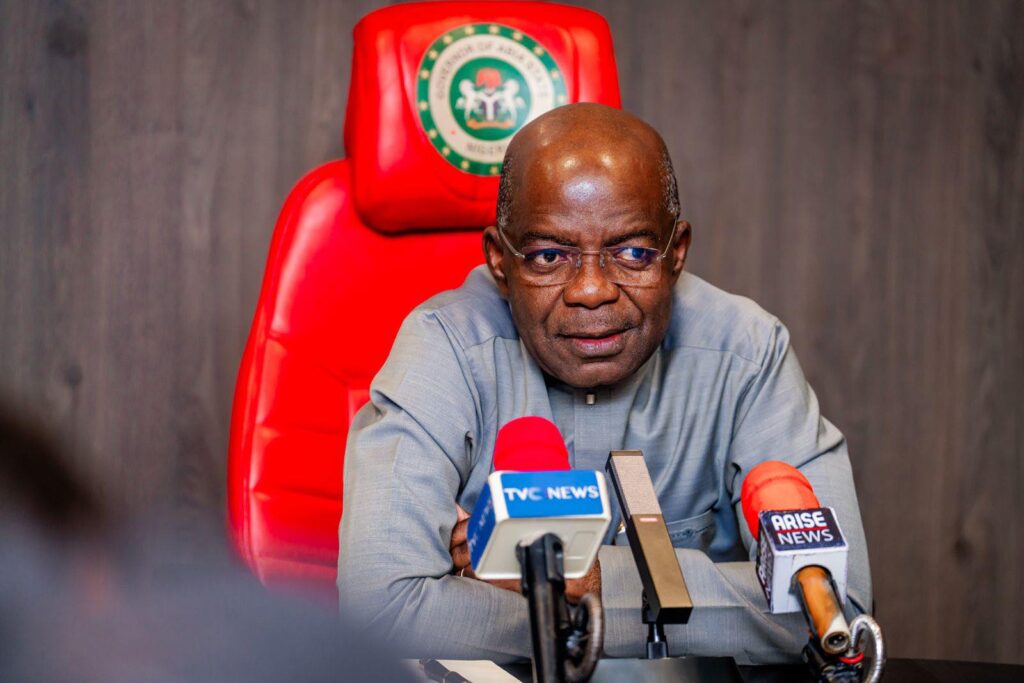

Abia State Governor, Dr. Alex Otti, OFR, has reiterated his intention to withdraw completely from active politics after completing his tenure in office, firmly denying any plans to seek higher political positions at the national level. The governor made this known on Friday, December 19, while addressing members of the public at the Michael Okpara Auditorium, Government House, Umuahia.
Governor Otti’s remarks followed the circulation of a viral video and growing public speculation suggesting that his recent political engagements and visibility might be linked to ambitions beyond the Abia State governorship. Responding directly to these claims, the governor stated unequivocally that his political journey would end with his current assignment.
According to him, he has no interest in contesting for the offices of President, Vice President, or Senator at any point in the future. He explained that his entry into public office was driven by a specific mandate to serve the people of Abia State and not by a lifelong pursuit of political power.
“By the time I’m done with governorship, I will retire,” Otti said. “I don’t have presidential ambition, vice-presidential ambition, or senatorial ambition. My focus is on delivering on the mandate the people of Abia gave me.”
The governor stressed that leadership should be anchored on service rather than personal ambition, adding that public office holders must understand when it is time to step aside. He argued that recycling political offices among the same set of individuals has contributed significantly to governance challenges in Nigeria.
“When you have done what you were asked to do, you clear and give way to younger people,” he stated. “We are not cut out for recycling offices. Politics should not be a career that one holds on to indefinitely.”
Otti’s declaration has generated mixed reactions across political and public circles. While some Nigerians have welcomed the statement as a refreshing departure from the norm in Nigerian politics, others have expressed skepticism, noting that similar promises have been made in the past by political leaders who later reversed their positions.
Supporters of the governor have pointed to his background in the private sector and his track record as reasons to believe he may keep his word. Before venturing into politics, Otti built a career in banking and corporate leadership, a factor his allies say shapes his views on governance, accountability, and succession.
Political analysts, however, caution that Nigeria’s political environment is highly dynamic, and circumstances can change significantly over time. They note that pressure from political supporters, party structures, or evolving national realities have historically influenced leaders to reconsider earlier positions.
Despite the differing opinions, Otti maintained that his stance remains unchanged. He emphasized that his priority is to use his time in office to implement policies and reforms that would leave a lasting impact on Abia State. According to him, the true measure of leadership lies in what one leaves behind, not how long one remains in power.
The governor’s comments also reignited broader conversations about political succession, ambition, and governance culture in Nigeria. Many observers argue that a clear exit plan by leaders could help strengthen democratic institutions and encourage the emergence of new voices in politics.
As Governor Otti continues his tenure, attention is likely to remain focused on whether his actions align with his words. For now, his declaration stands as a notable statement in a political landscape where long-term ambition often dominates public discourse.