Tinubu Vows Zero Tolerance for Terrorists and Sponsors as 2026 Budget Prioritises Security
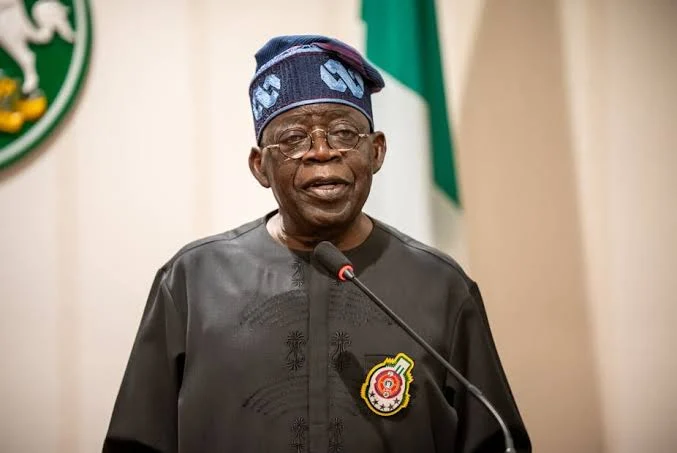

President Bola Ahmed Tinubu has declared that his administration will adopt a zero-tolerance approach toward terrorism and violent crime, vowing to deal decisively with terrorists, bandits, kidnappers, and those who sponsor or facilitate their activities. The President made this assertion on Friday while presenting the ₦58.18 trillion 2026 Appropriation Bill to a joint session of the National Assembly in Abuja.
The proposed budget, titled “Budget of Consolidation, Renewed Resilience and Shared Prosperity,” places security at the centre of Nigeria’s development agenda, with defence and security receiving the single largest allocation of ₦5.41 trillion. This marks the third consecutive year that defence and security spending has taken priority under the Tinubu administration, reflecting what the President described as a deliberate strategy to stabilise the country before sustainable economic growth can take root.
Tinubu emphasised that national development cannot thrive in an atmosphere of fear and insecurity, insisting that security remains the foundation upon which investments, productivity, and social stability are built. According to him, the substantial allocation to defence and security is aimed at strengthening the operational capacity of the armed forces and other security agencies through modern equipment, improved intelligence capabilities, and enhanced coordination.
“We will show no mercy. We will usher in a new era of criminal justice,” the President said. “We will act firmly against those who commit or support acts of terrorism, banditry, kidnapping for ransom, and other violent crimes.”
Related News
Many Feared Dead as Boko Haram Fighters Overrun Military Base and IDP Camp in Borno
Suspected militants from the Islamic State West Africa Province launched a coordinated early-morning assault on a military base and an…
Gun Attack on ADC Leaders in Edo Raises Fears of Violent Election Season
A gun attack on African Democratic Congress leaders in Benin City, including Peter Obi and Chief John Oyegun, has heightened…

Nigeria Issues Travel Advisory as Israel-US and Iran Conflict Escalates in Gulf Region
The Federal Government of Nigeria has issued a travel advisory urging Nigerians in Iran and neighbouring Gulf states to exercise…
Beyond funding, Tinubu disclosed that his administration is undertaking a comprehensive reset of Nigeria’s national security architecture. Central to this effort is the introduction of a new national counter-terrorism doctrine designed to fundamentally change how the country confronts terrorism and violent crime. The doctrine, he explained, is anchored on unified command structures, intelligence gathering, community stability, and coordinated counter-insurgency operations.
Under the new framework, any armed group or gun-wielding non-state actor operating outside the authority of the state will be classified as a terrorist organisation. This categorisation covers bandits, militias, armed gangs, violent cult groups, forest-based armed groups, and foreign-linked criminal networks. Tinubu stated that such groups would be treated as legitimate targets of security operations, without ambiguity or political considerations.
The President also vowed that the government would aggressively pursue individuals and networks that finance, enable, or facilitate violence for political, sectarian, or criminal ends. He maintained that cutting off funding and logistical support for violent groups is critical to ending insecurity across the country.
In outlining the broader 2026 budget priorities, Tinubu said infrastructure would receive ₦3.56 trillion, education ₦3.52 trillion, and health and social services ₦2.48 trillion. He stressed that these sectors are interconnected, noting that security without education, healthcare, and infrastructure would not yield lasting prosperity.
On the fiscal outlook, the President disclosed that total revenue for 2026 is projected at ₦34.33 trillion, against total expenditure of ₦58.18 trillion. Debt servicing is estimated at ₦15.52 trillion, while capital expenditure stands at ₦26.08 trillion. The budget deficit of ₦23.85 trillion represents about 4.28 per cent of Nigeria’s Gross Domestic Product.
Tinubu said the budget projections are based on conservative assumptions, including a crude oil benchmark of $64.85 per barrel, daily production of 1.8 million barrels, and an average exchange rate of ₦1,400 to the US dollar. He described the fiscal plan as one built on realism, prudence, and discipline.
In addition, the President announced that his administration would end Nigeria’s long-standing practice of overlapping budgets and poorly funded capital projects. From 2026, he said, the country would operate a single, disciplined budget cycle to improve implementation and accountability.
While reactions to the President’s remarks have been mixed, with some Nigerians welcoming the tough rhetoric and others expressing scepticism, Tinubu maintained that his administration is committed to translating words into action, insisting that the renewed security push will be matched with accountability, results, and measurable outcomes.