FG Clarifies Third Mainland Bridge Surveillance Cost, Says CCTV Centre Cost ₦2.5bn, Not ₦40bn
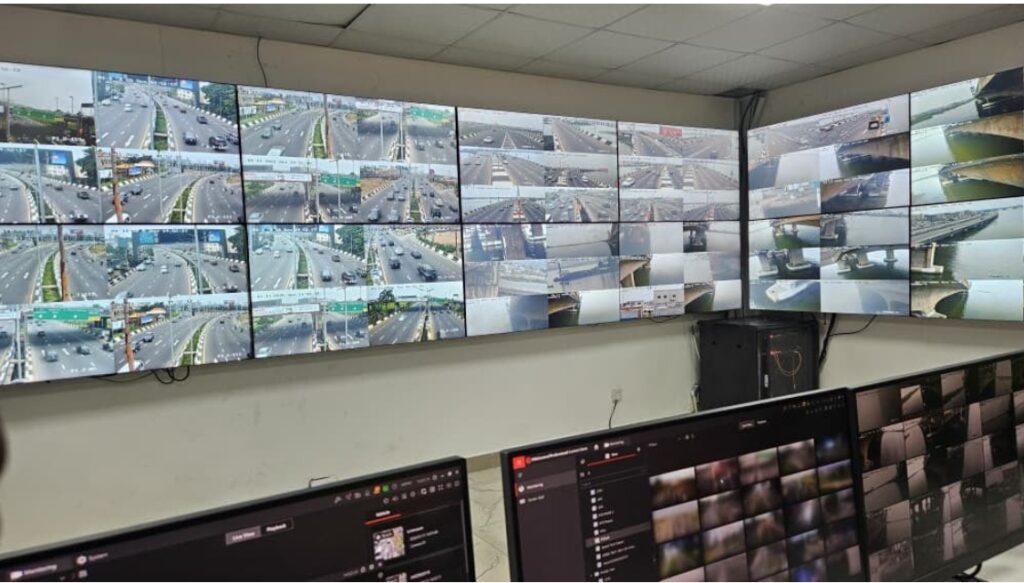

The Federal Government has dismissed widespread claims that it spent ₦40 billion on surveillance infrastructure for the Third Mainland Bridge in Lagos, clarifying that the actual cost of the CCTV surveillance centre is ₦2.5 billion. The clarification followed public outrage and intense debate triggered by earlier reports that appeared to conflate the cost of surveillance with the total rehabilitation cost of the bridge.
On Sunday, the Minister of Works, David Umahi, officially inaugurated the Third Mainland Bridge surveillance centre, describing it as Nigeria’s first of its kind. According to the minister, the facility was designed to improve security, enforce traffic regulations, and prevent incidents such as suicide attempts on the bridge, which is one of the busiest road corridors in the country.
Umahi explained that when the current administration assumed office in 2023, it inherited infrastructure in a severely deteriorated condition. He said the Third Mainland Bridge, alongside Carter Bridge and Iddo Bridge, suffered extensive damage affecting road surfaces, structural components above water, and critical elements beneath the bridge.
“The president directed a total re-evaluation and rehabilitation of the Third Mainland Bridge, including replacement of expansion joints,” Umahi said. He noted that the rehabilitation project, which has since been completed and commissioned, cost ₦43 billion in total and was separate from the surveillance project.
Related News

Lagos DSVA Trains Safeguarding Officers to Strengthen Fight Against Child Abuse
The Lagos State Domestic and Sexual Violence Agency (DSVA) has trained safeguarding and child protection officers across schools and communities,…

Ogun State Declares February 3 Public Holiday to Mark 50th Anniversary
The Ogun State Government has declared Tuesday, February 3, 2026, a public holiday to commemorate the state’s 50th anniversary.
Wike Seeks Court Order to Commit Striking FCT Workers for Alleged Contempt
The Minister of the Federal Capital Territory, Nyesom Wike, has approached the National Industrial Court seeking an order to jail…
The minister emphasized that the ₦2.5 billion surveillance centre should not be confused with the broader reconstruction work. He outlined the components of the surveillance project, stating that it includes closed-circuit television cameras, a control centre powered by 240 solar panels, multiple inverters, full air-conditioning, a 300KVA transformer, a standby generator, monitoring screens, a dedicated surveillance boat, and two Hilux patrol vans.
Umahi praised the China Civil Engineering Construction Corporation (CCECC), the contractor responsible for executing the project, for what he described as quality delivery. He added that the surveillance boat and patrol vehicles would be handed over to the Nigeria Police Force to support monitoring activities on and around the bridge, with room for collaboration with other security agencies if necessary.
The minister also expressed concern about frequent speeding on the Third Mainland Bridge and urged motorists to obey traffic regulations, noting that the new surveillance system would enhance enforcement efforts.
Earlier, the Federal Controller of Works in Lagos, Olufemi Dare, reiterated that the facility is unique in Nigeria. He said the surveillance system covers both the bridge deck and underwater sections, providing comprehensive monitoring capabilities. Dare disclosed that the project also includes approximately 1,268 solar-powered streetlights installed along the bridge as part of the contract.
He thanked President Bola Tinubu for approving the project and commended Umahi for ensuring due process during its execution. According to Dare, the inauguration marked only the first phase, with further commissioning expected once ongoing extension works on the bridge are completed.
Public reactions to the clarification have been mixed. While some Nigerians welcomed the explanation and acknowledged improvements in Lagos road infrastructure, others remained skeptical, questioning whether ₦2.5 billion was justified for the listed equipment. The controversy was further fueled by the admission that an earlier report citing a ₦40 billion CCTV cost was inaccurate and has since been corrected.
Despite the clarification, the debate has highlighted ongoing public concerns over transparency, cost control, and accountability in government infrastructure projects, particularly at a time of economic pressure and heightened scrutiny of public spending.