US Approves $413 Million Security Budget for Counter-Insurgency Operations in Nigeria, Africa
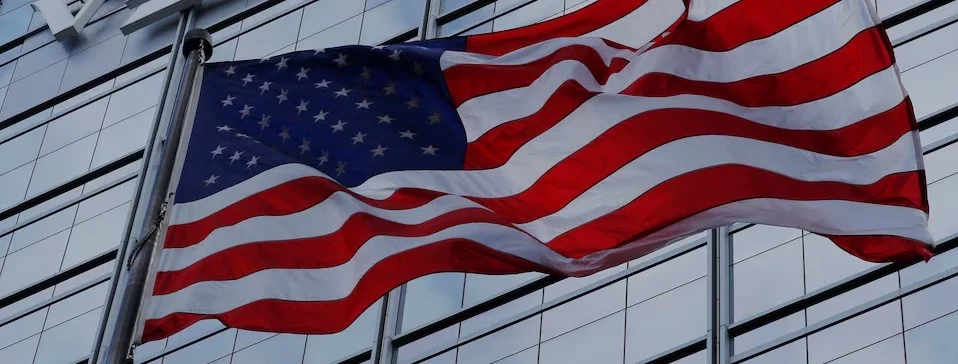

The United States has approved a security allocation of $413.046 million (approximately ₦587 billion) for counter-insurgency and related security operations in Nigeria and other African countries for the 2026 fiscal year, as insecurity continues to worsen across West Africa and the Sahel region.
The allocation is contained in the US National Defence Authorisation Act (NDAA) for Fiscal Year 2026, a comprehensive defence policy bill that authorises a total of $901 billion in annual military spending. The funding for Africa falls under Title XLIII of the Act, which covers Operation and Maintenance expenses for US military commands, including the United States Africa Command (AFRICOM).
According to the document obtained by The PUNCH, AFRICOM requested $413.046 million for its 2026 operations, and the full amount was authorised, although the Act did not provide a detailed breakdown of how the funds would be spent across specific countries or activities. The NDAA was signed into law by US President Donald Trump on December 18, 2025, marking the 65th consecutive annual defence authorisation by the United States.
The approval comes against the backdrop of persistent security challenges across the African continent. In Nigeria, insurgency in the North-East, banditry and kidnapping in the North-West, and piracy and maritime crimes in the Gulf of Guinea continue to pose serious threats to national and regional stability. Elsewhere in West Africa, Mali remains under sustained attacks from jihadist groups, while northern Benin has experienced spillover violence from the Sahel.
Related News
Many Feared Dead as Boko Haram Fighters Overrun Military Base and IDP Camp in Borno
Suspected militants from the Islamic State West Africa Province launched a coordinated early-morning assault on a military base and an…
Gun Attack on ADC Leaders in Edo Raises Fears of Violent Election Season
A gun attack on African Democratic Congress leaders in Benin City, including Peter Obi and Chief John Oyegun, has heightened…
Nigeria Issues Travel Advisory as Israel-US and Iran Conflict Escalates in Gulf Region
The Federal Government of Nigeria has issued a travel advisory urging Nigerians in Iran and neighbouring Gulf states to exercise…
In recent weeks, AFRICOM has intensified its engagement with Nigeria. On Tuesday, the command delivered a consignment of military equipment to Nigerian security agencies as part of ongoing efforts to strengthen counter-terrorism and internal security operations. The security budget also follows US-backed strikes on terrorist hideouts in Sokoto State during the Christmas period.
Beyond Africa, the NDAA outlines funding for other US military commands and activities, including $385.744 million for the United States European Command, $224.971 million for the United States Southern Command, $77.049 million for US Forces Korea, $331.467 million for Cyberspace Operations, and $550.089 million for Cybersecurity Activities. The total allocation for operating forces under the operation and maintenance category stands at $39.999 billion.
The Act also introduces major foreign policy changes affecting Africa. It provides for the establishment of an Assistant Secretary for African Affairs within the US Department of State, as well as a new Bureau of African Affairs tasked with coordinating and implementing US foreign policy across sub-Saharan Africa.
In addition, the legislation mandates comprehensive assessments of Russia’s military strategy and force posture in Africa, including overseas military basing, logistics capabilities, and infrastructure used to project power on the continent. The assessments are intended to guide US contingency planning under AFRICOM, US Central Command, and US European Command.
Security analyst and Chief Executive Officer of Beacon Consulting, Kabir Adamu, said the funding reflects intensifying geopolitical rivalry in Africa, driven largely by economic interests rather than military intervention. According to him, Africa—particularly West Africa and the Sahel—has become a strategic arena due to insecurity, weak state control, and the presence of critical natural resources.
Adamu noted that Russia and China have expanded their influence across Africa through military cooperation and economic engagement, forcing the United States to reassess its posture. He warned that competition among the three powers is likely to intensify, especially around access to rare earth minerals such as lithium.
Another security analyst, Chidi Omeje, described Nigeria’s engagement with the US as a partnership based on mutual respect rather than dominance. He said Nigeria’s security challenges are linked to transnational terrorist networks, making international collaboration essential.
In a related development, Nigeria’s Chief of Army Staff, Lt. Gen. Waidi Shaibu, has called for deeper strategic cooperation between the Nigerian Army and the US Army. During a courtesy visit by US Defence Attaché Lt. Col. Semira Moore, Shaibu emphasized the importance of expanding cooperation in capacity building, intelligence sharing, and operational planning to address Nigeria’s evolving security threats.