AFCON 2025: Senegal Defeat Hosts Morocco 1–0 to Clinch Historic Final Victory in Rabat
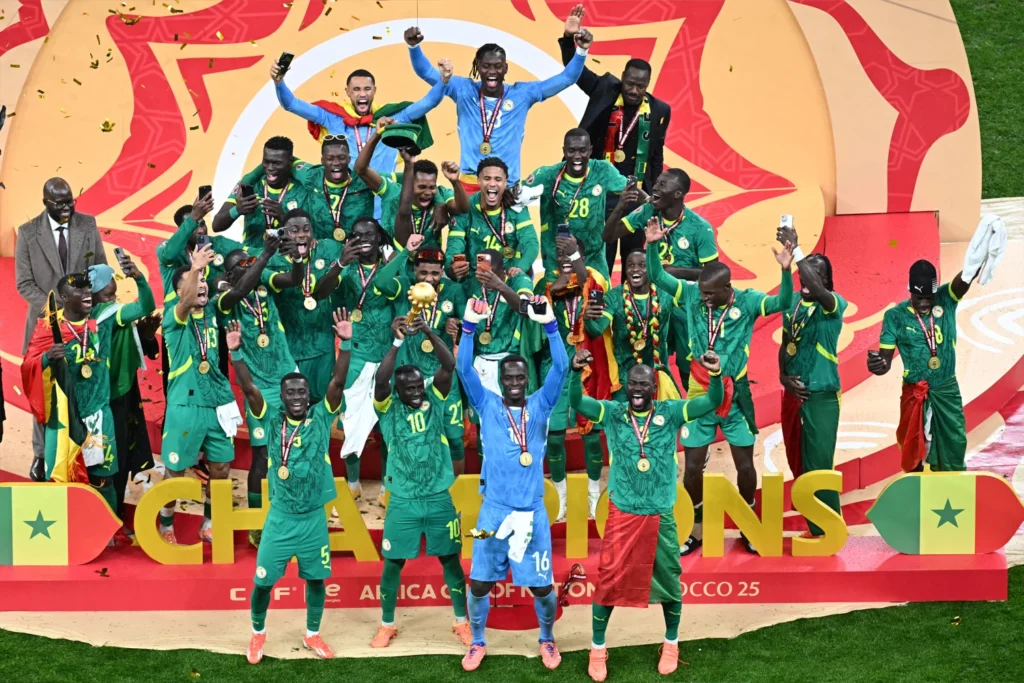

Senegal were crowned champions of the 2025 Africa Cup of Nations (AFCON) after edging host nation Morocco 1–0 in a dramatic final played on January 18, 2026. The highly anticipated clash, staged on Moroccan soil, delivered intensity, controversy, and emotional swings, ultimately ending with Senegal lifting the trophy at the expense of the tournament hosts.
The decisive moment came late in the match when Senegal found the breakthrough goal after sustained pressure, sealing a narrow victory in a game that had been finely balanced for long periods. Morocco, who had entered the final with a long-standing unbeaten record at home and massive public support, were left stunned as their hopes of a historic triumph slipped away.
One of the defining moments of the final was Morocco’s missed penalty at a crucial stage of the match. The failure to convert the spot kick became a major talking point among fans and analysts, with debates raging over whether the miss was a result of anxiety, overconfidence, or the pressure generated by the chaotic atmosphere surrounding the decision. Some observers argued that the buildup to the penalty, including protests and tensions on the pitch, disrupted the concentration of the Moroccan taker.
Related News

CAF Imposes Heavy Sanctions on Morocco and Senegal After Chaotic AFCON 2025 Final
The Confederation of African Football (CAF) has handed down substantial fines and suspensions to Morocco and Senegal following a series…

AFCON 2025: Tinubu Congratulates Super Eagles on Bronze Medal Finish, Describes Achievement as “Good as Gold”
President Bola Ahmed Tinubu has congratulated the Super Eagles of Nigeria for securing a bronze medal at the 2025 Africa…

AFCON 2025: Tunisia Allegedly Offer Super Eagles Coach Eric Chelle $100,000 Monthly Contract
Former Super Eagles media officer Peterside Idah has claimed that Tunisia have offered Nigeria head coach Eric Chelle a lucrative…
The officiating of the final also drew heavy scrutiny. Several fans questioned the consistency of decisions made by the referee and the role of the Video Assistant Referee (VAR), particularly in the buildup to the penalty awarded to Morocco. Critics pointed out that an apparent offside incident preceding the corner kick was not flagged, while others argued that Senegal’s goal was clean and required no further review.
Tensions escalated during the match when Senegalese players reportedly protested a late decision, briefly threatening to walk off the pitch. Although play eventually resumed, the incident fueled discussions about discipline, sportsmanship, and the enforcement of football regulations during high-stakes matches. Many commentators emphasized that walking out during a match, regardless of perceived injustice, is against the laws of the game and could attract serious sanctions.
Despite the controversy, Senegal received widespread praise for their composure, tactical discipline, and resilience. Their captain and senior players were lauded for maintaining belief until the final moments, while the team’s overall performance was described as mature and deserving of a championship side. Analysts highlighted Senegal’s fluid style of play, strong midfield control, and defensive organization as key factors behind their success.
For Morocco, the defeat was particularly painful. Hosting the tournament raised expectations of a fairytale ending, especially after significant investment in infrastructure and preparations. The loss marked the end of a cherished home record and followed closely after the Moroccan women’s team also lost a continental final, deepening the sense of disappointment among home supporters.
Reactions across Africa were mixed. While many congratulated Senegal for a well-earned victory, others expressed concern that the controversies surrounding the final could further damage the reputation of African football. Calls were made for the Confederation of African Football (CAF) to improve officiating standards, enforce rules consistently, and ensure that future tournaments are decided purely on sporting merit.
As celebrations erupted in Dakar and Senegal’s footballing legacy grew stronger, the 2025 AFCON final will be remembered not only for the result, but also for the intense debates it sparked about fairness, pressure, and the evolving state of African football.