Naira Strengthens Below ₦1,350 per Dollar for First Time Since May 2024
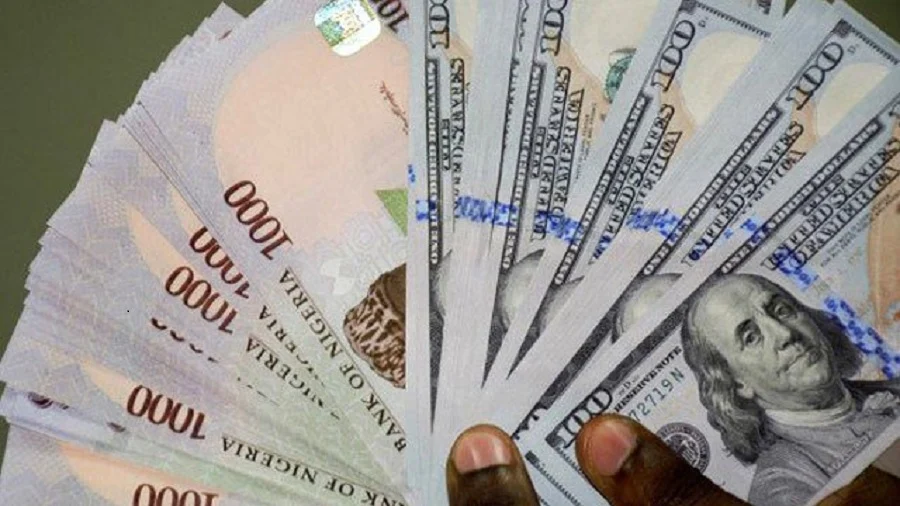

The Nigerian naira has strengthened to trade below the ₦1,350 per dollar mark in the official foreign exchange market for the first time since May 2024, reflecting renewed stability in the country’s currency market amid improved liquidity and rising external reserves.
Data from the official foreign exchange window showed that the naira closed at ₦1,349.5 per US dollar on Tuesday, appreciating from ₦1,354.9 recorded a day earlier. The development represents one of the most notable gains for the local currency in recent months and signals a gradual recovery following periods of volatility.
The latest exchange rate movement marks the first time the naira has traded below the ₦1,350/$ threshold since May 29, 2024, when it stood at approximately ₦1,329.65 per dollar. Analysts say the strengthening reflects ongoing efforts by monetary authorities to stabilise the currency and improve investor confidence.
Despite the improvement in the official market, the parallel market rate remained weaker, highlighting lingering pressure in the informal segment of the foreign exchange market. As of Tuesday, the naira traded at about ₦1,443.68 per dollar in the parallel market, slightly weaker than ₦1,443.40 recorded the previous day. The disparity between the official and parallel market rates underscores persistent demand pressures outside the regulated window.
Financial analysts have linked the naira’s recent appreciation to stronger foreign exchange inflows and improved supply conditions within the official market. Increased oil export earnings, diaspora remittances, and renewed portfolio investments have contributed to higher dollar liquidity, helping to stabilise the currency.
Related News

Nigeria’s Foreign Exchange Reserves Rise to $45.9 Billion, Reaching Highest Level Since 2018
Nigeria’s gross foreign exchange reserves climbed to $45.9 billion in January 2026, their highest level in nearly eight years.

Enugu Governor Peter Mbah Presents ₦1.62 Trillion 2026 Budget, Prioritises Education, Infrastructure, and Healthcare
Governor Peter Mbah has presented a ₦1.62 trillion budget for Enugu State’s 2026 fiscal year, outlining an ambitious, development-focused plan…

NNPC Targets 20% Stake in Dangote Refinery to Strengthen Nigeria’s Oil Sector
NNPCL plans to increase its equity stake in the $20 billion Dangote Refinery from 7.2% to 20% as part of…
According to Abuja-based economist Dr. Joseph Mbada, improved supply conditions and tighter monetary policies have played a significant role in supporting the naira’s recovery. He noted that enhanced liquidity in the official window has reduced speculative demand and eased exchange rate volatility.
“The strengthening of the naira below ₦1,350 per dollar indicates that supply conditions in the official window have improved significantly,” Mbada said. “Better inflows and tighter monetary conditions have helped moderate speculative pressure and stabilise pricing.”
Nigeria’s external reserves have also recorded gains in recent months, providing the Central Bank of Nigeria (CBN) with additional buffers to manage currency volatility. Higher reserves typically allow the apex bank to intervene more effectively in the foreign exchange market when necessary and reassure investors about the country’s ability to meet external obligations.
The narrowing gap between official and parallel market rates compared to previous months is also viewed as a sign of improving market alignment, although analysts note that disparities remain. Continued convergence between both markets is seen as essential for achieving sustained currency stability.
Attention is now turning to the Central Bank of Nigeria’s 304th Monetary Policy Committee (MPC) meeting scheduled for February 23–24, 2026. Policymakers are expected to assess inflation trends, exchange rate developments, and liquidity conditions as they consider potential adjustments to monetary policy.
At its previous meeting in November 2025, the MPC maintained the Monetary Policy Rate (MPR) at 27 percent, following a 50 basis point reduction from 27.5 percent in September 2025. The current policy stance reflects a tight monetary approach designed to curb inflation and support exchange rate stability.
Market observers believe that the upcoming MPC meeting will play a crucial role in shaping expectations for the naira in the coming months. Decisions on interest rates, liquidity management, and foreign exchange interventions are expected to influence investor sentiment and currency performance.
While the recent strengthening of the naira signals improved conditions in the official foreign exchange market, analysts caution that sustained stability will depend on continued inflows, prudent monetary policy, and broader economic reforms. For now, the currency’s movement below the ₦1,350/$ level represents a notable milestone in Nigeria’s ongoing efforts to stabilise its foreign exchange market.