Albert Obazee’s Benin City Residence Razed in Arson Attack Amid Rising Edo Political Tensions
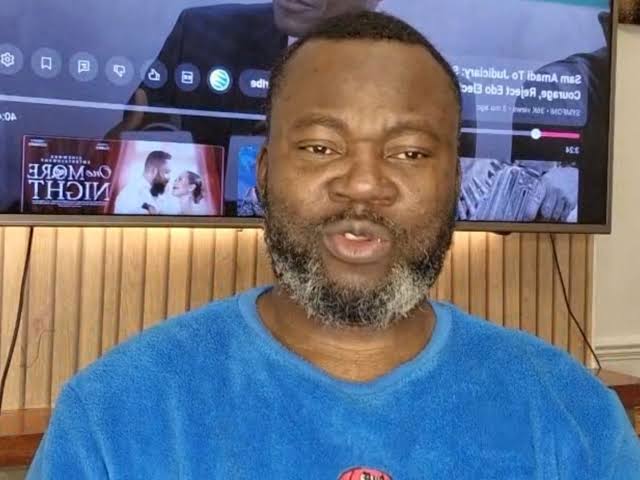

A wave of controversy and concern has followed the burning of a residential property belonging to Albert Obazee, a United Kingdom-based media commentator and outspoken critic of the Edo State government, after his house in Amagba, Benin City, was set on fire late on New Year’s Eve.
According to multiple eyewitness accounts, the incident occurred late on Wednesday night, December 31, 2025, when a group of young men allegedly forced their way into the compound and carried out a coordinated attack on the property. Residents in the area reported that the attackers arrived armed with bottles suspected to contain petrol or kerosene, which they later used to ignite the building.
An occupant of the compound, who spoke anonymously for fear of reprisals, stated that the attackers smashed windows, vandalised household items, and poured flammable substances around the building before setting it on fire. Videos later circulated online showed large sections of the house engulfed in flames, with visible damage to rooms, the kitchen, and living areas, rendering the residence largely uninhabitable.
Footage obtained by online media platforms also showed burnt debris and plastic bags containing bottles believed to have been used to transport fuel, suggesting that the attack was premeditated rather than accidental. The fire was reportedly brought under partial control by residents, preventing total destruction of the structure.
Albert Obazee, originally from Edo State but currently based in the UK, is known for his frequent social media commentary on Edo politics and governance. He has been a consistent critic of Governor Monday Okpebholo’s administration and has also taken public positions critical of powerful political and traditional institutions within the state.
The attack on his residence reportedly occurred days after Governor Okpebholo, in a widely circulated interview, made remarks perceived by supporters and critics alike as direct threats toward Obazee. In the interview, the governor openly acknowledged monitoring Obazee’s online activities and vowed that he would face legal consequences, stating that Obazee would not be allowed to “step freely” on Nigerian soil.
Obazee has alleged that the arson was carried out by hoodlums loyal to the state government, specifically naming Edo APC Youth Leader Tony Kabaka as being linked to the attackers. He claimed the incident followed his social media post reporting that Kabaka had been invited and interrogated by the Economic and Financial Crimes Commission (EFCC) over alleged issues related to NERRA nodes. Kabaka later confirmed that he had indeed been questioned by the EFCC, a development Obazee said validated his report.
Speaking after the incident, Obazee said the attack had instilled fear among his family members and tenants living in the property. “This is intimidation, pure and simple,” he said. “My house was destroyed because I speak the truth. Everyone connected to me is now living in fear, and this is unacceptable in a democracy.”
This was not the first time Obazee’s property has come under attack. His residence was reportedly vandalised several months earlier, further heightening concerns about a pattern of targeted intimidation.
While a government official, speaking anonymously, dismissed claims of state involvement and described the allegations as unfounded, the official called on the police to investigate the incident thoroughly. As of the time of reporting, the Edo State Government and the Nigeria Police Force had not issued an official statement confirming arrests or identifying suspects linked to the arson.
The incident has sparked widespread reactions across social and political spaces, with many Nigerians expressing alarm over what they see as growing political violence and intolerance in Edo State. Civil society voices have also called for an impartial investigation to ensure accountability and prevent further escalation.