BRICS, Global South and neocolonialism
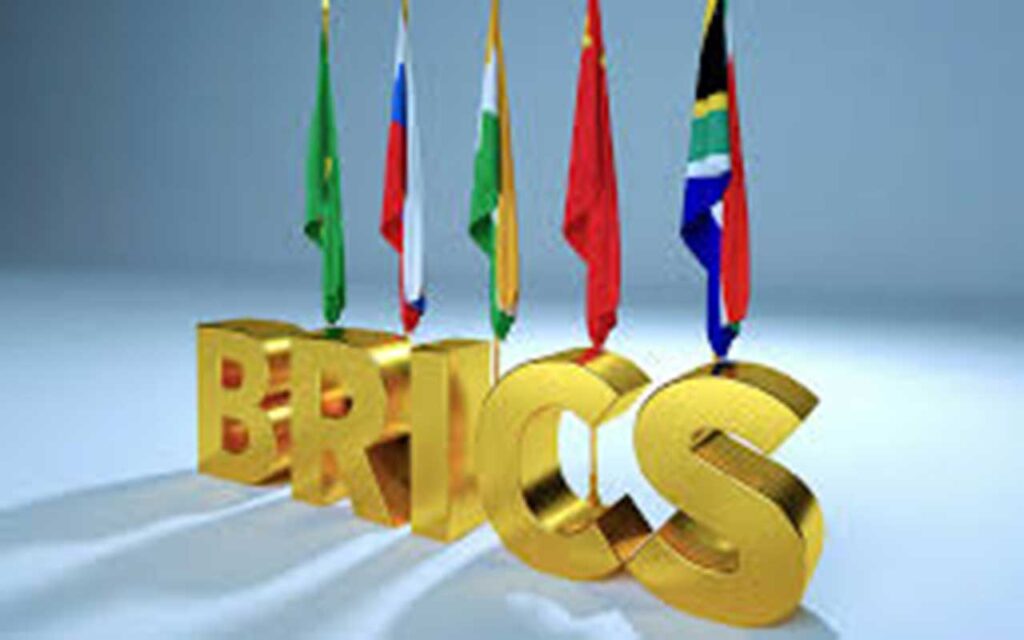

BRICS, Global South and neocolonialism
Summary
Metaphors are fascinating figures of speech partly because they help create striking imagery in readers’ minds, elicit divergent reactions, and also because they illustrate complex ideas quite simply. Take this statement: “if ain’t broke, don’t fix it”! Deductively, if an idea, geopolitical phenomenon, product, service, state-of-affairs etc is broken, then fix it!
That metaphor segues into the Brazil,Russia, India, China, South-Africa (BRICS) raison d’être. Because, if the trinity of geopolitics, geoeconomics, and international trade were executed on reasonably equitable and mutually beneficially terms, there would hardly be any rational basis for BRICS. Likewise, if the adverse impacts of direct and indirect neocolonialism ceased completely, discourse on BRICS would become theoretical.
However, the Global South or South-South countries believe that western powers skew international trade and monetary policies against their (Global South’s) interests, with the inescapable consequences of harmful trade practices, crippling financial/loan burdens, creating a poverty and underdevelopment cycle. A pivotal authority for this proposition is the exceptionalist protective tariffs regime imposed by United States President, Donald Trump, on virtually all goods entering the U.S., ranging from 2.5 per cent to over 25 per cent effective January 2025; and much higher tariffs, approximately 50 per cent, imposed on steel imports to the United States – the highest in over a century.
The policy intentions are clear: re-activating United States economy. Yet, the U.S. does not exist in vacuo. It is connected to the world through international trade, seminal global value chains and global supply chains transecting BRICS. Those geoeconomic and geopolitical dynamics, and safeguarding their interests, underpins the BRICS’ ratio. This treatise aims to deconstruct key intersecting geoeconomic and geopolitical issues.
Discourse
Originally founded in 2009 with Brazil, Russia, India, and China as pioneers, South Africa was admitted a year later in 2010. In the 16 years since its establishment, the organisation has expanded significantly and metamorphosed into BRICS+. Pursuant to the group’s July 2025 summit held in Rio de Janeiro, the bloc currently has 10 members and nine partner countries. The 10 BRICS+ member countries are: Brazil, Russia, India, China, South Africa, Egypt, Ethiopia, Indonesia, Iran, and United Arab Emirates (UAE). Belarus, Bolivia, Cuba, Kazakhstan, Malaysia, Nigeria, Thailand, Uganda and Uzbekistan make up the nine partner countries.
The BRICS+ group represents a diverse set of countries, some of which are resource rich in terms of availability of crude and other mineral resources, some have higher per capita incomes and some, relatively large population. Over 30 countries have so far either independently applied to join BRICS or been officially invited to join in some capacity. As at 2024, BRICS+ accounted for approximately 42.5 per cent of the global gross domestic product (GDP) and 54 per cent of the world’s population.
BRICS+ has emerged as a formidable power in global geopolitics and geoeconomics, offering a potential counterbalance to neocolonialism. Neocolonialism, a model where powerful nations exert control over weaker ones through economic, political, or cultural means, has been a recurrent challenge in international relations.
Some of the stinging critiques of neocolonialism, Western Institutions like the IMF and World Bank, and their adverse policy impacts on the Global South question: 1.) the exclusive basis of the G7 (USA, UK, France, Germany, Canada, Japan, and Italy) which foster the interests of the great Western powers; 2.) the utilisation of the U.S. dollar as the de facto global currency; 3.) the existence of three G7 countries (USA, UK, and France) as permanent veto wielding members on the UN Security Council and only two BRIC countries (Russia and China), and the exclusion of several BRIC+ countries on the hallowed Security Council;
4.) how, given the financial crash of 2007/2008 triggered by the collapse of the U.S. housing market which resulted in a global recession, puts Western financial institutions in any position to pontificate to the Global South about the merits of sound financial stewardship and effective corporate governance; 5.) the inequitable distribution of life-saving vaccines at the height of the Covid-19 pandemic which contributed to over 1.5 million deaths between January 2020 and October 2022 according to PLOS Global Public Health?! Brazil experienced the highest incidence of Covid-19 among BRIC countries with over 8.25 million cases and circa 44,800 deaths in a single-wave alone!
BRICS therefore, with its diverse membership and focus on South-South cooperation, presents an alternative to orthodox Western-dominated global governance structures.
Neocolonialism’s manifestations include conditional aid, double standards, unfair trade practices, economic dependency, structural-adjustment-programmes.
Thus, BRICS, having experienced colonialism and imperialism firsthand, are gearing up to reverse these imbalances through targeted strategic levers and policy instruments including:
Alternative Financial Institutions: The establishment of the New Development Bank (NDB) and the Contingent Reserve Arrangement (CRA) by BRICS countries demonstrates their commitment to creating alternative financial structures. These institutions aim to provide financing for development projects and stabilise financial markets without the stringent conditions often attached to Western-led funding.
Global South/South-South Cooperation: BRICS promotes cooperation among developing nations, fostering economic and political ties that are less likely to be influenced by neocolonial attitudes. This cooperation can lead to more equitable partnerships, where nations engage in mutually beneficial trade and investment devoid of the exploitative dimensions associated with of neocolonialism.
Economic Empowerment: The BRICS grouping focuses on economic empowerment as a means to reduce dependency on Western nations. By strengthening their economic positions, BRICS countries can better resist neocolonial pressures and promote a more multipolar world.
Related News

Cleric launches book to promote Edo language
Cleric launches book to promote Edo language : A major step towards preserving and promoting the Edo language was taken…

Industry sets for NITRA-ALTON telecom conference
Industry sets for NITRA-ALTON telecom conference : Bosun Tijani The Nigerian Communications Commission (NCC) and other industry operators, including IHS…
HSCM unveils strategy as IDA president visits Nigeria
HSCM unveils strategy as IDA president visits Nigeria : The Humanitarian Safety Chaplaincy Mission (HSCM), Nigeria, has unveiled its five-year…
Trade and Investment: BRICS nations are increasingly engaging in trade and investment with each other and other developing countries. This shift helps to diversify their economies and reduce reliance on traditional Western markets.
Industrialisation and Development: BRICS countries are investing in industrialisation and infrastructure development, which can help them move up the value chain and reduce their vulnerability to neocolonial exploitation.
Political and Diplomatic Influence: BRICS also seeks to enhance its political and diplomatic influence on the global stage, challenging the dominance of Western nations in international affairs.
Global Governance Reform: BRICS nations advocate for reform of global governance structures, such as the United Nations Security Council and the Bretton Woods institutions, to reflect the changing global economic landscape and give more voice to developing countries.
Multipolarity: By promoting a multipolar world order, BRICS aims to create a more balanced global environment where no single power or group of powers can dictate terms to others. This multipolarity can help reduce the influence of neocolonial practices.
Constraints
Although the strategic aims of the BRICS are well-founded and laudable, they are, nevertheless, hobbled by serious challenges including disunity, internal divisions over the Russia/Ukraine, overriding national interestsand complexities of international relations realism; which, together, stifle the objective of tackling neocolonialism, thereby limiting the bloc’s effectiveness.
The case study of Eswatini (formerly Swaziland) illustrates the point. The U.S. government currently executes an extremely controversial policy of deporting immigration offenders to the so-called “third countries” That is, countries other than the deportees’ own countries of birth where they retain current, lawful, and valid citizenship. Jurisprudence scholars, liberals, and realists, continuallydebate why A, is being deported from the USA to country X, where the alleged immigration offender has no ties whatsoever with X.
Eswatini, Africa’s last remaining absolute monarchy, ruled by King Mswati III since 1986; received five immigration offenders from the USA in July 2025. The deportees originally from Cuba, Jamaica, Laos, Vietnam, Yemen have no ties whatsoever to Eswatini, which, on the facts, is a de facto and de jure “third country.”
According to The Guardian (UK), Eswatini’s largest opposition party called it “human trafficking disguised as a deportation deal.” Eswatini’s decision may well be objectively perceived as cowing to neocolonialism when juxtaposed against the Nigerian government’s decision concerning 300 Venezuelan deportees, when presented with the same dilemma in July 2025 again, at the instance of the USA.
The Nigerian government refused that request, asserting its sovereign autonomy by explicitly affirming that “we already have over 230 million people… it will be unfair for Nigeria to accept 300 Venezuelan deportees.”By inferential logic, Nigeria affirmed that such decisions are better handled by U.S. criminal justice authorities; not outsourced to “third-countries”!
More widely, Nigeria is a BRICS+ country and Eswatini is not. Nonetheless, the aims of both countries relative to economic justice, cooperation, and geoeconomic integration of the Global South are aligned, but patently not with regards to secret deals bordering on sovereign autonomy.
Interestingly, Eswatini in the 19 years through 2005 and 2024 received $870 million in U.S. foreign aid to support health development initiatives.
Neocolonialism or not, is Eswatini, a country of 1.2 million people, able to defy the will of the USA, a country of over 340 million people given the latter’s geoeconomic, geopolitical and military pre-eminence?!
Conclusion
BRICS certainly offer a pivotal strategic counter balance to neocolonialism by promoting alternative financial institutions, Global South/South-South cooperation, economic empowerment, and political influence.
Nevertheless, serious constraints remain. The BRICS potential to reshape global governance and economic structures in a more equitable direction is significant. As the world moves towards a more multipolar order, the role of BRICS in challenging neocolonialism and promoting a more just and equitable global system will likely continue to grow.
By continuing to strengthen their cooperation and promote their shared interests, BRICS nations can help create a world where Global South and developing countries are not subject to the whims of more powerful nations but are instead equal partners in the global community.
That stance, could afford BRICS a fighting chance of defeating neocolonialism and accomplishing its strategic aims notwithstanding complicated realpolitik.
Ojumu is the Principal Partner at Balliol Myers LP, a firm of legal practitioners and strategy consultants in Lagos, Nigeria, and the author of The Dynamic Intersections of Economics, Foreign Relations, Jurisprudence and National Development (2023).