DSS Recaptures Key Ansaru Commander Linked to 2012 Kogi Church Mass Shooting
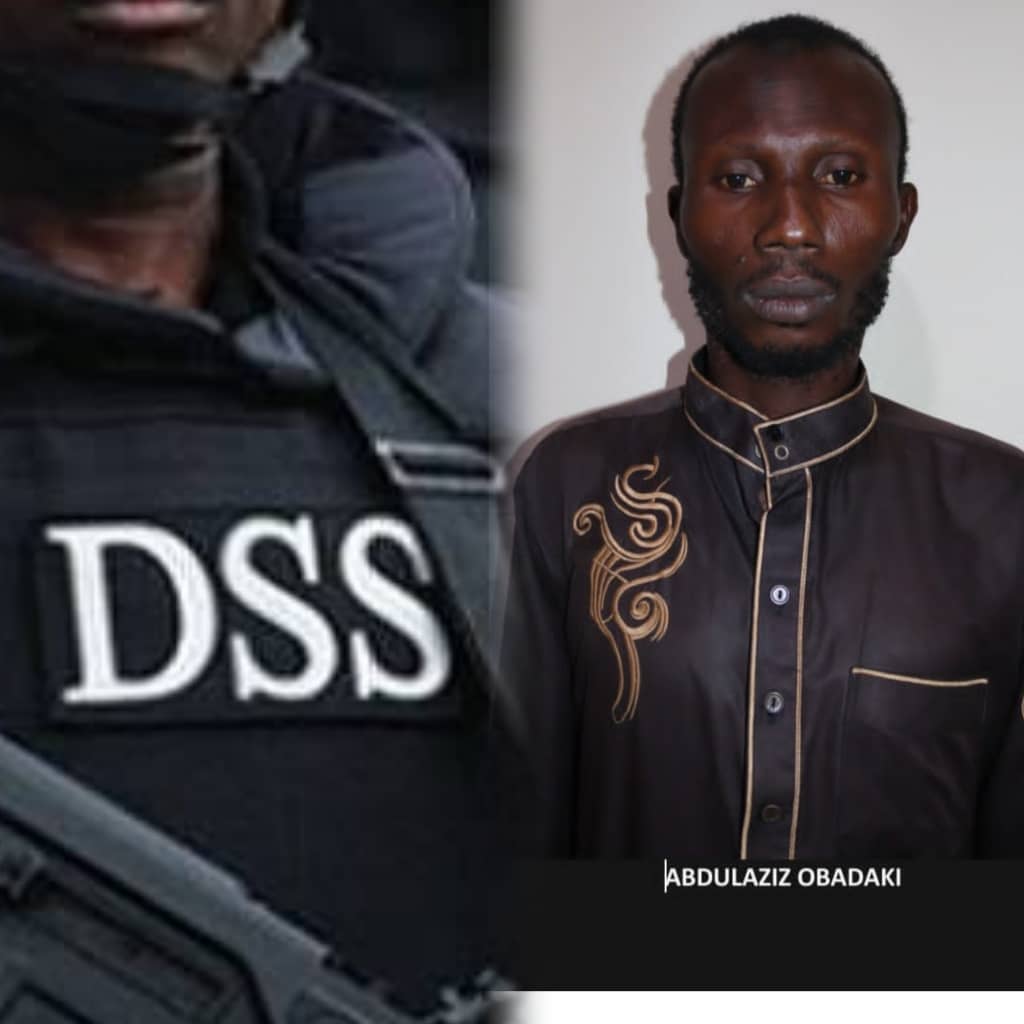

The Department of State Services (DSS) has recaptured Abdulazeez Obadaki, a senior commander of the Ansaru terrorist group and the suspected mastermind of one of Nigeria’s most devastating religious attacks in the last decade. His arrest marks a major development in a case that has lingered since the August 7, 2012 mass shooting at a Deeper Life Bible Church near Okene, Kogi State—a tragedy that left at least 19 worshippers dead, including the pastor, and shook the nation’s sense of safety.
Obadaki, also known by the alias “Bomboy,” had been on the run for more than three years following the July 2022 jailbreak at the Kuje Custodial Centre, where he fled along with several high-profile detainees. Security sources revealed that he was originally arrested after the church shooting and later linked to a string of violent operations, including the coordinated daylight robberies of five commercial banks in Uromi, Edo State, in February 2022. That attack resulted in the deaths of policemen and bank customers, with hundreds of millions of naira reportedly stolen.
According to intelligence officials, Obadaki not only resumed terrorist activities after his escape but also confessed to being one of the masterminds behind the Kuje jailbreak itself. His confession allegedly detailed his role in planning the operation after he was transferred from Kabba Custodial Centre to Kuje in mid-2022. The jailbreak, which exposed major lapses in Nigeria’s correctional security apparatus, remains one of the country’s most troubling security breaches.
Related News
Many Feared Dead as Boko Haram Fighters Overrun Military Base and IDP Camp in Borno
Suspected militants from the Islamic State West Africa Province launched a coordinated early-morning assault on a military base and an…

Gun Attack on ADC Leaders in Edo Raises Fears of Violent Election Season
A gun attack on African Democratic Congress leaders in Benin City, including Peter Obi and Chief John Oyegun, has heightened…

Nigeria Issues Travel Advisory as Israel-US and Iran Conflict Escalates in Gulf Region
The Federal Government of Nigeria has issued a travel advisory urging Nigerians in Iran and neighbouring Gulf states to exercise…
DSS operatives reportedly tracked Obadaki through a coordinated intelligence effort that culminated in his arrest early Friday morning. His re-arrest comes just two months after the DSS prosecuted five suspects connected to the June 2022 attack on the St. Francis Catholic Church in Owo, Ondo State—another incident that highlighted the escalating threat of extremist violence.
The renewed focus on disrupting terrorist networks has been described by analysts as one of the agency’s most sustained counterterrorism drives in recent years. The DSS, under new leadership, has intensified operations targeting individuals and cells linked to long-standing terror organisations, kidnapping syndicates, and armed robbery groups. Security officials say the goal is not only to make arrests but also to accelerate prosecution timelines, which have historically been slow or inconsistent.
The broader public reaction to the recapture has been polarized. While some Nigerians welcome the development as overdue justice, others question the timing, the credibility of the arrest, and the government’s long-term commitment to ending impunity. The fact that Obadaki had remained at large for years—despite being implicated in mass killings and large-scale armed attacks—has generated criticism over the state’s capacity to protect its citizens and prevent repeat offences.
Concerns have also been raised about the fate of previous terrorism cases that stalled or resulted in minimal accountability. Many Nigerians argue that the pattern of arrests followed by escapes, delays, or controversial decisions has weakened trust in security agencies. The Kuje jailbreak, in particular, remains a symbol of the systemic failures that allow high-risk suspects to re-enter society and inflict further harm.
Still, experts note that Obadaki’s recapture may provide investigators with valuable intelligence about Ansaru’s current structure, operational routes, and external support networks. His interrogation could also shed light on unreported crimes or unresolved attacks linked to the group’s activities in Kogi, Edo, and other parts of the northern region.
As Obadaki awaits trial, human-rights observers and security analysts say the government must ensure transparency, expedite legal proceedings, and prevent further lapses that could undermine public confidence. Many insist that justice for the 2012 victims—and others affected by subsequent attacks—depends on the state’s ability to deliver a decisive, credible conclusion to a case that has spanned more than a decade.
For the families of the victims of the 2012 massacre, the recapture offers a renewed opportunity for closure. But for the nation, it serves as another reminder of the deep-rooted security challenges that continue to test Nigeria’s resilience and the urgent need for long-term reforms in intelligence, law enforcement, and corrections management.