EFCC Files Terrorism Financing and Money Laundering Charges Against Bauchi State Officials
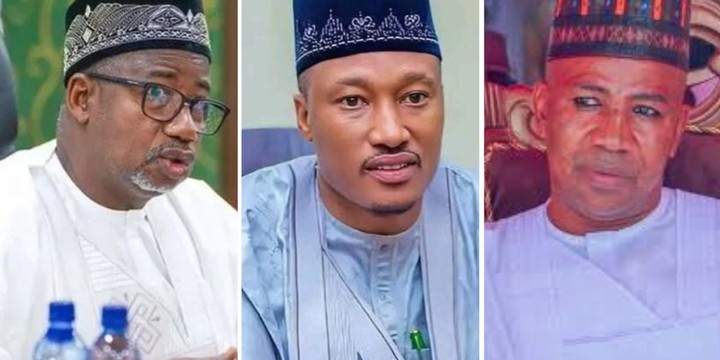

The Economic and Financial Crimes Commission (EFCC) has brought terrorism financing and money laundering charges against senior officials of the Bauchi State Government, following investigations into how millions of dollars allegedly earmarked for security purposes were disbursed through unofficial channels and outside the banking system.
According to court filings, government records, and statements obtained during EFCC investigations, Bauchi State paid substantial sums in foreign currency and naira between late 2023 and mid-2024 under what was described as the state’s “security commitments.” Rather than being processed through formal financial institutions, large portions of the funds were allegedly distributed in cash via intermediaries to individuals and corporate entities.
Investigators allege that the cash payments were conducted at unconventional locations, including restaurants, supermarkets, private residences, and public offices in Abuja. EFCC documents state that beneficiaries did not sign any acknowledgment receipts, raising concerns about transparency, accountability, and the true purpose of the disbursements.
One of the most prominent recipients named in the case is Bello Bodejo, the national president of Miyetti Allah Kautal Hore. EFCC records allege that the Bauchi State Government disbursed a total of $2.33 million to Mr Bodejo in four tranches between December 2023 and March 2024. The payments allegedly occurred during a period when Mr Bodejo was either under investigation or in detention for terrorism-related charges, a contradiction that prosecutors say raises serious questions to be resolved at trial.
In July 2024, the then Accountant-General of Bauchi State, Sa’idu Abubakar, reportedly sent a memo to Governor Bala Mohammed through the Secretary to the State Government seeking “regularisation” of disbursements already made between January and July 2024. The memo allegedly documented releases amounting to nearly $17 million and ₦75.2 million paid to various individuals and entities.
Related News

EFCC Arraigns Investment Firm Boss Ufoma Joseph Immanuel Over Alleged $1.5 Million Fraud
Nigeria’s anti-graft agency, the Economic and Financial Crimes Commission (EFCC), has arraigned businessman Ufoma Joseph Immanuel, the chief executive of…
EFCC Hands Over Recovered ₦279 Million to Wole Soyinka Centre for Culture and Creative Arts
The Economic and Financial Crimes Commission has handed over ₦279 million recovered from a corruption case linked to a National…
ADC Accuses EFCC of Politically Targeting Malami Over Kebbi Governorship Ambition
The African Democratic Congress has alleged that the Economic and Financial Crimes Commission revoked the bail of former Attorney-General of…
On 30 December 2025, the EFCC charged the Commissioner for Finance, Yakubu Adamu, alongside three civil servants — Balarabe Ilelah, Aminu Mohammed Bose, and Kabiru Mohammed — with terrorism financing and related money laundering offences. The EFCC alleges that funds released to Mr Bodejo and others were used, in part or in whole, to finance a terrorist organisation.
The commission further alleges that Mr Adamu personally received nearly $7 million in cash through a laundering scheme conducted outside the banking system. According to prosecution filings, the transactions violated Nigeria’s money laundering laws, which prohibit large cash dealings outside regulated financial institutions.
The defendants were arraigned before the Federal High Court in Abuja on 31 December 2025. On 6 January, the trial judge, Emeka Nwite, ruled that the charges were weighty and supported by compelling documentary evidence, denying the defendants bail.
Governor Bala Mohammed has publicly criticised the prosecution, alleging political targeting orchestrated by rivals within his party. The EFCC has dismissed the claim, stating that it operates independently and that attempts to politicise the case are “mischievous and condemnable.”
EFCC documents detail the role of intermediaries who allegedly collected and delivered cash on behalf of the Bauchi State Government. One such intermediary told investigators that he personally delivered millions of dollars in cash to both Mr Bodejo and Mr Adamu at locations chosen by the recipients, without any written acknowledgment of receipt.
The investigation also points to a complex network of individuals and corporate accounts used to move funds, including entities allegedly linked to foreign exchange trading hubs in Abuja and Dubai. Investigators say billions of naira flowed through these accounts over multiple years.
In addition to the current case, the EFCC has filed other charges against serving and former Bauchi State officials, including the Accountant-General of the state and bureau de change operators, over alleged financial crimes involving public funds.
The terrorism financing trial against Mr Adamu and his co-defendants is scheduled to commence on 13 January. The outcome is expected to have significant legal and political implications, as well as broader consequences for public finance oversight and anti-corruption enforcement in Nigeria.