JAMB Flags 2,658 Illegal Admissions Across Nigerian Tertiary Institutions

The Joint Admissions and Matriculation Board (JAMB) has uncovered 2,658 cases of illegal admissions conducted across several tertiary institutions in Nigeria during the 2024/2025 academic session, raising renewed concerns about non-compliance with the nation’s centralised admission system.
According to official data obtained from JAMB headquarters in Abuja, the irregular admissions were discovered across 17 universities, polytechnics, and colleges of education, following an institutional audit carried out by the board. The findings were made public as public universities concluded their admissions for the 2025/2026 session on Friday.
Breakdown of Affected Institutions
The report revealed that Abubakar Tafawa Balewa University (ATBU), Bauchi, topped the list with 1,847 illegal admissions, followed by Osun State University, which recorded 492 cases. Other institutions cited include Abubakar Tafari Ali Polytechnic (148), Federal College of Animal and Health Production (66), University of Calabar (28), and College of Education, Oro (12).
Additionally, Michael and Cecilia Ibru University and Redeemer’s University each recorded five to twelve irregular admissions, while smaller cases were reported at Pan-Atlantic University (five), Nigerian Army College of Education (two), Kwara State Polytechnic (one), and Best Solution Polytechnic (one), among others.
JAMB classified all these admissions as “illegal” because they were processed outside its Central Admissions Processing System (CAPS) — the only officially recognized portal for tertiary admissions in Nigeria.
Why Admissions Outside CAPS Are Illegal
Since its introduction in 2017, CAPS has been the core mechanism designed by JAMB to enforce transparency, meritocracy, and fairness in admissions. The system ensures that all candidates are treated equally, that institutions adhere to federal admission quotas, and that only qualified candidates are offered admission.
Related News

Prof. Ursula Ngozi Akanwa Appointed First Female Vice-Chancellor of Michael Okpara University of Agriculture
Professor Ursula Ngozi Akanwa has been named the seventh Vice-Chancellor of the Michael Okpara University of Agriculture, Umudike, becoming the…

Lagos Governor Sanwo-Olu Hands Over Seat to Student Esther Etiyemonu as One-Day Governor
Lagos State Governor Babajide Sanwo-Olu temporarily handed over the reins of leadership to student Esther Etiyemonu after she emerged winner…
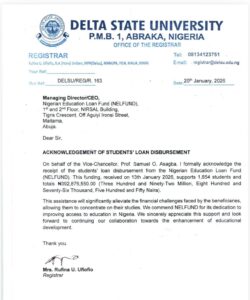
Higher Institutions Confirm Receipt of Tuition Support Funds from NELFUND
Several Nigerian higher institutions have confirmed the receipt of tuition support funds disbursed by the Nigerian Education Loan Fund (NELFUND)…
Admissions conducted outside this framework are considered invalid, as they bypass merit verification and regulatory oversight. Students admitted through such unauthorized channels risk facing severe consequences, including ineligibility for the National Youth Service Corps (NYSC) after graduation.
Over the years, JAMB has repeatedly warned both institutions and candidates about the dangers of accepting or offering admissions outside CAPS. Despite this, some schools continue to circumvent the system through backdoor admissions, often for financial or political reasons.
Government Threatens Sanctions
During the 2025 JAMB Policy Meeting, the Minister of Education, Dr. Tunji Alausa, expressed strong disapproval of the rising number of illegal admissions and warned that the government would impose stringent sanctions on offending institutions.
“The Federal Government will not tolerate any form of admission fraud or manipulation. Institutions found culpable will face punitive measures, including withdrawal of accreditation and disciplinary action against complicit officials,” Alausa stated.
He emphasized that the integrity of Nigeria’s education system depends on strict adherence to due process in admissions, calling on universities and colleges to “respect the sanctity of CAPS.”
Implications for Students and Institutions
Educational experts have warned that illegal admissions not only jeopardize students’ academic futures but also undermine the credibility of tertiary institutions. Students admitted through such means may graduate without valid academic recognition or may be denied mobilization for NYSC service — a key requirement for many career paths in Nigeria.
Furthermore, JAMB’s renewed crackdown is seen as part of broader efforts to clean up the tertiary education system and restore confidence in the country’s admission processes.
Public Reactions
The revelation has sparked widespread debate among Nigerians. While many citizens applauded JAMB’s vigilance, others criticized the board for what they perceive as excessive bureaucratic control over university admissions. Some called for a review of JAMB’s role, arguing that multiple layers of examinations — including WAEC, NECO, and Post-UTME — make the system unnecessarily rigid.
Despite the criticisms, JAMB insists that CAPS remains essential for maintaining national standards and ensuring fairness in Nigeria’s competitive higher education landscape.
Conclusion
With 2,658 illegal admissions flagged across 17 institutions, JAMB’s latest findings highlight the ongoing struggle to enforce accountability in Nigeria’s education sector. The board has reaffirmed its commitment to ensuring that no student or institution circumvents due process, urging candidates to verify all admission offers through the official CAPS portal before acceptance.