Kanu Family, IPOB Leadership Clash Over February 2 Sit-At-Home Order
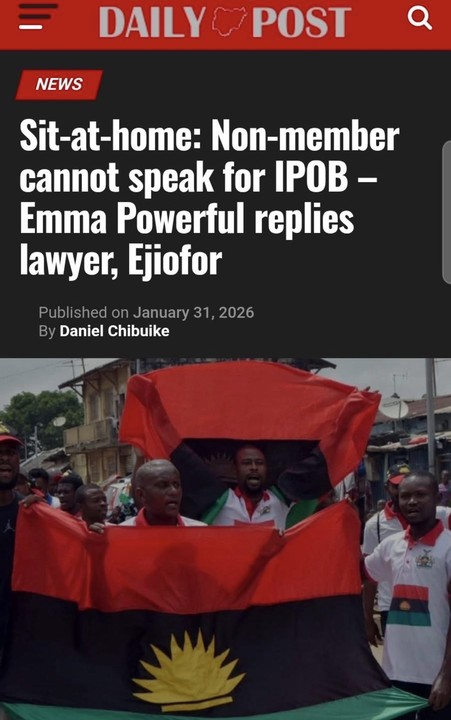

The Indigenous People of Biafra (IPOB) is facing renewed internal turmoil as members of the family of its detained leader, Nnamdi Kanu, openly clash with the group’s Directorate of State (DOS) over the enforcement of a planned sit-at-home protest scheduled for February 2, 2026.
At the center of the dispute are conflicting claims over authority, legitimacy, and the right to issue directives in Kanu’s name while he remains in detention. While IPOB’s DOS and Kanu’s legal team have repeatedly announced that the sit-at-home has been cancelled in line with Kanu’s earlier instructions, some of Kanu’s brothers insist the protest must go ahead.
IPOB’s internal structure dates back to 2021, when Nnamdi Kanu reportedly established the Directorate of State to manage the organization in the event of his detention. Following his arrest, the DOS assumed operational control of IPOB, with Mazi Chika Edoziem serving as the director. The structure was designed to ensure continuity, discipline, and centralized command.
According to IPOB officials, Kanu also issued specific instructions at the time, including the appointment of Simon Ekpa as a lead broadcaster for Radio Biafra. However, Ekpa was later dismissed by the DOS for alleged insubordination, a move that led to the formation of rival factions and splinter groups, including the Biafra Republic Government in Exile (BRGIE).
The current crisis intensified after IPOB’s DOS announced that there would be no sit-at-home protest on February 2, citing Kanu’s standing directive against such actions. This position was publicly reinforced by IPOB lawyers and Eastern Security Network (ESN) commander Chinasa Nworu, who urged residents to ignore reports of a lockdown.
Related News
Nnamdi Kanu Appeals Conviction, Challenges Terrorism Trial and Life Sentences
Detained IPOB leader Nnamdi Kanu has filed an appeal against his terrorism conviction and multiple life sentences, arguing that his…
However, members of the Kanu family, particularly Kanunta and Emmanuel Kanu, have rejected this position. They argue that the DOS has compromised the movement by allegedly engaging in backchannel discussions with Anambra State Governor Chukwuma Soludo and failing to adequately defend traders affected by enforcement actions at Onitsha Main Market.
In a series of statements circulated on social media, Kanunta Kanu accused members of the DOS of betraying IPOB’s core principles and attempting to sideline the family from decision-making. He also dismissed the authority of IPOB spokesperson Emma Powerful, claiming that the office has been hijacked and misused.
Emma Powerful, speaking on behalf of IPOB, countered these claims by reaffirming that the Directorate of State remains the sole body authorized to run the organization’s daily affairs. In an internal memorandum dated January 31, 2026, the spokesperson emphasized that IPOB operates under a strict chain of command established by Nnamdi Kanu himself, and that no family member holds automatic authority within the movement.
The statement further warned against impersonation, misinformation, and unauthorized declarations, stressing that IPOB’s leadership does not derive from blood relations but from institutional appointments made by its leader.
The dispute has drawn in supporters of rival factions, including individuals aligned with Simon Ekpa’s BRGIE, further complicating the situation. Analysts note that IPOB has experienced repeated internal fractures over the years, often centered on leadership control, ideological direction, and the management of international donations.
Legal observers and civil society groups have expressed concern that the conflicting messages could heighten tension across the South-East, particularly given the history of violence, economic disruption, and fear associated with previous sit-at-home orders.
As of now, there is no unified directive accepted across all IPOB factions. While the DOS insists the protest has been cancelled, members of the Kanu family continue to mobilize supporters online, raising uncertainty over public compliance and security implications.
With Nnamdi Kanu still in detention and unable to directly intervene, the struggle for control within IPOB appears far from resolved, leaving supporters, residents, and authorities grappling with the consequences of a divided movement.