Lagos State to Enforce Stricter Water Quality Standards, Warns Service Providers

The Lagos State Government has signalled a tougher regulatory stance on water safety as the Lagos State Water Regulatory Commission (LASWARCO) announced plans to strictly enforce water quality and safety standards across the state. The commission warned that unsafe practices by water service providers pose serious risks to public health and the environment, particularly in a rapidly growing and urbanising мегacity like Lagos.
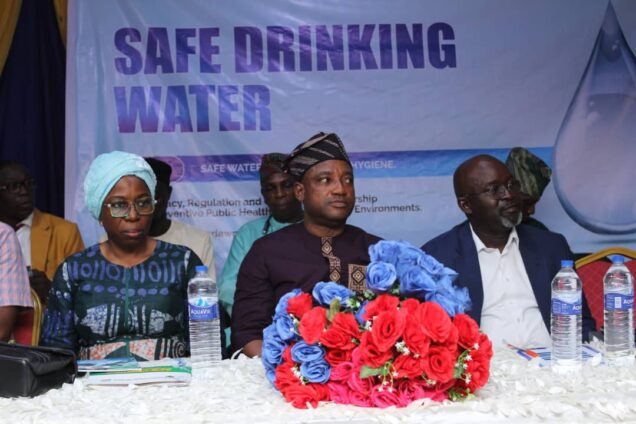
The warning was issued on Monday by the Executive Secretary of LASWARCO, Oluwabukola Khadijah Adeyemo, during a one-day community sensitisation and public engagement programme with water service stakeholders held in Epe. The event brought together borehole drillers, sachet and bottled water producers, tanker operators, and other players in the water supply value chain.
Adeyemo said the engagement marked a clear transition from awareness campaigns to full regulatory enforcement, stressing that operators who fail to meet prescribed standards would face appropriate sanctions. She noted that while previous efforts focused on education and sensitisation, the current realities demand stricter compliance.
According to her, Lagos State’s rapid population growth, increasing urbanisation, and mounting climate-related pressures have made effective regulation of water resources unavoidable. She explained that the growing dependence on alternative water sources has heightened the need for oversight, as unsafe water practices now have broader implications for public health and environmental sustainability.
“As regulators, we are committed to enforcing standards that ensure water is properly treated, purified, packaged, and distributed,” Adeyemo said. “However, regulation alone cannot achieve this goal. Compliance must be driven by a shared sense of responsibility and professional ethics among all water service providers.”
She observed that many Lagos residents rely heavily on boreholes and other private water sources due to limited access to pipe-borne water. This situation, she said, has encouraged indiscriminate and poorly regulated drilling practices across the state.
Related News

Lagos DSVA Trains Safeguarding Officers to Strengthen Fight Against Child Abuse
The Lagos State Domestic and Sexual Violence Agency (DSVA) has trained safeguarding and child protection officers across schools and communities,…
Lagos Government Partners MTN to Redevelop Obalende Under-Bridge into Modern Y’ELLO Bus Park
The Lagos State Government has announced a partnership with MTN Nigeria to redevelop the Obalende under-bridge area into a modern…
FG Clarifies Third Mainland Bridge Surveillance Cost, Says CCTV Centre Cost ₦2.5bn, Not ₦40bn
The Federal Government has clarified that the newly inaugurated surveillance centre for the Third Mainland Bridge in Lagos cost ₦2.5…
Adeyemo warned that boreholes drilled too close to septic tanks and sewage systems significantly increase the risk of contamination, exposing residents to waterborne diseases such as cholera, typhoid fever, and diarrhoea. She emphasised that the appearance of water alone does not guarantee its safety.
“Water is life, but unsafe water is a silent threat,” she said. “The physical appearance of water does not guarantee its safety or potability. Every sachet or bottled water produced, every borehole drilled, and every tanker delivery made has a direct impact on public health.”
Beyond public health concerns, the LASWARCO boss raised alarms about the environmental consequences of unregulated groundwater extraction. She warned that excessive abstraction of underground water, coupled with abandoned or improperly sealed boreholes, could lead to land subsidence and soil instability in parts of Lagos.
“One of the most alarming consequences is land subsidence caused by over-extraction of underground water and abandoned boreholes without proper decommissioning,” Adeyemo said. She added that once aquifers are damaged or depleted, they are extremely difficult to restore.
Adeyemo explained that the enforcement initiative aligns with the Lagos State Government’s THEMES+ development agenda, particularly its Health and Environment pillar. She also noted that the move supports Nigeria’s commitment to Sustainable Development Goal 6, which focuses on ensuring access to clean water and sanitation for all.
She disclosed that the state government, under Governor Babajide Sanwo-Olu, is investing in water infrastructure to expand access to safe pipe-borne water and reduce reliance on unsafe private sources. Ongoing and completed projects include the commissioning of the Akilo Water Works in Ogba, the rehabilitation of Adiyan Phase 1, the near completion of Adiyan Phase 2, and planned upgrades to water works in Epe.
Adeyemo said LASWARCO would intensify monitoring and regulation of all categories of water service providers, including borehole drillers, sachet and bottled water producers, tanker operators, and household water managers. She stressed that no operator is exempt from regulation.
“LASWARCO stands ready to partner with stakeholders to guide and support them, but we equally expect full compliance, ethical practices, and a shared commitment to health and environmental safety,” she said.
She urged stakeholders to see regulation as a protective framework rather than a threat, adding that adherence to standards helps build public trust, improve service quality, and strengthen the water sector. According to her, the engagement was designed to clarify responsibilities, encourage voluntary compliance, and send a clear message that Lagos State will enforce water safety standards to safeguard present and future generations.