Nigerians Criticize Nasboi After He Deletes Tweet Seen as Supporting Controversial 2026 Tax Law


Popular Nigerian content creator and skitmaker, Nasboi, has found himself at the center of an online storm after deleting a tweet that many Nigerians interpreted as support for the controversial 2026 tax law. The proposed legislation, which is expected to take effect from January 1, 2026, has already generated significant public opposition, with critics arguing that it would place additional financial pressure on citizens who are already struggling under harsh economic conditions.
In the now-deleted post shared on X (formerly Twitter), Nasboi reportedly wrote:
“Tax us, that’s fine. But I’m hoping that the money is used to better this country, hopefully.”
While the comment appeared moderate and conditional, it quickly attracted criticism from Nigerians who believe the proposed tax reforms are ill-timed and poorly structured. For many, the phrase “tax us” was seen as dismissive of the daily struggles faced by ordinary citizens grappling with inflation, rising fuel costs, stagnant wages, and reduced purchasing power.
The backlash intensified as reports emerged alleging that some sections of the tax law may have been altered or improperly handled, with claims of forgery further fueling public anger. Although these allegations have not been conclusively established, they heightened public suspicion and placed additional scrutiny on individuals perceived as supporting the policy.
Related News

Apple Unveils MacBook Air M5 Using Fela Anikulapo Kuti’s “Let’s Start”
Tech giant Apple has unveiled its next-generation MacBook Air powered by the new M5 chip, with a campaign featuring Fela…

Simi Addresses Backlash Over Resurfaced 2012 Tweets About Children
Nigerian singer Simi has responded to public criticism following the resurfacing of tweets she posted in 2012 referencing children at…
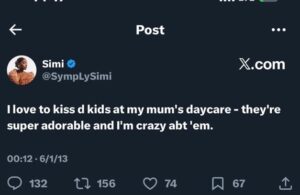
Outrage as 2012 Tweet by Simi About Four-Year-Old Resurfaces Amid Online Controversy
Nigerian singer Simi is facing online backlash after a 2012 tweet referencing a four-year-old boy resurfaced on social media.
Shortly after the backlash began, Nasboi deleted the tweet. However, screenshots of the post had already circulated widely across social media platforms, ensuring that the conversation did not end with its removal. Instead, the deletion itself became a fresh point of contention, with many users accusing the skitmaker of retreating under pressure rather than clarifying his position.
One social media user questioned his action by reposting the screenshot and asking, “Why did you remove this?” while others suggested that the deletion implied guilt or external influence. Another user, identified as @Emarged, took a more dramatic stance, likening the situation to betrayal and writing, “They have collected their 30 pieces of silver,” a comment that implied alleged compromise or inducement.
As reactions poured in, opinions remained sharply divided. Some Nigerians argued that Nasboi was unfairly targeted, insisting that public anger should be directed at policymakers rather than entertainers. Others described the backlash as an example of “transferred aggression,” suggesting that frustration with government decisions was being redirected toward an easier target.
However, critics maintained that celebrities and influencers have a responsibility to be mindful of their public statements, particularly on sensitive national issues. According to this group, Nasboi’s wealth and status place him in a different economic category from the average Nigerian, making his comment appear detached from the realities faced by millions of citizens.
There were also debates around interpretation. Some defenders suggested that Nasboi may have been referring to wealthy individuals when he said “us,” arguing that higher-income earners should reasonably contribute more through taxation. Others countered that the lack of clarity in his statement made it easy to misinterpret and difficult to defend.
The controversy reflects a broader tension in Nigeria’s public discourse, where trust in government policy remains low and discussions about taxation are emotionally charged. With many Nigerians skeptical about how public funds are managed, any perceived endorsement of increased taxation often attracts swift backlash, particularly when it comes from high-profile figures.
As of the time of reporting, Nasboi has not issued a formal statement clarifying his position or explaining why the tweet was deleted. Meanwhile, the debate continues online, highlighting the fragile relationship between public figures, government policy, and an increasingly vocal and economically pressured population.