NSA Office Clears Kwara Government, Says Arrested Persons Are FG-Recognised Vigilantes


The Office of the National Security Adviser (ONSA) has formally clarified circumstances surrounding the arrest of armed individuals in Kwara State, stating that those involved were not bandits or criminal elements but vigilantes known to, and recognised by, the Federal Government. The clarification follows widespread public concern and media reports after a rifle reportedly linked to the ONSA was recovered during security operations in the state.
In a statement issued by the Head of Strategic Communications at the National Counter Terrorism Centre (NCTC), Mr. Abu Michael, the ONSA explained that the Federal Government, through authorised security structures, engages trained auxiliary forces to support conventional security agencies in combating terrorism, banditry, and other violent crimes, particularly in forested and hard-to-reach areas.
According to the statement, the operations are conducted pursuant to Part III, Sections 4, 5, and 6 of the Terrorism Prevention and Prohibition Act, 2022, which empowers the National Counter Terrorism Centre under the Office of the National Security Adviser to coordinate and support law enforcement, intelligence, and security agencies nationwide. The arrangement, the ONSA said, forms part of Nigeria’s broader National Counter Terrorism Strategy (NACTEST).
Mr. Michael explained that Nigeria’s counter-terrorism efforts adopt a “hybrid security approach,” which combines the deployment of regular security forces with trained irregular auxiliaries such as hunters and vigilante groups. These auxiliary forces, he said, are particularly effective in terrains that are difficult for conventional troops to navigate, including forests and remote rural communities.
Related News
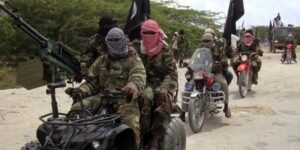
Many Feared Dead as Boko Haram Fighters Overrun Military Base and IDP Camp in Borno
Suspected militants from the Islamic State West Africa Province launched a coordinated early-morning assault on a military base and an…

Gun Attack on ADC Leaders in Edo Raises Fears of Violent Election Season
A gun attack on African Democratic Congress leaders in Benin City, including Peter Obi and Chief John Oyegun, has heightened…

Nigeria Issues Travel Advisory as Israel-US and Iran Conflict Escalates in Gulf Region
The Federal Government of Nigeria has issued a travel advisory urging Nigerians in Iran and neighbouring Gulf states to exercise…
Drawing historical parallels, the ONSA noted that a similar strategy was deployed in the North-East through the Civilian Joint Task Force (CJTF), where trained civilian volunteers worked alongside the Armed Forces in operations against Boko Haram insurgents. The same operational framework, the statement added, is currently being applied in parts of the North-West and North-Central regions, including Kwara State, with reported successes in degrading the operational capacity of criminal and terrorist groups.
Addressing claims that arms were distributed to unauthorised groups, the ONSA categorically denied providing weapons to any socio-cultural organisation. It stressed that all auxiliary personnel involved in hybrid operations are recruited directly by authorised security and intelligence agencies after due diligence, and are engaged strictly under established laws and standard operating procedures.
“For the avoidance of doubt, the Federal Government and its agencies are not conducting kinetic operations with any socio-cultural groups,” the statement said, adding that suggestions to the contrary were inaccurate and misleading.
The ONSA further explained that limited public disclosure around the Kwara operation was deliberate, citing the sensitive nature of counter-terrorism missions and the need to prevent operational compromise as well as ensure the safety of personnel involved. It urged the media to exercise caution and responsibility when reporting security-related matters, particularly those with national security implications.
In clearing the Kwara State Government, the ONSA said there was no evidence linking the state authorities to any illegal arming or sponsorship of banditry. Instead, the individuals arrested were described as part of federally coordinated security efforts aimed at restoring peace and stability.
The statement also reassured Nigerians that all operations conducted under the National Counter Terrorism Centre remain subject to legal oversight and accountability mechanisms. Mr. Michael added that the NCTC maintains an open-door policy to promote transparency and deepen public understanding of Nigeria’s counter-terrorism initiatives.
Despite the clarification, the development has continued to generate intense public debate, with many Nigerians raising questions about oversight, arms control, inter-agency coordination, and the long-term implications of deploying auxiliary forces. Security analysts note that while hybrid security models can be effective, clear communication and accountability remain essential to maintaining public trust.
The ONSA concluded by calling on citizens to disregard unverified reports and rely on official channels for accurate information, reiterating its commitment to protecting national security while operating within the bounds of the law.