Retired Police Officers Protest in Abuja: “We Have Been Turned to Beggars After 35 Years of Service”
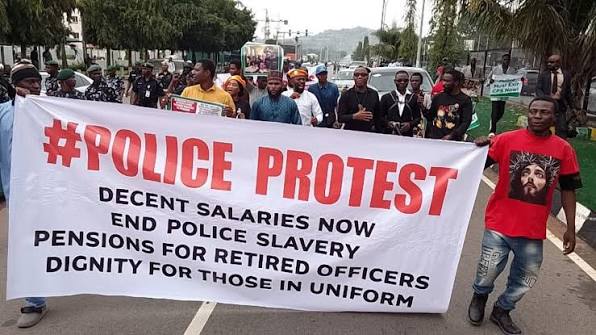

A group of retired police officers staged a peaceful protest in Abuja on November 7, 2025, decrying what they described as years of neglect and unpaid pensions after serving the country for over three decades. The demonstrators, many visibly emotional, carried placards with inscriptions such as “We served Nigeria faithfully” and “We have been turned to beggars after 35 years of service.”
Gathering at the Unity Fountain in Abuja, the retirees—some elderly and frail—called on the federal government to urgently address their plight. They accused the Police Pension Board and relevant government agencies of failing to pay their entitlements, leaving them to struggle for survival despite their long years of service in maintaining national security.
“We risked our lives for this country,” one retired officer told reporters, his voice breaking with emotion. “Today, we can’t feed our families or pay our medical bills. Many of our colleagues have died waiting for their pensions.”
For many of the protesters, the rally was not only about money but also about dignity. They said that after years of facing danger and hardship, they deserve respect, not abandonment. “We served Nigeria with honor. Nigeria should not forget us,” one of the protest leaders said, echoing the sentiment shared by dozens of others at the protest ground.
Related News
El-Rufai Says He Would Have Joined Peter Obi’s ‘Occupy NASS’ Protest Over Electronic Transmission of Results
Former Kaduna State governor Nasir El-Rufai has said he would have joined former presidential candidate Peter Obi at the “Occupy…
‘Sack Wike Now’: Protesters Storm APC National Headquarters in Abuja
A group of protesters on Friday besieged the national headquarters of the All Progressives Congress (APC) in Abuja, calling on…
Buildings Set Ablaze in Tehran as Cost-of-Living Protests Spread Across Iran
Fresh anti-government demonstrations erupted across Iran as protesters set fire to buildings in Tehran, marking an escalation in nationwide unrest…
However, public reaction to the demonstration has been sharply divided. On social media and popular online forums, Nigerians expressed a mix of sympathy, anger, and criticism toward the retirees. While some agreed that the government should address their grievances, others argued that police officers are now facing the same system they once upheld through oppression and corruption.
One user wrote bluntly, “While in active service, no be beg una dey beg too? Silly set of people.” Another added, “Na karma. Na mumu dey pity police.” Such comments reflected widespread resentment stemming from years of police misconduct and brutality, particularly during events like the 2020 #EndSARS protests.
Others saw the situation as poetic justice. “Since 20-10-2020, I got no pity for any policeman or soldier that complains of injustice. Whatever goes around comes around,” one commenter posted.
Still, not everyone was unsympathetic. Some Nigerians pointed out the systemic failures in the pension system that affect not only police officers but also teachers, civil servants, and other retirees. One observer remarked, “For many of them, their pensions are less than 100 dollars a month. This is not about karma — it’s about a broken system that fails everyone.”
The issue of unpaid pensions has long plagued Nigeria’s public sector. Over the years, various pension reforms have been introduced, yet delays, corruption, and administrative bottlenecks continue to deny many retirees their rightful benefits. For retired police officers, the situation is particularly painful given the risks they faced throughout their careers — from combating crime and insurgency to enduring poor working conditions.
Despite the harsh public criticism, experts warn that neglecting the welfare of former officers could further damage morale within the force. “If those still serving see that retirees are left to suffer, it discourages commitment and integrity,” a retired security analyst noted. “This problem needs urgent intervention before it becomes another national embarrassment.”
For now, the retired officers say they will continue to protest until their voices are heard. “We are not asking for favors,” one of them said. “We are only asking for what is rightfully ours. We gave our best years to this nation — we deserve to live the rest of our lives with dignity.”
The scene in Abuja ended peacefully, but the message was unmistakable. Behind the uniforms and badges once worn with pride are now elderly men and women pleading for the same justice they once swore to uphold. Their protest has rekindled a complex debate about fairness, accountability, and the moral cost of corruption within Nigeria’s institutions.