TikTok Star Peller Seeks ₦11 Million Public Support to Fix Damaged Mercedes-Benz SUV After Lekki Crash
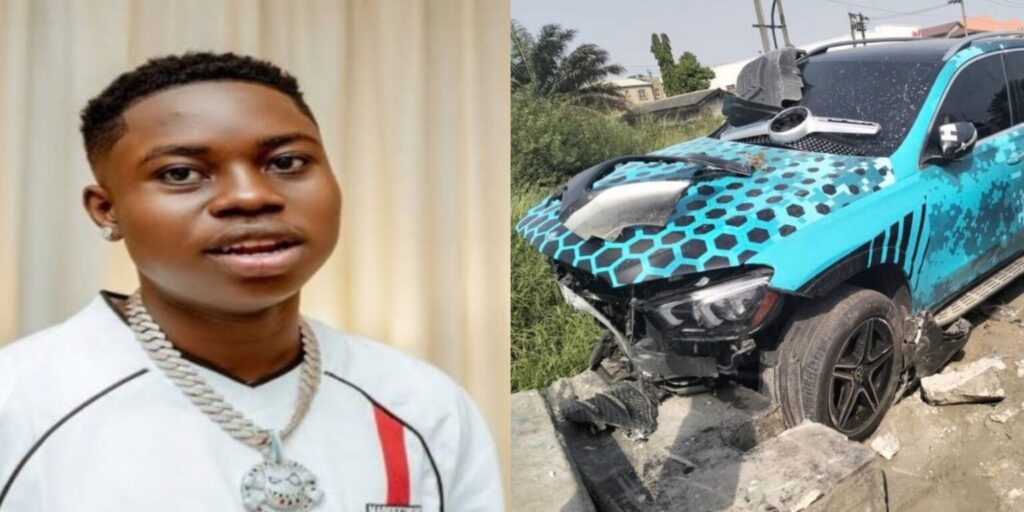

Popular TikTok streamer and content creator Habeeb Hamzat, widely known as Peller, has appealed to the public for financial assistance to repair his damaged Mercedes-Benz SUV, revealing that the cost of fixing the luxury vehicle has been estimated at ₦11 million. The appeal was made during a recent TikTok live session and has since generated intense reactions across social media platforms.
Peller disclosed that he was shocked when mechanics informed him of the repair cost and admitted that he has been unable to fix the vehicle due to financial strain following the incident. According to him, the magnitude of the bill was unexpected and beyond what he had anticipated when the accident occurred.
“They told me fixing my car would cost ₦11 million. I haven’t fixed it because the money is too much. I thought maybe my fans who love me can help me. I never imagined it would cost this much,” he said during the livestream.
The influencer explained that the accident affected him both mentally and financially, adding that he had taken time away from social media to recover emotionally. He noted that the vehicle has remained unrepaired largely because of the high cost involved, prompting his decision to reach out to his online supporters for help.
“This accident affected me mentally and financially. If anyone can support me, it will go a long way. I really need help to get my car back on the road,” he told viewers, urging those who were able to assist to do so.
Related News
Wizkid Responds to 2Baba’s Burna Boy Comment, Sparks Debate Over Afrobeats Global Rankings
A social media exchange between Wizkid and veteran singer 2Baba has stirred widespread debate after the latter described Burna Boy…

Phyna Denied Entry to BBNaija Winner Imisi’s Birthday Party Over Livestreaming Dispute
Reality TV star Phyna was reportedly denied entry to BBNaija Season 10 winner Imisi’s birthday party after refusing to stop…
Police Arrest TikTok Influencer Peller Over Alleged Suicide Attempt and Reckless Driving in Lagos
The Lagos State Police Command has arrested and detained popular TikTok influencer Habeeb Hamzat, widely known as Peller, following a…
The crash, which occurred in December 2025 along the Lekki–Epe Expressway in Lagos State, attracted national attention after it was revealed that the incident happened during a live broadcast. The development sparked widespread concern, with many Nigerians questioning the safety implications of livestreaming while driving.
Following the incident, the Federal Road Safety Corps (FRSC) and the Lagos State Police Command indicated that Peller could face prosecution for reckless and distracted driving. Authorities warned that livestreaming while driving poses serious risks to both motorists and pedestrians, and emphasized the need for accountability in such cases.
In the aftermath of the crash, Peller issued public apologies to Nigerians and to the family of Jarvis, expressing regret over the incident and acknowledging the distress it caused. He maintained that the accident was not intentional and said he has learned from the experience.
Despite the apologies, his recent crowdfunding appeal has drawn mixed reactions. While some fans have expressed sympathy and willingness to support him financially, many Nigerians have questioned the decision to solicit public donations to repair a luxury vehicle, particularly in a country grappling with widespread economic hardship.
Critics argue that a content creator who is widely perceived to earn substantial income from streaming, brand endorsements, and appearances should be able to bear the cost of repairing his own vehicle. Others described the appeal as insensitive, noting that many of his followers struggle to meet basic needs and cannot afford such expenses themselves.
On the other hand, a smaller group of supporters defended Peller’s right to ask for help, pointing out that donations are voluntary and that fans who choose to contribute are doing so out of goodwill. Some also suggested that public figures often rely on fan support during difficult times and that his appeal should not be viewed differently.
As of the time of this report, Peller has not disclosed whether he has received any significant financial contributions toward the ₦11 million repair cost, nor has he announced a specific fundraising target or deadline.
The controversy surrounding the appeal has continued to trend online, reflecting broader conversations about influencer culture, accountability, and the growing practice of public fundraising by wealthy or high-profile individuals. For many observers, the episode highlights the tension between online fame, public expectations, and personal responsibility in Nigeria’s fast-evolving digital space.