Alaafin of Oyo Leads Traditional Rulers on Visit to Dangote Refinery in Lagos
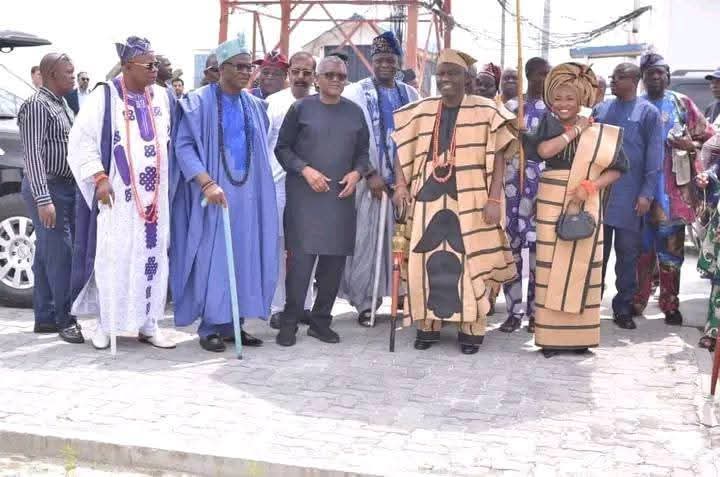

The Alaafin of Oyo and several other traditional rulers paid a visit to the Dangote Refinery in Lagos on November 6, 2025, in what has been described as a symbolic show of support for one of Africa’s most ambitious industrial projects.
The royal delegation, led by the Alaafin and accompanied by high-ranking chiefs, toured the facility, which is located in the Lekki Free Trade Zone, Lagos. The visit was part of efforts to understand the operations of the refinery — a project that has drawn global attention for its scale and potential to transform Nigeria’s petroleum industry.
While official details of the visit remain limited, sources at the refinery confirmed that the tour included a presentation on the refinery’s production capacity, its ongoing testing phase, and its role in reducing Nigeria’s reliance on imported refined petroleum products.
The Dangote Refinery, owned by business magnate Aliko Dangote, is the largest single-train refinery in the world, with a projected capacity of 650,000 barrels per day. The project has been hailed as a major step toward achieving energy independence for Nigeria and reshaping the nation’s industrial landscape.
However, public reaction to the royal visit was deeply divided. On social media, especially on platforms like Nairaland and X (formerly Twitter), the visit quickly became a topic of heated debate.
Some commentators praised the visit, calling it a recognition of a project that symbolizes African self-sufficiency and national pride. One user described the refinery as the “10th wonder of the earth,” applauding the Alaafin’s gesture as a sign of respect for a man who “achieved what many governments could not.”
Another commenter, under the username FutureFocus, wrote:
Related News

Rights Group Accuses Police of Judicial Persecution Over Remand of Blogger Maureen Badejo
The Committee for the Defence of Human Rights (CDHR) has accused the Nigeria Police Force of engaging in judicial persecution…
Enugu Government Declares 90-Day Amnesty for Buildings Without Approved Plans
The Enugu State Government has introduced a 90-day amnesty period for property owners whose buildings lack approved plans, offering them…

China to Remove Tariffs on Most African Imports Starting May 1, Says Xi Jinping
China has announced plans to eliminate tariffs on imports from nearly all African nations beginning May 1, a move President…
“It’s a shame that lots of wealthy people in this country failed in this course until a hero like Dangote got it done. You all have the resources to go into other sectors and be game changers like him but you choose otherwise.”
Others, however, were not impressed. Some questioned the relevance of the visit, labeling it a “personal excursion” or a “royal sightseeing trip.” A critic remarked:
“Like you gather your chiefs and aides and say, ‘Guys, I want us to visit the refinery so we can tick it off the bucket list.’”
Another user described the visit as unnecessary “showmanship,” arguing that traditional leaders should be focusing on community development and accountability, not ceremonial appearances.
The most pointed criticism came from users who viewed the visit as hypocrisy, given the failure of Nigeria’s government-owned refineries. One post read:
“This is not the time for jamboree. Billions of dollars have been wasted on national refineries that never worked. Yet these rulers have never questioned the government. But they are quick to visit Dangote’s refinery because success has many fathers while failure is an orphan.”
Still, supporters of Dangote were quick to defend him, arguing that such visits demonstrate respect for a man who has put Nigeria on the industrial map. “Dangote is my hero in the petroleum downstream sector,” one person replied. “Maybe your heroes are those who build refineries abroad while looting the country.”
The Dangote Refinery has faced its share of challenges since its commissioning, including regulatory delays, crude oil supply issues, and skepticism from industry observers. But for many Nigerians, it remains a symbol of what private enterprise can achieve in a system often plagued by inefficiency.
The Alaafin’s visit — whether symbolic or strategic — reflects growing recognition among traditional institutions of the role the private sector plays in national development. Analysts believe that such engagements could pave the way for broader partnerships between cultural leaders and industrial players, particularly in community relations and investment education.
As one observer summed it up:
“Whether you like him or not, Dangote has changed the conversation. The refinery isn’t just a private project — it’s a statement that Nigeria can still dream big and deliver.”