Rights Group Accuses Police of Judicial Persecution Over Remand of Blogger Maureen Badejo
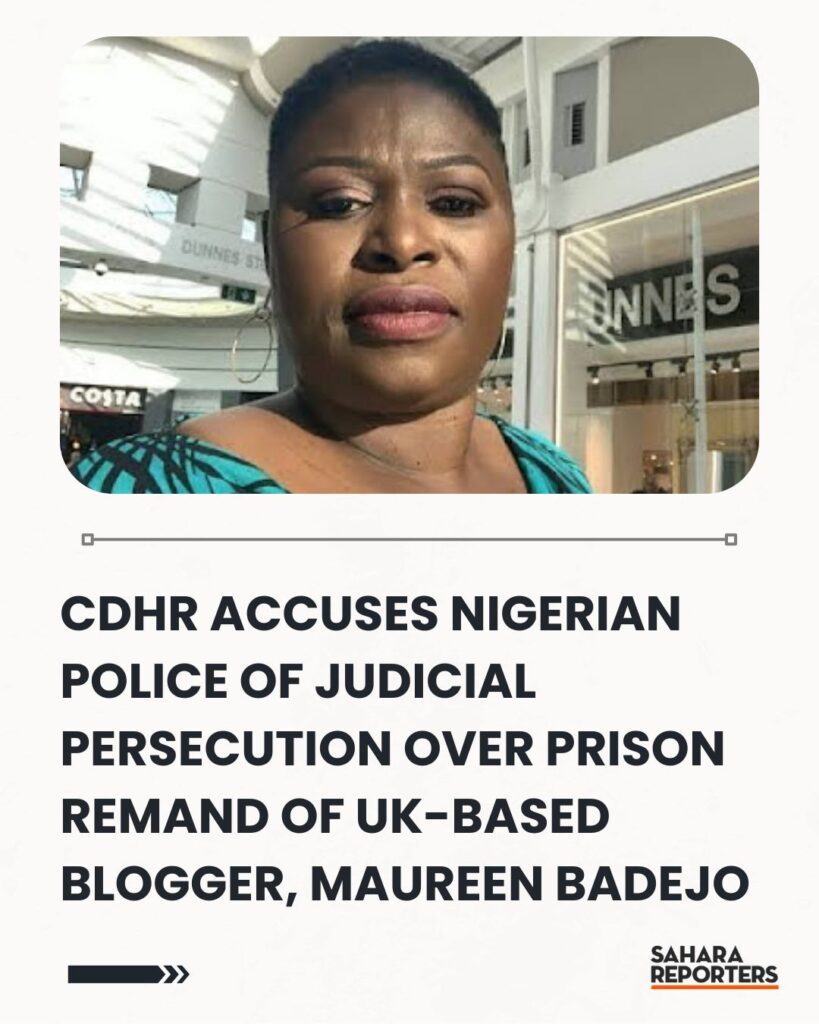

The Committee for the Defence of Human Rights (CDHR) has accused the Nigeria Police Force of engaging in what it described as “judicial persecution” following the arrest and remand of UK-based Nigerian blogger Maureen Badejo.
Badejo was reportedly arrested by police operatives after petitions were filed against her by two prominent Nigerian clerics — Johnson Suleman, General Overseer of Omega Fire Ministries, and Daniel Olukoya, founder of Mountain of Fire and Miracles Ministries (MFM).
According to reports, the blogger was taken into custody in Lagos on Friday by detectives attached to the Criminal Investigation Department (CID). She was later interrogated at the police cybercrime unit located in the Adekunle area of Yaba.
Following her arrest, Badejo was arraigned before the Federal High Court of Nigeria in Ikoyi. The case was heard in Court 7, presided over by Justice A. Aluko.
During the proceedings, police prosecutors reportedly introduced 11 amended charges against the blogger, replacing earlier charges that had been filed in February.
Badejo, who was represented by her lawyer Yinka Owoeye, pleaded not guilty to the allegations.
Despite her plea, the prosecution — acting on behalf of the Inspector General of Police of Nigeria — opposed her request for bail. Prosecutors argued that the blogger posed a potential flight risk and had continued to make online statements related to the matter.
The court subsequently ordered that Badejo be remanded at the **Nigerian Correctional Service facility in Kirikiri pending further proceedings. The case was adjourned to March 16, 2026.
Reacting to the development, CDHR criticised the actions of the police and the legal process surrounding the case, describing them as an attempt to silence critical voices.
Related News

DSS Tells Court Kaduna Man’s Tweets Could Drag Nigeria into Israel–Iran Conflict
Nigeria’s domestic intelligence agency, the Department of State Services (DSS), has told a court that social media posts allegedly made…

Nigeria Begins Evacuation of Citizens from Iran Amid Escalating Middle East Conflict
The Nigerian government has started evacuating its citizens from Iran as tensions in the Middle East intensify.

Nigeria Surpasses India in Number of People Living in Poverty – Report
New data shared by Statisense suggests that Nigeria now has a higher number of people living below the poverty line…
In a statement issued by its media team, the human rights organisation argued that the prosecution’s position suggested an attempt to criminalise online expression.
“Let this be clear: the Nigerian Police is admitting in open court that it wishes to jail a citizen for what she writes on the internet. This is the hallmark of a dictatorship, not a democracy,” the group said.
CDHR also criticised the court’s decision to refuse Badejo the opportunity to benefit from bail previously granted by a lower court.
According to the group, the decision resulted in the blogger being detained despite procedural developments in the case.
The organisation further alleged that prosecutors attempted to introduce an additional set of charges during the same court session involving a different complainant.
Badejo’s legal counsel objected to the move, arguing that presenting new charges without prior notice violated due process and prevented the defence from adequately preparing for the case.
The court upheld the objection and ruled that the new charges must be formally served to the defendant before any plea could be taken.
Following this decision, the case was adjourned until March 30, 2026, for proper arraignment.
CDHR stated that the sequence of events reflects what it believes to be a broader pattern of legal intimidation against individuals who express controversial opinions online.
The group called on the National Human Rights Commission of Nigeria to investigate the case as a potential violation of fundamental human rights.
It also urged the Inspector General of Police to ensure that law enforcement agencies do not misuse legal processes to suppress dissent or intimidate critics.
The organisation appealed to civil society groups and members of the public to defend the principle of freedom of expression, arguing that individuals should not face persecution for exercising their right to speak or publish opinions.
The case has since sparked debate among Nigerians, particularly regarding the balance between protecting reputations through defamation laws and safeguarding freedom of expression in the digital era.