Reno Omokri Tells Oxford Audience There Is No Christian Genocide in Nigeria
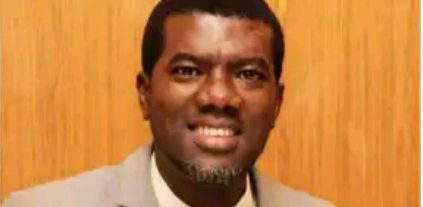

At an address delivered at Oxford University over the weekend, former presidential aide Reno Omokri firmly rejected claims that Christians in Nigeria are victims of a deliberate, government-enabled genocide. Speaking at the Oxford African Governance Forum, Omokri argued that the violence occurring across various regions—particularly in Northern Nigeria—has long-standing historical and economic roots that predate both Christianity and the modern Nigerian state.
The lecture, titled “Speaking Truth to Power in Contemporary Nigeria,” was delivered as part of the Michaelmas Conference Series at the University of Oxford. It was framed around his critique of international narratives that, in his view, misrepresent Nigeria’s security challenges. Omokri directly responded to US President Donald Trump’s recent designation of Nigeria as a “Country of Particular Concern” (CPC), a label applied to nations accused of permitting severe violations of religious freedom. Trump had claimed that Nigerian Christians were being systematically targeted and killed, even threatening military action if Abuja failed to curb the violence.
Omokri insisted that such claims were not grounded in factual evidence. He called the designation “condescending,” arguing that attributing Nigeria’s violence to a religious motive is a fundamental misunderstanding of the dynamics at play. To illustrate his point, he compared the claim to suggesting that the US government “allowed” the attempted assassination of Trump two years ago—an analogy he used to highlight the absurdity of assuming intent without proof.
Related News

DSS Tells Court Kaduna Man’s Tweets Could Drag Nigeria into Israel–Iran Conflict
Nigeria’s domestic intelligence agency, the Department of State Services (DSS), has told a court that social media posts allegedly made…

Nigeria Begins Evacuation of Citizens from Iran Amid Escalating Middle East Conflict
The Nigerian government has started evacuating its citizens from Iran as tensions in the Middle East intensify.

Nigeria Surpasses India in Number of People Living in Poverty – Report
New data shared by Statisense suggests that Nigeria now has a higher number of people living below the poverty line…
Throughout his lecture, Omokri leaned heavily on historical analysis and statistical data. He referenced the Global Terrorism Index, noting that terror-related deaths in Nigeria have dropped sharply over the last decade—from about 7,000 in 2015 to roughly 500 in 2025, a 90% decline. For him, this trajectory contradicts narratives that violence is worsening or that Christians are increasingly the primary targets.
Tracing the roots of violence further back, Omokri argued that clashes—especially farmer–herder conflicts in the North—are driven by competition for land and resources. He pointed to the precolonial Kwararafa Kingdom, which spanned parts of present-day Kebbi to Taraba, as an example of how land-based conflicts existed long before Christianity entered the region. He further cited colonial-era documentation from as early as 1924, which described farmer–herder clashes as an escalating security challenge even when Nigeria’s population was only 18 million.
By contrast, today’s population exceeds 200 million. Omokri contended that this massive demographic expansion has intensified the struggle for farmland, grazing routes, and economic survival, making the violence more a function of resource pressure than religion.
He acknowledged that successive governments have attempted various interventions, from all-year-round farming initiatives under the Fadama programme to the recent creation of a livestock development ministry by the Tinubu administration. However, he maintained that misunderstanding the root causes—especially through the lens of Western religious politics—makes any long-term solution more difficult.
Omokri also turned his criticism toward domestic political actors. He accused Labour Party presidential candidate Peter Obi of fueling international perceptions of “Christian genocide” after addressing a US congressional committee earlier in the year. According to Omokri, the global narrative intensified following Obi’s remarks. He further criticized Obi for defending the proscribed Indigenous People of Biafra (IPOB), even though its operatives, such as Simon Ekpa, have been convicted of terrorism, and leader Nnamdi Kanu is awaiting judgment.
In closing, Omokri urged both Nigerians and the international community to adopt a more balanced, data-driven approach to assessing the country’s security issues. He argued that transcending ethnic and religious framing is essential to building a stable and united Nigeria.