Nigeria vs DR Congo: DR Congo Clinches 2026 World Cup Play-Off Final After Dramatic Shootout
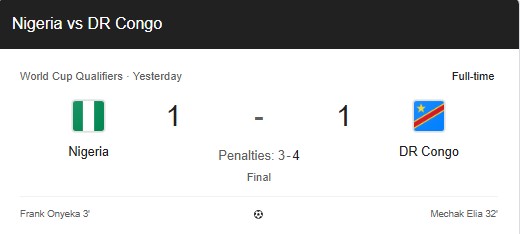

The Super Eagles of Nigeria missed out on qualification for the 2026 FIFA World Cup after a tightly fought playoff final against the Democratic Republic of Congo ended in a penalty shootout loss. The match, held on November 16, 2025, concluded 1–1 after 90 minutes, requiring spot kicks to determine the final African representative headed to the global tournament. DR Congo converted four of their five penalties, while Nigeria missed two crucial attempts, sealing their exit from the qualifying campaign.
The encounter began with high intensity as both teams approached the fixture as a decisive last step in a long and grueling qualifying series. Nigeria entered the match under pressure, having faced criticism throughout the qualification period for inconsistent performances and tactical instability. DR Congo, meanwhile, arrived with confidence after a strong showing in earlier rounds and were determined to capitalize on their momentum.
Related News
Kaduna State Government Takes Over Ahmadu Bello Stadium, Begins Major Reconstruction
The Kaduna State Government has officially taken over ownership of the iconic Ahmadu Bello Stadium from the Federal Government, following…

Nigeria Marks Fourth Consecutive Winter Olympics Appearance with Athlete Samuel Ikpefan
Nigeria has continued its growing presence in winter sports with its fourth consecutive appearance at the Winter Olympic Games.

Mikel Obi Reveals How Premier League Rule Blocked Manchester United Move
Former Super Eagles captain John Obi Mikel has disclosed that a Premier League work permit regulation stopped Manchester United from…
Nigeria opened the scoring in the first half through a well-constructed attacking move that momentarily lifted the spirits of supporters. However, DR Congo responded before the interval with an equalizer that shifted the dynamics of the match. The remainder of the game was marked by physical play, calculated midfield battles, and several missed chances on both sides. Despite Nigeria’s attempts to regain control, the Congolese team remained disciplined and compact, preventing the Super Eagles from gaining meaningful dominance.
As the second half progressed, clear opportunities grew scarce, and nerves became increasingly visible. Nigeria had moments of promise through individual runs and set-piece situations, but execution fell short when it mattered most. DR Congo also created moments of danger, particularly on the counterattack, testing Nigeria’s defensive organization. Neither team managed to produce a decisive breakthrough, leading the match into a penalty shootout.
The shootout unfolded with high tension. DR Congo maintained composure, converting their opening kicks with precision. Nigeria, on the other hand, suffered from early pressure, missing one of their initial attempts. A second miss later in the sequence placed the Super Eagles at a disadvantage they were unable to recover from. When DR Congo scored their fourth penalty, the contest was effectively settled, sparking celebrations among their players, technical crew, and supporters.
The defeat marks a significant setback for Nigeria, whose last World Cup appearance was in 2018. The outcome is expected to intensify discussions surrounding player selection, tactical approach, and long-term planning within the national team structure. Fans expressed disappointment across social platforms, noting the team’s fluctuating form and lack of clinical finishing as recurring concerns during the campaign.
For DR Congo, the result represents a historic achievement. Their qualification highlights the progress the team has made in recent years, characterized by improved squad depth, organized defensive play, and resilience in critical matches. The victory secures their place on the global stage in 2026 and serves as a major milestone for Congolese football.
As reactions continue to emerge across the football community, the result underscores the growing competitiveness within African football, where traditionally dominant nations face increasing challenges from rising teams determined to claim their place on the world stage.