Lagos Challenges NPA’s Port Diversion Strategy, Insists Policy Failures — Not Location — Cause Chronic Congestion
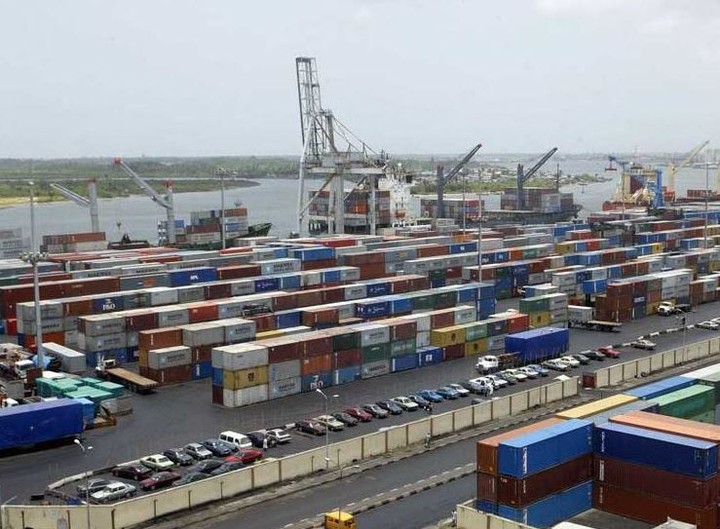

The Lagos State Government has openly criticized the Nigerian Ports Authority (NPA) for its recent decision to redirect operational focus away from Lagos to the Warri Port Complex. The NPA argues the move is necessary to decongest Apapa and Tin Can Island — both of which have suffered years of crippling gridlock. But Lagos insists the idea misses the point entirely.
Operational data published by the NPA shows early gains at Warri and Koko ports, including improved cargo throughput and faster turnaround time. These metrics were presented by the NPA as proof that shifting traffic away from Lagos will bring national-level benefits. But senior Lagos officials say the narrative is misleading.
Adekoya Hassan, Senior Special Assistant to Governor Babajide Sanwo-Olu on Transportation and Logistics, dismissed the NPA’s justification, insisting that Lagos ports are not inherently inefficient. Instead, he argued that the NPA has failed for years to reform its internal systems, allowing corruption, policy misalignment, and institutional bottlenecks to become the real engines of congestion.
Related News
Lagos Government Asked Landlord to Pay ₦400,000 to Unseal Her House Despite Having Complete Documents
A Lagos landlord shared a shocking experience after returning home to find her newly built house sealed by officials despite…
Lagos Ready for State Police, Says LNSA Chief Ifalade
Lagos State has declared its readiness for the establishment of state police in Nigeria, with the leadership of the Lagos…
Lagos State Holds Nigeria’s Largest Subnational Domestic Debt at ₦1.05 Trillion, Data Shows
New data from Nigeria’s Debt Management Office indicates that Lagos State holds the largest domestic debt among all states, standing…
According to Hassan, the NPA’s redirection strategy is nothing more than a surface-level reaction to a much deeper structural problem. Speaking to Vanguard, he said the gridlock that plagues Apapa is not caused by Lagos, but by “entrenched institutional practices within the NPA” that have resisted reform for too long. He noted that Governor Sanwo-Olu has repeatedly invested in traffic control, road rehabilitation, and emergency intervention. Yet progress remains undermined by systemic failures from the federal side.
Among the problems he highlighted were excessive toll points created by various agencies, irregularities in the e-call-up system, blatant racketeering, the abuse of authority by senior port officials, and deliberate misinformation circulated by truck unions benefiting from the chaos. These practices, he said, artificially sustain the gridlock, frustrate logistics operators, and distort public perception.
Hassan argued that unless the NPA reforms its operational framework — modernizing workflows, enforcing accountability, improving digital systems, and eliminating corrupt toll structures — any alternative port will eventually face the same issues. The Warri Port may experience early momentum, but without structural changes, he warned, that momentum will collapse under the same inefficiencies that cripple Lagos today.
According to him, the problem is not geographic; it is administrative. “If the NPA genuinely updated its systems to reflect Nigeria’s current economic realities,” he said, “congestion in Apapa would drop significantly. The shift to Warri wouldn’t even be necessary — and certainly wouldn’t be a popular choice among stakeholders.”
Hassan further stressed that the federal government must not be given a distorted picture of what is happening at the ports. He insisted President Bola Tinubu should be briefed honestly, not persuaded by cosmetic statistics that hide long-standing institutional failures. He argued that the real danger lies in a policy shift that ignores root causes, allowing inefficiency to travel from Lagos to Warri — and, eventually, to every major port in the country.
While public reactions online have devolved into ethnic arguments and political accusations, the underlying policy debate remains clear: Lagos believes the NPA is attempting to relocate traffic instead of fixing the system that processes it. And until that system is cleaned up, modernized, and protected from racketeering, Nigeria will keep repeating the same cycle — no matter which port becomes the new centerpiece of national logistics.