Lagos State Holds Nigeria’s Largest Subnational Domestic Debt at ₦1.05 Trillion, Data Shows
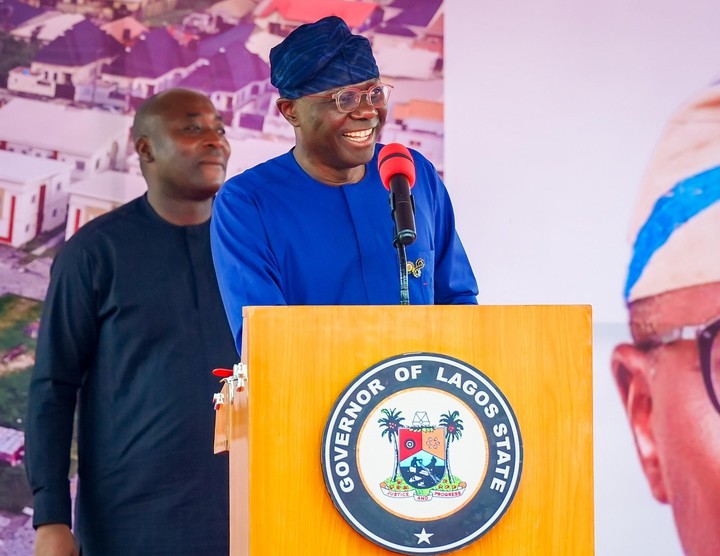

Lagos State currently holds the largest domestic debt among Nigeria’s subnational governments, with its obligations reaching ₦1.05 trillion as of September 30, 2025, according to data released by the Debt Management Office (DMO).
The figures, compiled for the third quarter of 2025, show that Lagos alone accounts for approximately 26.25 percent of the ₦4.00 trillion total domestic debt owed by all state governments across Nigeria. The data highlights the outsized financial position of Lagos within the country’s subnational borrowing landscape.
When grouped by geopolitical zones, the South West region holds the highest domestic debt burden among Nigeria’s six zones. The region’s total domestic debt stands at ₦1.43 trillion, with Lagos responsible for roughly 73 percent of that amount.
Other geopolitical zones trail significantly behind. The South South region carries domestic debt totaling ₦1.00 trillion, followed by the North Central zone with ₦496.05 billion. The North East region has accumulated ₦482.02 billion in domestic obligations, while the South East holds ₦375.04 billion. The North West has the lowest domestic debt burden among the zones, standing at ₦215.43 billion.
A closer breakdown of individual states reveals that Lagos leads by a wide margin. The state’s ₦1.05 trillion debt is considerably higher than the domestic obligations of other highly indebted states.
Related News

Lagos Government Asked Landlord to Pay ₦400,000 to Unseal Her House Despite Having Complete Documents
A Lagos landlord shared a shocking experience after returning home to find her newly built house sealed by officials despite…

Lagos Ready for State Police, Says LNSA Chief Ifalade
Lagos State has declared its readiness for the establishment of state police in Nigeria, with the leadership of the Lagos…
Lagos to Expand Red Line Capacity With Three New Eight-Coach Trains by Q3 2026
The Lagos State Government has announced plans to add three new eight-coach trains to the Red Line rail system by…
Rivers State ranks second with ₦381.21 billion in domestic debt, followed by Delta State with ₦247.17 billion. Enugu State occupies the fourth position with ₦194.72 billion, while Ogun State rounds out the top five with ₦168.09 billion.
Other states among the top twelve most indebted include Bauchi State with ₦158.20 billion, Niger State with ₦143.50 billion, and Cross River State with ₦141.94 billion. Further down the list are Benue State with ₦107.25 billion, Akwa Ibom State with ₦95.51 billion, Imo State with ₦90.51 billion, and Taraba State with ₦89.74 billion.
An analysis of the figures reveals that Lagos’ domestic debt exceeds the combined debt of the next four most indebted states. Rivers, Delta, Enugu, and Ogun together hold domestic debt totaling ₦991.19 billion—still less than Lagos’ ₦1.05 trillion obligation.
The scale of Lagos’ borrowing has sparked discussions among analysts and observers about the relationship between economic capacity and government debt. Lagos remains Nigeria’s largest economic hub, generating the highest internally generated revenue (IGR) among the country’s states and hosting a large share of corporate headquarters, financial institutions, and major ports.
Because of its economic size and infrastructure demands, Lagos often relies on borrowing to finance large-scale development projects, including transportation networks, urban infrastructure, and public services required for its rapidly growing population.
Supporters of the state’s borrowing strategy argue that high debt levels can be sustainable when matched with strong revenue generation and economic output. Critics, however, say that debt levels should be evaluated alongside improvements in public services, infrastructure, and living standards.
Domestic debt refers to funds borrowed by governments from within the country, typically through bonds, treasury instruments, and loans from local financial institutions. For state governments in Nigeria, such borrowing is often used to fund capital projects, budget deficits, and long-term development initiatives.
As Nigeria continues to face fiscal pressures and infrastructure needs across its states, the scale and sustainability of subnational borrowing are expected to remain an important topic in economic and policy discussions.