Senator Orji Uzor Kalu Says Over 30,000 Lives Lost to Agitations Linked to Nnamdi Kanu
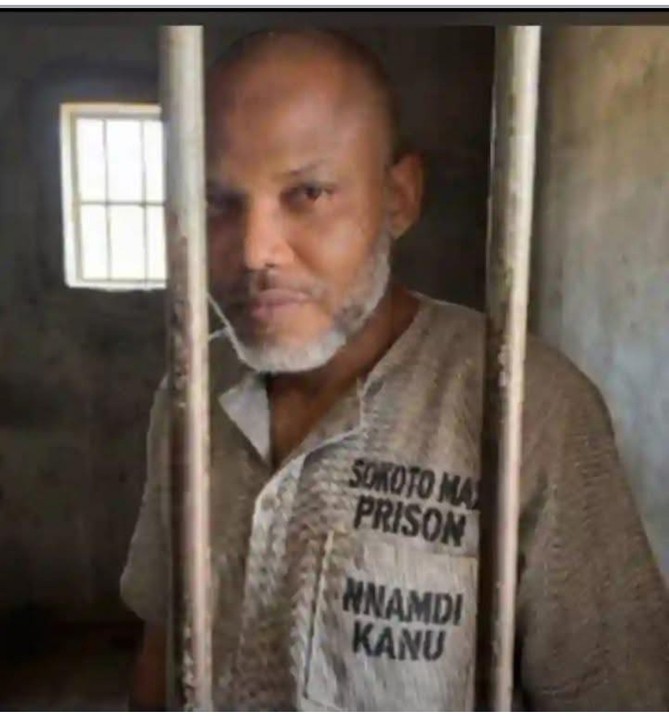

In a renewed call for a political resolution to the long-running tension in the South-East, the Senator representing Abia North, Orji Uzor Kalu, has stated that more than 30,000 people have been killed due to the agitations linked to the convicted leader of the Indigenous People of Biafra (IPOB), Nnamdi Kanu. Kalu made the claim during an appearance on Channels Television’s Politics Today, where he discussed the fallout of Kanu’s recent conviction on terrorism-related charges.
Kalu, a former governor of Abia State, argued that public conversations around the unrest have been overly centered on clashes between security operatives and agitators while ignoring a broader and deeper humanitarian crisis. He insisted that thousands of ordinary citizens, traders, and business owners bore the brunt of the violence triggered by the agitation, with many losing their lives, livelihoods, and assets.
“It’s not the time for noise-making or fighting,” he said. “It’s a time for sober reflection. Do you know that over 30,000 Igbos were killed? People who have shops lost their businesses.” He recalled his personal experience as a businessman in Aba, emphasizing that traders in the region suffered devastating losses. He narrated a particular case involving his late mother’s friend, whose rice business collapsed during the unrest after her shop was destroyed, leaving her bankrupt and unable to repay debts.
Related News

DSS Tells Court Kaduna Man’s Tweets Could Drag Nigeria into Israel–Iran Conflict
Nigeria’s domestic intelligence agency, the Department of State Services (DSS), has told a court that social media posts allegedly made…

Nigeria Begins Evacuation of Citizens from Iran Amid Escalating Middle East Conflict
The Nigerian government has started evacuating its citizens from Iran as tensions in the Middle East intensify.

Nigeria Surpasses India in Number of People Living in Poverty – Report
New data shared by Statisense suggests that Nigeria now has a higher number of people living below the poverty line…
Kalu maintained that the agitation should be approached with strategic political dialogue, not heightened rhetoric or antagonism. He noted that he has quietly engaged the Federal Government for years in pursuit of a political settlement—dating back to the Buhari administration. According to him, his interventions in 2016 and 2017 contributed to securing Kanu’s earlier release on bail, despite intense political pressure and security concerns.
He also stated that his media organization, The Sun Newspaper, came under scrutiny for its reporting on Kanu. Kalu claimed that former President Muhammadu Buhari’s administration made repeated attempts to censor coverage of the IPOB leader, but he resisted, insisting on press freedom.
On Kanu’s conviction, Kalu defended Justice James Omotosho, saying that judicial decisions must be respected even when disagreed with. “Nobody should question the decision of Justice Omotosho. If you are displeased, you go to the appellate court,” he said. He criticized what he described as Kanu’s aggressive conduct during the trial, contrasting it with his own composure while facing criminal charges years ago.
The Federal High Court in Abuja recently convicted Kanu on seven terrorism-related charges, sentencing him to life imprisonment on several counts, in addition to other long-term sentences without an option of a fine. The charges stemmed from IPOB’s activities, destruction of public infrastructure, alleged killings, and sit-at-home directives that contributed to economic paralysis in the region.
Reactions to Kalu’s comments were deeply polarized, with many social media users describing the death toll as alarming, while others questioned the figure or accused Kalu of political motivated positioning. Some commenters insisted that political leaders must prioritize peacebuilding, while others argued that the long-term instability in the region has roots in federal actions preceding IPOB’s escalation.
Despite the divided opinions, Kalu maintained that only non-emotional, strategic engagement could lead to a sustainable resolution. “Let Igbos stop being emotional,” he said. “I want us to settle down, go on our knees and find a way that a man can be released. It’s part of my job to do it.”