Governor Soludo Presents ₦757.88 Billion Anambra 2026 Budget, Sparks Mixed Reactions
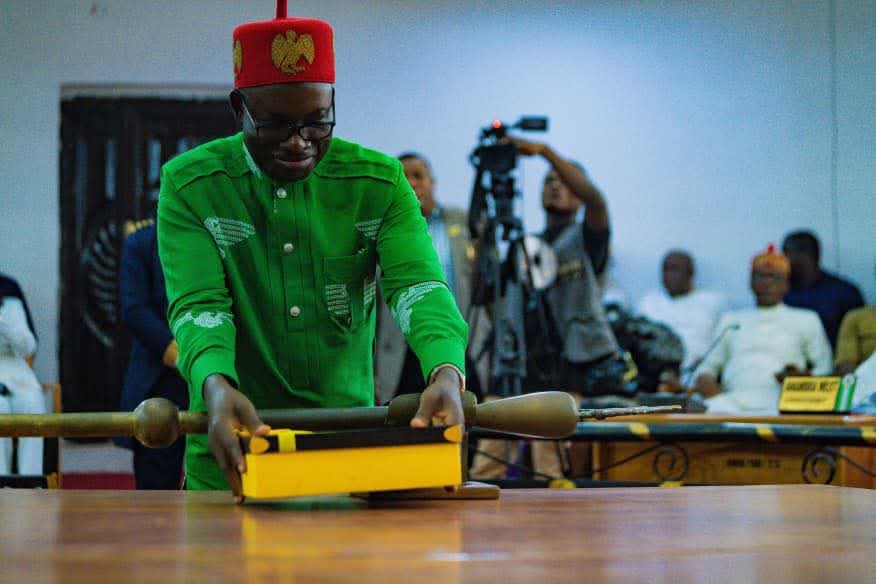

Governor Chukwuma Charles Soludo, CFR, has officially presented the draft 2026 Budget Proposal to the Anambra State House of Assembly, outlining a total spending plan of ₦757.88 billion. The budget, themed “Changing Gears 3.0: Solution Continues,” reflects the administration’s intention to sustain ongoing reforms while accelerating infrastructural and economic development across the state.
The proposed budget structure allocates ₦595.3 billion—representing a substantial 79%—to capital expenditure. This emphasis demonstrates Soludo’s continued commitment to projects that directly improve the state’s physical and economic environment, including roads, bridges, urban renewal, transportation systems, and public utilities. The recurrent expenditure is pegged at ₦162.6 billion (21%), covering administrative operations, salaries, and essential services required to keep government institutions functioning.
Central to the proposal is a projected deficit of ₦225.7 billion, amounting to 29.8% of the total budget size. According to the governor, this deficit is a strategic financing approach meant to fast-track economic growth and position Anambra as a “livable, prosperous, and smart homeland” for present and future generations. The government plans to bridge the deficit through a mix of internally generated revenue, grants, development financing, and partnerships.
Related News
Global Uncertainty: Governor Mbah Challenges Enugu MDAs to Meet ₦870 Billion Internally Generated Revenue Target
Governor Peter Mbah has urged Enugu State ministries, departments, and agencies to intensify efforts toward achieving a ₦870 billion internally…
Soludo emphasized that his administration’s focus remains human capital development, security enhancement, infrastructure expansion, and improved social welfare. He described the 2026 budget as a forward-thinking financial plan designed to consolidate reforms already underway while scaling up critical interventions across all local government areas.
However, the budget presentation quickly triggered intense public reactions. Critics argued that the proposal lacked adequate transparency regarding the performance of the current budget cycle. Some commenters described the governor as offering “nothing innovative,” insisting that his administration had not shown distinct progress compared to others in the country. They also accused him of focusing more on political disagreements, particularly with former Governor Peter Obi, rather than delivering measurable governance outcomes.
Others questioned the size of the budget relative to the state’s economic challenges. Concerns were raised about rising poverty, inflation, and shrinking revenue capacity across Nigeria. One commentator highlighted that budgets at both the federal and state levels have increasingly become unrealistic, noting that large portions often go unimplemented due to revenue shortfalls and inefficiencies in execution. He argued that Nigeria’s broader economic challenges—low productivity, high inflation, and widespread poverty—mean that even ₦700 billion may not be sufficient to meet the needs of over four million residents.
Conversely, supporters defended the administration, applauding Soludo’s vision and describing him as one of the most competent governors in the country. They argued that his focus on long-term structural transformation, including road construction, digital infrastructure, and environmental reforms, places Anambra on a stronger developmental path. Some supporters went as far as labeling him “the best governor so far,” while others maintained that his approach would yield more tangible results than the more celebrated governors in other states.
The reactions also touched on inter-state comparisons, with some observers noting that if Anambra could propose ₦757.88 billion, larger states like Oyo should be capable of presenting even higher budgets, given their population and revenue potential. This sparked a broader conversation about fiscal capacity, governance quality, and development priorities across Nigerian states.
Despite conflicting opinions, one theme remained clear: the budget has ignited important discourse on accountability, governance standards, and the economic realities facing Nigerians. As the House of Assembly begins its review of the proposal, residents of Anambra will remain watchful, eager to see whether the promises embedded in the 2026 budget will translate into visible and measurable change.