Abducted Kaduna Anglican Priest, Venerable Edwin Achi, Confirmed Dead After Weeks in Captivity
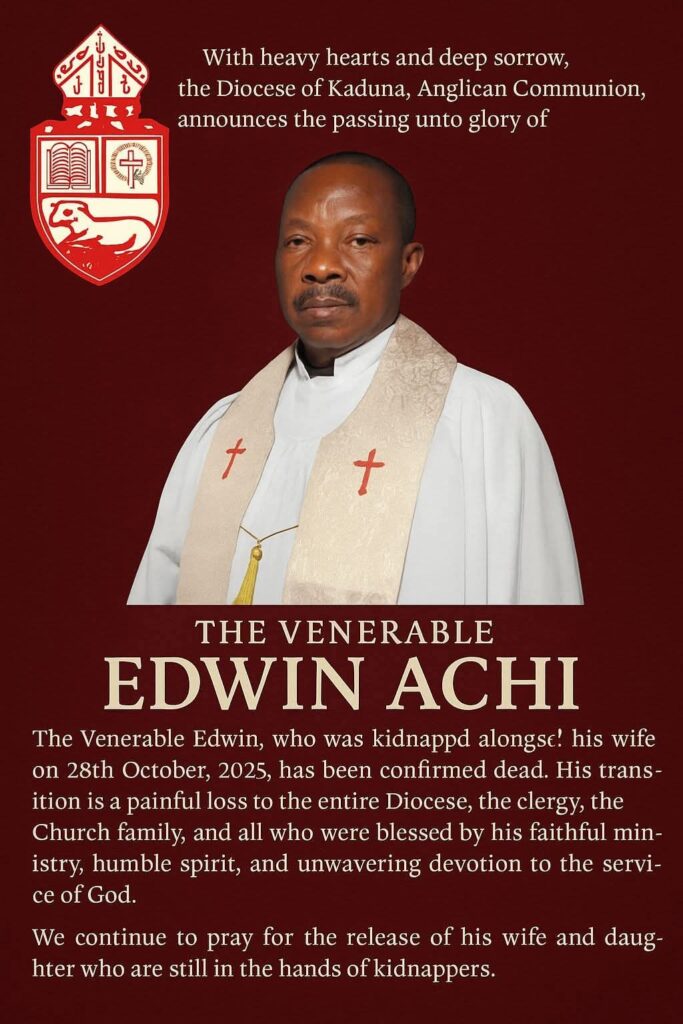

The Anglican community in Kaduna and across Nigeria has been thrown into profound grief following the confirmation of the death of Venerable Edwin Achi, a respected priest abducted by bandits on October 28. After weeks of anxiety, prayers, and public appeals for his safe release, the Diocese of Kafanchan announced on November 26 that the cleric had died in captivity, describing the loss as heartbreaking and deeply devastating.
According to the Diocese, Venerable Achi and his wife were kidnapped in late October, a tragedy that immediately sparked widespread concern among parishioners, colleagues, and Christian associations. Throughout the weeks that followed, church leaders and family members held onto hope, issuing appeals to the government, security agencies, and President Bola Ahmed Tinubu to intervene. Those hopes were extinguished with confirmation of his passing, a development that has reignited debates on the persistent insecurity ravaging many parts of Northern Nigeria.
Related News

DSS Tells Court Kaduna Man’s Tweets Could Drag Nigeria into Israel–Iran Conflict
Nigeria’s domestic intelligence agency, the Department of State Services (DSS), has told a court that social media posts allegedly made…

Nigeria Begins Evacuation of Citizens from Iran Amid Escalating Middle East Conflict
The Nigerian government has started evacuating its citizens from Iran as tensions in the Middle East intensify.

Nigeria Surpasses India in Number of People Living in Poverty – Report
New data shared by Statisense suggests that Nigeria now has a higher number of people living below the poverty line…
In its official statement, the Diocese of Kafanchan expressed sorrow over the “cruel kidnapping” and the tragic loss that has now befallen both the church and the family. They extended condolences to the Anglican Diocese of Kaduna and offered earnest prayers for the priest’s wife, who remains missing. Church leaders pleaded for her safe return, urging Nigerians to join in praying for divine protection and comfort in this difficult period.
The news triggered an emotional wave of reactions online as Nigerians lamented not only the personal tragedy but also the broader implications for national security. Many commenters described the killing as a reflection of a collapsing security architecture, expressing frustration that clergy members and other civilians continue to be targeted by armed groups. Some mourners condemned the government’s handling of insecurity, insisting that the continued abductions and killings of Christians in the region amount to a form of “ongoing genocide.”
Others called for urgent reforms, including the establishment of state police, arguing that Nigeria’s centralized policing system has repeatedly shown its limitations. Some comments highlighted the increasing danger for Christian leaders in certain regions, with several users accusing the government of failing to protect vulnerable communities.
The tragedy also reignited political tensions, as some commenters directed blame toward current federal leadership, suggesting that the administration has not demonstrated the resolve required to confront the escalating violence. A few voices recalled previous abductions, pointing out that priests are rarely released alive, further deepening fears among religious communities.
Friends and neighbors of the deceased priest described him as kind, warm, and deeply committed to his congregation. One commenter who said they lived next to the family in Kaduna remembered him as a welcoming figure who treated everyone with dignity and compassion. His death, they noted, is not just a national tragedy but a painful personal loss for all who knew him.
As messages of grief continue to pour in, many Nigerians are left grappling with yet another reminder of the country’s security crisis—one that has cost thousands of lives and shows little sign of abating. For the Anglican community, the death of Venerable Edwin Achi is a wound that will linger, and a stark call for stronger protections for religious leaders and civilians across the nation.