Tinubu Absent as Obasanjo Makes First Visit to Aso Rock Since Inauguration
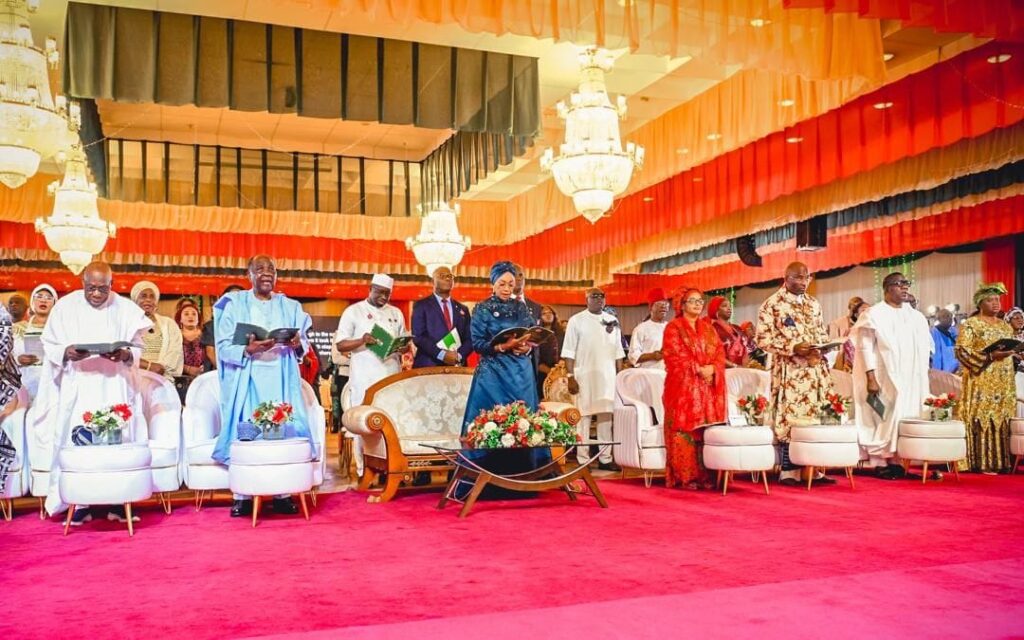

Former Nigerian President Olusegun Obasanjo on Friday visited the Presidential Villa in Abuja for the first time since President Bola Ahmed Tinubu was sworn into office, marking a notable moment given Obasanjo’s long-standing criticisms of the current administration. The visit, however, did not involve a direct meeting with President Tinubu, who was absent from the event.
Obasanjo’s appearance at Aso Rock took place during the 2025 Service of Nine Lessons and Carols, an annual Christian event hosted by the First Lady, Senator Oluremi Tinubu. The programme, themed “Emmanuel: God With Us,” brought together past and present national figures, religious leaders, and members of the diplomatic community for a solemn end-of-year reflection.
The former president’s presence was particularly striking because he has largely stayed away from the Presidential Villa since the inauguration of the Tinubu administration. Obasanjo, who has emerged as one of Tinubu’s most vocal critics, notably declined invitations to previous high-level engagements, including meetings of the Council of State, fuelling speculation about a strained relationship between both leaders.
In recent months, Obasanjo has repeatedly raised concerns about Nigeria’s leadership and global standing, often drawing comparisons with past administrations. At the height of a diplomatic controversy involving comments attributed to former U.S. President Donald Trump—who warned that the United States could deploy troops to Nigeria if the government failed to stop the “killing of Christians”—Obasanjo appeared to take an indirect swipe at the Tinubu administration. He recalled a time when Nigeria commanded significant international respect, stating that during his tenure, major global powers such as the United States would always inform Nigeria before taking decisive actions in Africa.
Related News
Presidency Spent ₦34.39bn on Forex for Foreign Travel and Official Obligations in Two Years
Findings from GovSpend, a public finance tracking platform managed by BudgIT, show that Nigeria’s Presidency spent at least ₦34.39 billion…
President Tinubu Returns to Nigeria After Türkiye State Visit, Reactions Trail His Arrival
President Bola Ahmed Tinubu has returned to Nigeria following a state visit to Türkiye, drawing mixed reactions from Nigerians across…

Presidency Explains Tinubu’s Brief Loss of Balance During Official Visit to Turkey
The Presidency has addressed public concern following a viral video showing President Bola Ahmed Tinubu briefly losing his balance during…
“They were not seeking permission, but they would inform us,” Obasanjo said at the time, underscoring what he described as Nigeria’s diminished influence on the global stage. Although he did not directly reference President Tinubu in those remarks, they were widely interpreted as a critique of the current government’s foreign policy posture.
Despite these tensions, Obasanjo played a visible role during Friday’s service. According to a statement released by the First Lady’s media office, the former president read the Second Lesson from Genesis 22:15–18, which focuses on God’s covenant and the blessings tied to obedience and faithfulness. His participation was received with applause from the congregation.
Also in attendance was former Head of State, General Yakubu Gowon, who read the First Lesson from Genesis 3:8–12, reflecting on humanity’s early encounter with accountability before God. Senator Oluremi Tinubu, as host, read the Ninth Lesson from John 1:1–14, emphasizing the message of the Word made flesh and dwelling among humanity. The service concluded with the congregation standing to sing the traditional hymn “O Come, All Ye Faithful.”
President Tinubu’s absence from the event did not go unnoticed and quickly became a topic of discussion online. Supporters of the president pointed out that Tinubu is a Muslim and that the service was a Christian religious programme, arguing that his absence should not be politicised. Others, however, viewed the situation as symbolically significant, given Obasanjo’s attendance and history of sharp public commentary on national leadership.
As expected, the event triggered a wave of reactions on social media, with opinions sharply divided along political, religious, and ethnic lines. While some commentators dismissed the visit as purely ceremonial, others framed it as another chapter in Nigeria’s complex political theatre, where symbolism often carries as much weight as policy.
The Service of Nine Lessons and Carols remains an annual tradition observed by Christians during the Christmas season, focusing on scripture readings that trace the biblical narrative of salvation. Yet this year’s edition, attended by two former heads of state and marked by the president’s absence, has once again highlighted how even religious gatherings in Nigeria can quickly take on political meaning.
Whether Obasanjo’s visit signals a thaw in relations or simply reflects respect for a national tradition remains unclear. What is certain is that the appearance has once again drawn public attention to the delicate and often contentious relationships among Nigeria’s political elite.