“I’ve Never Had ₦5 Million”: Bandit Leader Bello Turji Denies Receiving Funds During Zamfara Peace Talks
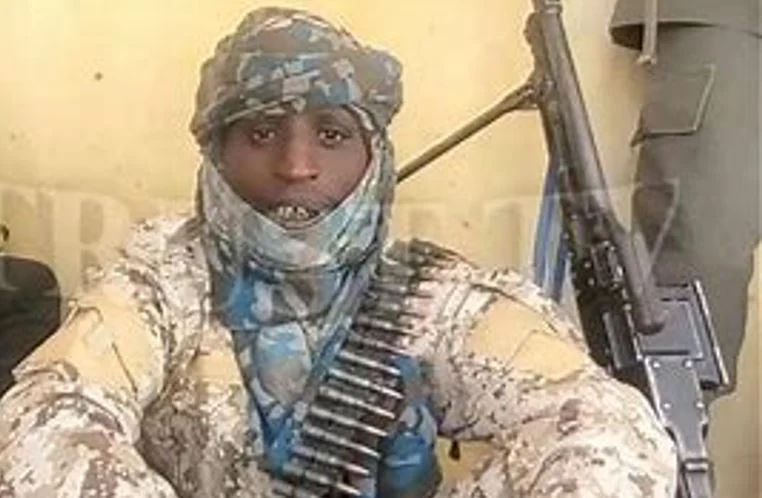

Notorious bandit leader Bello Turji has publicly denied claims that he received money or vehicles from the Zamfara State Government during previous peace negotiations, declaring that he has never possessed ₦5 million since birth. Turji made the remarks in a video that has gone viral on social media, responding to allegations made by Musa Kamarawa, a former government-appointed peace mediator involved in dialogue with armed groups in the North-West.
In the video, Turji rejected accusations that his activities were motivated by personal financial gain, describing the claims as false and misleading. His statement followed comments by Kamarawa, who alleged that Turji received up to ₦30 million during several meetings with the former governor of Zamfara State, Bello Muhammad Matawalle, now Nigeria’s Minister of State for Defence. According to Kamarawa, the meetings reportedly took place at the Government House in Gusau, where vehicles were also allegedly distributed to armed group leaders as part of confidence-building measures.
Turji, however, categorically denied the allegations. Swearing by his faith, he stated that he had never held even ₦5 million in his lifetime and dismissed the reported ₦30 million payment as a fabrication. He accused Kamarawa of betraying the trust that existed during the peace process and of providing what he described as false testimony. According to Turji, the mediator was appointed by the Zamfara State Government to facilitate peace, but later turned around to make statements that undermined the credibility of the talks.
Related News

DSS Tells Court Kaduna Man’s Tweets Could Drag Nigeria into Israel–Iran Conflict
Nigeria’s domestic intelligence agency, the Department of State Services (DSS), has told a court that social media posts allegedly made…

Nigeria Begins Evacuation of Citizens from Iran Amid Escalating Middle East Conflict
The Nigerian government has started evacuating its citizens from Iran as tensions in the Middle East intensify.

Nigeria Surpasses India in Number of People Living in Poverty – Report
New data shared by Statisense suggests that Nigeria now has a higher number of people living below the poverty line…
In his remarks, Turji also attempted to distance himself from political actors, insisting that neither he nor his group was acting on behalf of politicians or external sponsors. He claimed that his actions were not directed or supported by any individual or political interest group, stressing that “there is no human being backing us.” He framed his comments as a personal defence, saying he was speaking “before Allah alone.”
Beyond denying the allegations, Turji shifted blame to earlier political leadership in the region, accusing former officeholders of contributing to insecurity long before the administration of Bello Matawalle. He specifically named former Sokoto State governor Attahiru Bafarawa and former Zamfara State governor Senator Ahmed Yerima, calling for their arrest and investigation over their alleged roles in the deterioration of security in the North-West. These accusations were not accompanied by detailed evidence but added another layer to the long-running debate over political responsibility for banditry in the region.
Turji did not address whether he has been involved in any recent negotiations with the Federal Government, nor did he comment on ongoing military operations targeting armed groups. Instead, his statements focused on rebutting claims about financial inducements and responding directly to accusations made against him.
The video and the wider controversy have sparked intense reactions among residents of Sokoto and Zamfara states, many of whom fear that insecurity is increasingly being politicised ahead of the 2027 general elections. Alhaji Sani Aliyu, a community leader in Sokoto metropolis, said the public exchanges reflect political positioning rather than a genuine concern for justice or security. According to him, ordinary citizens continue to bear the brunt of violence while political actors trade accusations.
Similarly, civil society activist Malam Abdullahi Bello warned that using banditry and insecurity as political tools could further destabilise the region. He argued that framing violence within partisan narratives risks deepening mistrust and distracting from the need for sustainable security solutions that address the root causes of armed violence.
Despite Turji’s denials, Nigerian security agencies have consistently identified him as one of the most dangerous bandit leaders operating in the North-West. He remains on security watchlists for terror-related activities, including attacks on communities, kidnappings, and the disruption of farming and trade. Military and security operations continue across parts of Sokoto, Zamfara, and neighbouring states as authorities seek to dismantle armed networks and restore stability.
As the debate continues, the incident has once again highlighted the complexities surrounding past peace negotiations with armed groups, the transparency of such engagements, and the broader challenge of addressing insecurity without allowing it to become a tool for political contestation.