Trump “More Than Happy” With Dangote Refinery, Says Aliko Dangote
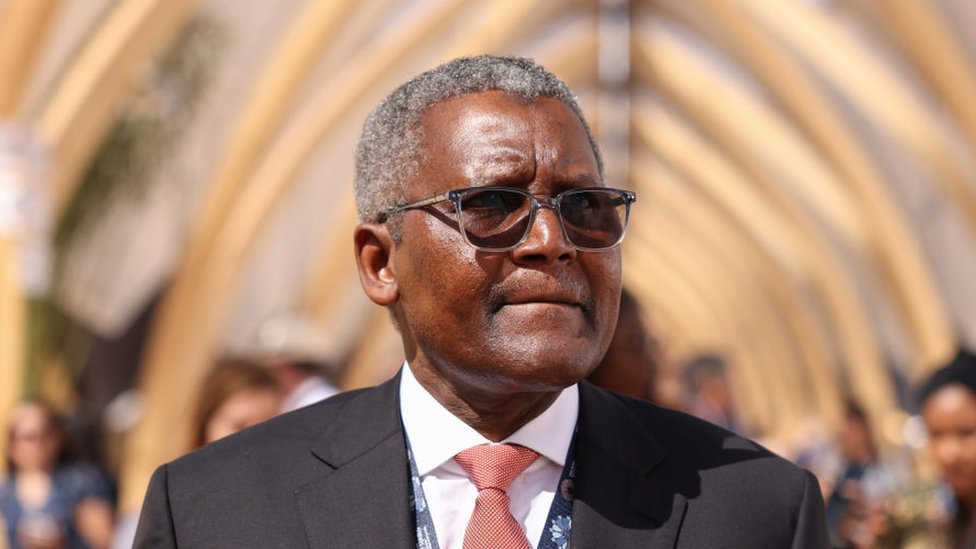

Nigerian industrialist and President of the Dangote Group, Alhaji Aliko Dangote, has refuted widespread claims suggesting that the United States is opposed to the operations or financing of the Dangote Petroleum Refinery. According to him, such reports are unfounded, as the US remains one of the refinery’s major crude oil suppliers and beneficiaries of its large-scale operations.
Dangote made the clarification during a press briefing held on Sunday at the Dangote Petroleum Refinery in Lekki, Lagos State. He explained that contrary to speculation in some quarters, the United States does not view the refinery as a competitor or a strategic threat. Instead, the country benefits directly from the significant volume of crude oil it supplies to Nigeria for refining.
“The idea that Trump or the United States is unhappy with our refinery is not correct,” Dangote said. “Trump is more than happy with our refinery because of the scale of business involved. The US is one of our major suppliers of crude oil.”
He noted that global oil trade is driven by commercial interests rather than sentiment or rivalry, adding that the size of the Dangote Refinery makes it a key player in international energy markets. According to him, the refinery’s operations have created a mutually beneficial trade relationship between Nigeria and several crude-producing countries, including the United States.
Dangote also disclosed that despite Nigeria being a major crude oil producer, the country is currently unable to meet the refinery’s feedstock requirements from domestic production alone. As a result, Nigeria has had to import crude oil from multiple sources to sustain refining operations.
Related News

DSS Tells Court Kaduna Man’s Tweets Could Drag Nigeria into Israel–Iran Conflict
Nigeria’s domestic intelligence agency, the Department of State Services (DSS), has told a court that social media posts allegedly made…
Nigeria Begins Evacuation of Citizens from Iran Amid Escalating Middle East Conflict
The Nigerian government has started evacuating its citizens from Iran as tensions in the Middle East intensify.

Nigeria Surpasses India in Number of People Living in Poverty – Report
New data shared by Statisense suggests that Nigeria now has a higher number of people living below the poverty line…
“We are not getting enough crude locally,” Dangote explained. “That is why we buy from Ghana and a few other African countries. We also buy from the United States.”
He described the US as one of Nigeria’s most important crude oil suppliers, stressing that the volume of trade involved underscores why claims of American opposition to the refinery do not hold water. According to Dangote, Nigeria currently purchases an average of over 100 million barrels of crude oil from the United States annually.
He further revealed that if crude supply arrangements are expanded, Nigeria could potentially import as much as 200 million barrels of crude oil from the US each year. Such volumes, he said, represent significant business for American oil producers and exporters, reinforcing the notion that the refinery strengthens, rather than undermines, US–Nigeria trade relations.
In addition to importing crude, Dangote noted that Nigeria also exports refined petroleum products to the United States. He disclosed that aviation fuel and gasoline produced in Nigeria are supplied to the US market, highlighting the reciprocal nature of the energy relationship between both countries.
According to him, the refinery’s business model aligns with global energy trade practices, where countries both import and export crude and refined products depending on market needs, pricing, and logistical considerations. He stressed that even the world’s largest oil producers, including the United States, routinely import crude oil despite having substantial domestic reserves.
Dangote’s remarks come amid public debate and speculation over the geopolitical implications of the Dangote Refinery, which is Africa’s largest single-train refinery. Some commentators had suggested that powerful foreign interests might be uncomfortable with Nigeria refining petroleum products at such a massive scale. However, Dangote maintained that these narratives overlook the commercial realities of the global oil market.
He added that the refinery’s operations are designed to complement global supply chains, reduce Nigeria’s dependence on imported refined products, and create economic value for both local and international partners.
By addressing the issue directly, Dangote sought to reassure Nigerians that the refinery’s operations are not facing international hostility, but rather are embedded within mutually beneficial trade relationships. He reiterated that the focus should remain on improving domestic crude production and infrastructure so Nigeria can maximise the full benefits of its refining capacity.
The Dangote Petroleum Refinery, with a capacity of 650,000 barrels per day, is expected to play a transformative role in Nigeria’s energy sector, reducing fuel imports, conserving foreign exchange, and positioning the country as a net exporter of refined petroleum products.