Petrol Battlefield: Dangote Refinery and Importers Locked in a High-Stakes Price War
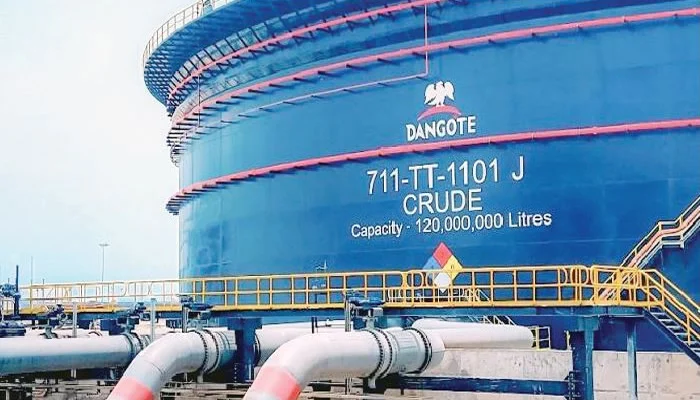

Nigeria’s downstream petroleum sector is currently witnessing one of its most intense confrontations in recent history, as the Dangote Petroleum Refinery and fuel importers battle for market dominance through aggressive price cuts. The price war, sparked by Dangote Refinery’s decision to slash the gantry price of Premium Motor Spirit (PMS), has reshaped pricing dynamics across depots and filling stations nationwide, leaving significant financial casualties in its wake.
The Dangote Refinery recently reduced its ex-depot petrol price from N828 per litre to N699 per litre, a N129 cut that immediately disrupted the cost structure of imported fuel. Industry data indicate that this move could result in monthly losses of up to N102.48 billion for fuel importers, who now struggle to compete with locally refined petrol priced far below their landing costs. At the same time, the refinery itself is projected to lose approximately N91 billion monthly as it absorbs the cost of sustaining the lower price regime.
Despite the financial strain on operators, the development has been widely welcomed by consumers, many of whom have endured prolonged periods of high fuel prices. The reduction comes at a critical time, coinciding with the festive season, when transportation costs typically surge. However, fuel marketers argue that the benefits to consumers have come at a steep cost to businesses that purchased petrol at higher prices and are now forced to sell below cost to remain competitive.
Following Dangote’s announcement, private depot owners across Lagos and other key supply hubs rapidly adjusted their prices downward. Market checks showed that several depots reduced PMS prices by an average of 14 per cent within days. Depots that were selling petrol at around N828 per litre slashed prices to about N710 per litre to avoid stock overhang and weak sales. Dangote-linked depots went even lower, selling around N702 per litre, intensifying competitive pressure across the supply chain.
Related News
IEA Announces Record Release of 400 Million Barrels of Oil to Stabilize Markets Amid Iran War
The International Energy Agency (IEA) has announced the largest emergency oil release in its history, unlocking 400 million barrels from…
Petrol Price Could Reach ₦2,000 Per Litre If Middle East Conflict Persists – PETROAN
The Petroleum Products Retail Outlets Owners Association of Nigeria (PETROAN) has warned that petrol prices in Nigeria could surge to…
IPMAN Urges Federal Government to Cut Crude Oil Price for Dangote Refinery
The Independent Petroleum Marketers Association of Nigeria (IPMAN) has called on the Federal Government to reduce the cost of crude…
The ripple effect has been widespread. According to the Nigerian Midstream and Downstream Petroleum Regulatory Authority, Nigeria consumes an estimated 50 million litres of petrol daily, or about 1.5 billion litres monthly. Dangote Refinery currently supplies roughly 23.52 million litres per day, while importers account for the remaining 26.48 million litres. With landing costs still hovering around N828 per litre, importers now face losses of about N129 per litre if they match Dangote’s prices, translating to billions of naira in daily losses.
Retail marketers have also expressed concern, warning that filling stations could collectively lose over N80 billion as cheaper fuel floods the market. Many stations are holding large volumes of petrol purchased at the old rates and have little choice but to sell at reduced prices as consumers gravitate towards cheaper outlets.
Speaking on the development, the Independent Petroleum Marketers Association of Nigeria described the situation as painful but inevitable under a deregulated regime. While commending Dangote for driving prices down, marketers appealed for measures to cushion losses, including possible discounts on future purchases.
Dangote, however, has maintained that the refinery is also incurring heavy losses and cannot be expected to subsidise the entire market. He disclosed that previous price reductions had already cost the refinery tens of billions of naira, stressing that the refinery must adopt survival strategies in a highly competitive environment. He reiterated his determination to continue lowering prices, arguing that transportation costs from the refinery do not justify pump prices nearing N900 per litre.
The price war has also drawn regulatory and political attention. Tensions between the refinery and regulators escalated after allegations were made over the issuance of import licences despite growing local refining capacity. In response, the House of Representatives Committee on Petroleum Resources (Downstream) intervened, summoning key stakeholders to prevent further destabilisation of the sector.
Energy analysts warn that while competition is healthy, prolonged conflict could threaten energy security if not properly managed. They stress the need for cooperation between regulators, refiners, and marketers to ensure stability, adequate supply, and sustainable pricing.
For now, Nigerians are enjoying lower petrol prices, with some filling stations selling as low as N739 per litre. However, beneath the surface, the downstream sector remains locked in a brutal struggle, with no clear resolution in sight. As the price war continues, the long-term implications for market structure, investment confidence, and energy security remain uncertain.