NMDPRA CEO Disowns Alleged Response to Dangote’s Claims, Welcomes Formal Investigation
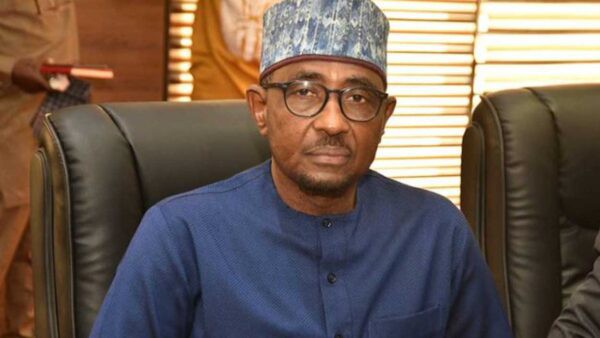

The Chief Executive Officer of the Nigerian Midstream and Downstream Petroleum Regulatory Authority (NMDPRA), Mr Farouk Ahmed, has publicly distanced himself from a statement circulating in the media and on social platforms that was attributed to him as a response to recent allegations made by billionaire businessman Alhaji Aliko Dangote. In a formal disclaimer issued early Wednesday, Mr Ahmed stated categorically that the said response did not originate from him and does not reflect his position on the matter.
Mr Ahmed explained that although he is fully aware of the allegations levelled against him and members of his family, he has consciously chosen not to engage in what he described as public “brickbats.” According to him, his role as the head of a sensitive regulatory agency demands restraint, caution, and respect for due process, rather than trading accusations in the media.
“My attention has been drawn to a purported response I was said to have made on the recent allegations against my person. I hereby state categorically that the so-called statement did not emanate from me,” Mr Ahmed said. He added that while the allegations have generated widespread public interest and debate, he believes the appropriate forum for addressing them is through established investigative institutions.
Related News
IEA Announces Record Release of 400 Million Barrels of Oil to Stabilize Markets Amid Iran War
The International Energy Agency (IEA) has announced the largest emergency oil release in its history, unlocking 400 million barrels from…
Petrol Price Could Reach ₦2,000 Per Litre If Middle East Conflict Persists – PETROAN
The Petroleum Products Retail Outlets Owners Association of Nigeria (PETROAN) has warned that petrol prices in Nigeria could surge to…
IPMAN Urges Federal Government to Cut Crude Oil Price for Dangote Refinery
The Independent Petroleum Marketers Association of Nigeria (IPMAN) has called on the Federal Government to reduce the cost of crude…
The NMDPRA chief further expressed relief that the matter has now been formally reported to an anti-corruption agency, describing this development as an opportunity for an objective and impartial review of the claims. “Thankfully, the person behind the allegations has taken it to a formal investigative institution. I believe that would provide an opportunity to dispassionately distill the issues and to clear my name,” he stated.
The controversy began on Sunday when Alhaji Aliko Dangote, President and Chief Executive Officer of Dangote Industries Limited, accused Mr Ahmed of economic sabotage, alleging that regulatory actions by the NMDPRA were undermining domestic refining efforts in Nigeria. Speaking at a press conference held at the Dangote Petroleum Refinery, Mr Dangote claimed that the continued issuance of petroleum import licences by the regulator was deliberately frustrating local refiners and benefiting foreign traders and importers.
Mr Dangote also alleged that Mr Ahmed was living far beyond his legitimate means as a public officer. He claimed that four of the NMDPRA CEO’s children were enrolled in expensive schools in Switzerland, with educational and living costs allegedly running into several million dollars. According to Mr Dangote, such expenditures raised serious concerns about possible conflicts of interest, abuse of office, and the integrity of regulatory oversight in the downstream petroleum sector.
The following day, Mr Dangote escalated the matter by providing estimated figures, alleging that Mr Ahmed spent approximately five million dollars on secondary education and upkeep for his children over a six-year period, in addition to about two million dollars on tertiary education abroad. He further cited a specific cost for a 2025 MBA programme at Harvard University, allegedly undertaken by one of Mr Ahmed’s children.
On Tuesday, Mr Dangote formally submitted a petition to the Independent Corrupt Practices and Other Related Offences Commission (ICPC) through his lawyer, a Senior Advocate of Nigeria. The petition reportedly called for Mr Ahmed’s arrest, investigation, and prosecution for allegedly living beyond his means as a public officer. The ICPC has since confirmed receipt of the petition and stated that it will be investigated in line with its mandate.
In his reaction, Mr Ahmed maintained his innocence and reiterated confidence in the investigative process. He stressed that allegations, no matter how widely publicised, must be tested against evidence and the rule of law. Legal analysts have also noted that the denial of authorship of the circulating statement suggests a deliberate effort by the NMDPRA chief to avoid prejudicing any ongoing or future investigation.
As public debate continues, opinions remain divided, with some calling for Mr Ahmed’s suspension to allow for an uninterrupted probe, while others warn against taking punitive administrative actions based solely on allegations. For now, the matter rests with the ICPC, whose findings are expected to play a decisive role in shaping the next steps in what has become one of the most closely watched disputes in Nigeria’s oil and gas sector.