Ijade Opa Eyo 2025: Tinubu, Sanwo-Olu, Traditional Leaders Mark Formal Return of Lagos’ Iconic Festival
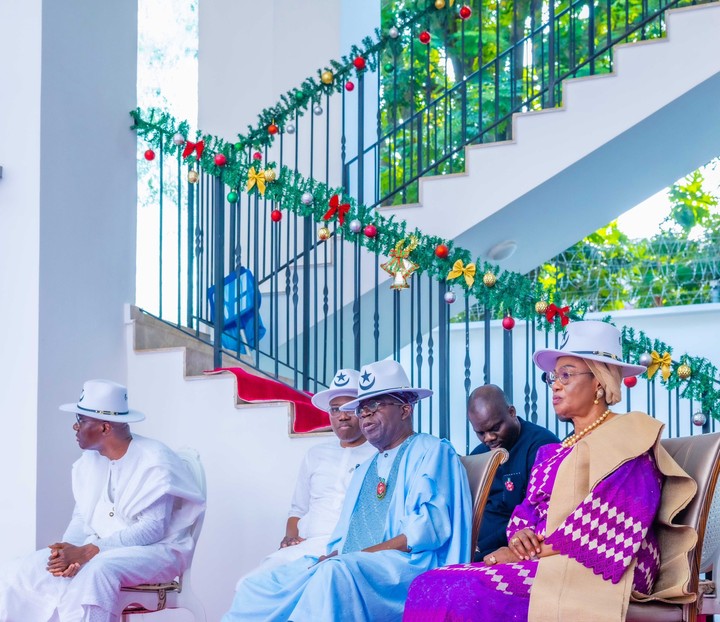

Lagos State has once again stepped into a season of cultural reflection and celebration as the Ijade Opa Eyo procession formally announced the return of the world-famous Eyo Festival. The traditional rite, which involves the ceremonial presentation of the Opambata (ceremonial staff), marks the official commencement of activities leading to the Adamu Orisa Play, popularly known as the Eyo Festival.
The Opambata is traditionally taken to the residences of prominent individuals as a formal notification that the festival will soon take place. In keeping with this long-standing custom, Eyo Festival organizers paid a visit to President Bola Ahmed Tinubu at his Ikoyi residence. The President, accompanied by the First Lady, received the delegation alongside white-cap chiefs and traditional leaders, affirming the continuity of Lagos’ ancestral traditions.
During the brief interaction, President Tinubu advised participants and residents to celebrate peacefully. He emphasized unity, restraint, and communal harmony, urging those involved to conduct themselves as members of one family and to avoid excesses that could disrupt the festival’s sacred essence. His message reinforced the spiritual and moral foundations upon which the Eyo Festival is built.
Related News

Lagos Government Asked Landlord to Pay ₦400,000 to Unseal Her House Despite Having Complete Documents
A Lagos landlord shared a shocking experience after returning home to find her newly built house sealed by officials despite…
Lagos Ready for State Police, Says LNSA Chief Ifalade
Lagos State has declared its readiness for the establishment of state police in Nigeria, with the leadership of the Lagos…
Lagos State Holds Nigeria’s Largest Subnational Domestic Debt at ₦1.05 Trillion, Data Shows
New data from Nigeria’s Debt Management Office indicates that Lagos State holds the largest domestic debt among all states, standing…
The Ijade Opa Eyo procession also made its way to Lagos House, Marina, where Governor Babajide Sanwo-Olu officially received the Olori Eyo, white-cap chiefs, and other custodians of the tradition. Speaking at the event, the governor described the Eyo Festival as more than a cultural spectacle, noting that it represents Lagos beyond its global image as Nigeria’s commercial hub. According to him, the festival reflects the city’s deep historical roots, cultural resilience, and growing importance as a destination for heritage tourism.
Governor Sanwo-Olu highlighted that culture plays a crucial role in shaping identity and continuity, warning that societies that lose touch with their traditions risk losing their sense of purpose. He praised the leadership of Oba Rilwan Akiolu, the Oba of Lagos, for championing the revival of the Eyo Festival after an eight-year hiatus, describing the return as a significant milestone for the state.
The 2025 edition of the Eyo Festival has been dedicated to notable individuals who played key roles in shaping Lagos and Nigeria’s political and social landscape. Among those honored are the late Brigadier Mobolaji Johnson, Lagos State’s first military governor; Alhaji Lateef Kayode Jakande, the first civilian governor of the state; Sir Michael Otedola, former governor during the Third Republic; and Alhaja Abibat Mogaji, former Iyaloja-General of Lagos and mother of President Tinubu. Their legacies, according to organizers, represent leadership, service, and sacrifice worthy of remembrance.
The procession itself was led by the Akinisiku of Lagos, Chief Adebola Olalekan Alabi Dosunmu, who serves as custodian of the Adamu Orisa Play. As the Opambata was borne through the city in measured steps, it symbolized authority, guidance, and ancestral blessings, reaffirming the spiritual foundations of the festival. Traditional chants, rhythmic movements, and ceremonial dances accompanied the procession, drawing admiration from residents and cultural enthusiasts alike.
Beyond the official ceremonies, the Ijade Opa Eyo sparked lively public reactions. While many Lagosians celebrated the revival of the festival as a proud expression of Yoruba heritage, others engaged in debates reflecting Nigeria’s broader social and political diversity. Despite differing opinions, the event succeeded in drawing attention back to the importance of preserving indigenous customs in a rapidly modernizing society.
As Lagos looks ahead to December 27, 2025, when the full Eyo Festival will take place at Tafawa Balewa Square, expectations are high. The festival is anticipated to attract visitors from across Nigeria and beyond, reinforcing Lagos’ identity as a city where commerce and culture coexist. With the successful completion of the Ijade Opa Eyo procession, the stage has been set for a historic celebration that reconnects the present generation with the enduring spirit of Lagos’ past.