Woman and Children Trapped in Faulty Elevator in Abuja, Sparking Safety Concerns


A viral video circulating on social media has drawn national attention to a frightening incident in Abuja, where a woman and her children, alongside other occupants, were trapped inside a malfunctioning elevator for several hours. The footage, which has been widely shared, shows the victims sweating profusely in a cramped metal enclosure as panic gradually set in, highlighting the dangers posed by faulty infrastructure in public and commercial buildings.
According to eyewitness accounts and details emerging online, the incident occurred in a busy Abuja building during what appeared to be a normal day. The elevator reportedly stalled mid-operation, leaving its occupants stranded without immediate assistance. Among those trapped were children, including a baby who was seen being fed by an adult trying to maintain calm amid the growing tension.
The video captures the psychological toll of the situation, as fear, discomfort, and uncertainty mounted over time. With limited ventilation and rising temperatures, concerns quickly escalated about the health risks involved, especially for children, elderly individuals, or anyone with underlying medical conditions such as asthma or heart problems.
Related News

Presidency Explains Tinubu’s Brief Loss of Balance During Official Visit to Turkey
The Presidency has addressed public concern following a viral video showing President Bola Ahmed Tinubu briefly losing his balance during…

Two Critically Injured in Early-Morning Crash on Oshodi–Oke Axis as Speeding Bus Slams Into Truck
Two passengers were left critically injured after a commercial bus reportedly travelling at high speed collided with a moving truck…
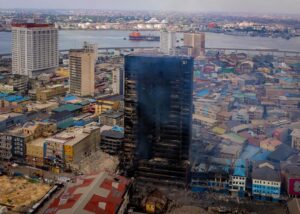
Lagos Government Issues Fresh Update on Great Nigeria Insurance Building Fire, Confirms Demolition Plan
The Lagos State Government has provided a detailed update on the fire incident at the Great Nigeria Insurance (GNI) Building,…
Although no official statement has been released by the building management at the time of reporting, the incident has triggered intense debate across social media platforms. Many Nigerians questioned whether the elevator was overloaded, poorly maintained, or affected by power failure—an all-too-common issue in the country. Others pointed fingers at lax regulatory oversight and the absence of strict enforcement of safety standards in high-rise buildings.
Public reactions ranged from anger to resignation. Some commenters argued that such incidents reflect a deeper systemic failure, where infrastructure is installed without proper long-term maintenance plans or trained technicians on standby. Others lamented what they described as a culture of negligence, noting that routine safety inspections are often ignored until accidents occur.
Several Nigerians also expressed concern about the trauma such experiences can inflict on children. Being trapped for hours in a confined space, many noted, could result in long-lasting fear and anxiety, particularly toward elevators and enclosed environments. Others stressed that the situation could easily have turned fatal if medical emergencies had arisen during the ordeal.
While a few voices urged caution against sensationalizing the incident, insisting that elevator malfunctions occur globally, the dominant sentiment online was one of frustration. Critics argued that while accidents can happen anywhere, the difference lies in emergency response speed, accountability, and preventive maintenance—areas where Nigeria continues to struggle.
Questions have also been raised about the availability of emergency systems such as functional alarm buttons, backup power supplies, and rapid-response rescue teams. In many developed settings, stalled elevators are typically resolved within minutes. In contrast, prolonged entrapment, as seen in this case, underscores critical gaps in emergency preparedness.
At the time this report was compiled, it was confirmed that those trapped were eventually rescued, and no fatalities were recorded. However, the lack of transparency surrounding the response timeline and rescue process has only fueled public demand for answers.
The Abuja elevator incident serves as a stark reminder of how ordinary activities can quickly turn dangerous in the absence of strict safety compliance. As urban centers across Nigeria continue to expand vertically, citizens are increasingly calling on authorities, building owners, and facility managers to prioritize regular maintenance, skilled technical oversight, and robust emergency response mechanisms to prevent future occurrences.