MUSWEN President Warns That Tinubu’s Policies Are Exposing Nigeria’s Economy to Dangerous Volatility
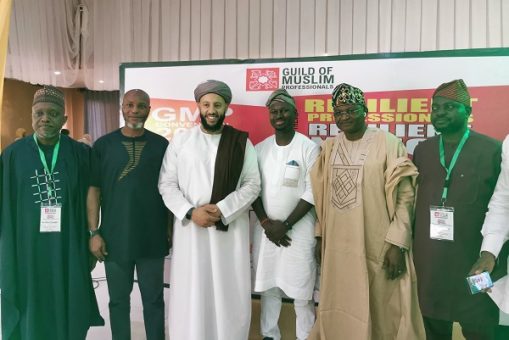

The President of the Muslim Ummah of South West Nigeria (MUSWEN), Alhaji Rasaki Oladejo, has expressed serious concern over the current state of Nigeria’s economy, warning that policies under President Bola Ahmed Tinubu’s administration are exposing the country to heightened economic volatility and weakening its ability to withstand shocks.
Alhaji Oladejo made these remarks on Thursday during the formal opening of the Guild of Muslim Professionals (GMP) Convention held at the AM2PM Hotel in Ijebu-Ode, Ogun State. He was represented at the event by the Deputy President II of MUSWEN, Alhaji Thabit Wale Sonaike.
According to the MUSWEN President, Nigeria’s resilience to economic and social pressures has been significantly eroded by years of poor governance, overdependence on oil revenue, and the persistent weakness of national institutions. He argued that these structural problems have left the economy highly exposed to both internal and external shocks, making recovery and sustainable growth increasingly difficult.
Alhaji Oladejo noted that the Federal Government’s heavy reliance on oil and gas remains a major source of concern, despite repeated calls for diversification. He stated that oil and gas still account for up to 90 per cent of Nigeria’s foreign exchange earnings and approximately half of government revenue, a situation he said has repeatedly exposed the economy to volatility whenever global oil prices fluctuate.
Related News

DSS Tells Court Kaduna Man’s Tweets Could Drag Nigeria into Israel–Iran Conflict
Nigeria’s domestic intelligence agency, the Department of State Services (DSS), has told a court that social media posts allegedly made…
Nigeria Begins Evacuation of Citizens from Iran Amid Escalating Middle East Conflict
The Nigerian government has started evacuating its citizens from Iran as tensions in the Middle East intensify.

Nigeria Surpasses India in Number of People Living in Poverty – Report
New data shared by Statisense suggests that Nigeria now has a higher number of people living below the poverty line…
He further warned that such dependence has undermined long-term planning and discouraged the development of other productive sectors of the economy. According to him, without a deliberate and sustained shift away from oil dependence, Nigeria will continue to face cycles of boom and bust that worsen poverty and inequality.
The MUSWEN President also described Nigeria as one of the least resilient countries in Africa, citing a range of indicators that reflect deep-rooted economic fragility. He pointed to worsening infrastructure deficits, persistent insecurity, rising poverty levels, and increasing public debt as factors that have further weakened the country’s economic foundation.
Providing statistical context, Alhaji Oladejo stated that Nigeria’s per capita Gross Domestic Product (GDP) declined by an average of 0.7 per cent annually between 2014 and 2023, indicating that economic growth has failed to translate into improved living standards for the majority of citizens. He added that inflation surged past 40 per cent in 2024, significantly increasing the cost of living and deepening hardship for households across the country.
He also highlighted ongoing challenges such as electricity shortages, food insecurity, unemployment, and widespread poverty, noting that these issues continue to undermine productivity and social stability. According to him, the combined effect of these challenges has left many Nigerians vulnerable and increasingly unable to cope with economic shocks.
Beyond economic indicators, the MUSWEN President emphasized the importance of ethical leadership and institutional reform. He warned that without morally grounded leadership, transparency, and accountability, policy interventions would fail to deliver meaningful results. He argued that sustainable development requires not only sound economic policies but also strong institutions capable of implementing reforms effectively and fairly.
Alhaji Oladejo stressed that Nigeria’s long-term development prospects depend on rebuilding trust in governance, strengthening institutions, and pursuing inclusive economic policies that prioritize human development over short-term gains. He called on leaders at all levels to demonstrate sincerity of purpose and a genuine commitment to the welfare of the people.
He concluded by urging policymakers to adopt a more holistic approach to economic management—one that reduces dependence on volatile revenue sources, invests in infrastructure and human capital, and addresses the structural causes of poverty and inequality. Without such reforms, he warned, Nigeria would continue to struggle with economic instability and missed opportunities for sustainable growth.