Terror Groups Disperse Across Regions Following U.S. Air Strikes in Northern Nigeria
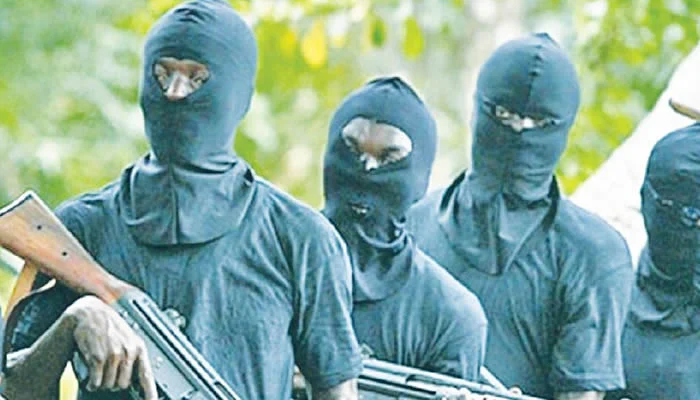

There are growing indications that suspected terrorist and armed groups operating in parts of northern Nigeria have begun relocating following missile strikes carried out by the United States military on Thursday night. Community leaders, security sources, and government officials have reported unusual movements of armed elements in the days after the attacks, suggesting that the strikes may have disrupted established hideouts and operational routes.
President Donald Trump announced on Thursday that the U.S. military had conducted targeted strikes against Islamic State-linked elements in northwestern Nigeria. The Federal Government later confirmed the development, stating that the operations were carried out with Nigeria’s support and focused on areas believed to be used by terrorists.
Although official reports indicate that no fatalities were recorded at the immediate strike locations, the impact was felt across multiple communities. In Jabo, Tambuwal Local Government Area of Sokoto State, a missile reportedly struck farmland, while in Offa, Kwara State, some buildings were damaged. Officials in Tangaza Local Government Area of Sokoto State also disclosed that additional strikes targeted suspected hideouts of the Lakurawa armed group within the Sokoto axis.
While no deaths were confirmed, several residents were injured, and properties valued at millions of naira were destroyed, according to local authorities.
In Benue State, concerns have been raised about a possible influx of armed elements fleeing the affected northern zones. The Chairman of the Traditional Council in Gwer West Local Government Area, Daniel Abomtse, said his community had observed the presence of armed herders shortly after the strikes. According to him, similar movements were noticed in neighbouring Agatu Local Government Area.
Related News
Controversy Trails Shettima’s Kwara Visit as Reports Claim Devastated Woro Community Was Not Reached
A fresh controversy has emerged following Vice President Kashim Shettima’s condolence visit to Kwara State after a deadly terrorist attack…

Tinubu Meets Kwara Governor AbdulRazaq Over Deadly Terrorist Attack in Kaiama Communities
President Bola Tinubu held an emergency meeting with Kwara State Governor AbdulRahman AbdulRazaq following a deadly terrorist attack that reportedly…
Scores of Terrorists Killed as Nigerian Troops Repel Coordinated Attack on Military Base in Borno
Nigerian troops have successfully repelled a large-scale, coordinated attack on a Forward Operating Base in Borno State, neutralising scores of…
Abomtse claimed that the groups were moving from Sokoto towards parts of Benue with sophisticated weapons and grazing openly. While he commended the U.S. intervention, he also called for expanded operations to states such as Benue, Kogi, Taraba, Niger, and Plateau, arguing that a wider approach was needed to curb the long-running security crisis.
Attempts to independently confirm these claims through the Benue State Police Command were unsuccessful, as calls and messages to the command’s spokesperson were not answered as of the time of filing this report.
In Sokoto State, residents and security sources say the strikes have caused noticeable disruption among armed groups. Community leaders in Tangaza, Gudu, and parts of Illela reported signs of dislocation, with some bandits moving in smaller units toward forest corridors and others allegedly attempting to cross into neighbouring border communities to evade surveillance.
Government officials in the state said intelligence assessments were ongoing to determine the scale and direction of the movements. A senior official disclosed that security agencies had been placed on high alert, with border patrols and joint operations intensified to prevent infiltration into safer areas.
Security expert Bashar Umar noted that surveillance efforts were being strengthened across known flashpoints, particularly in border local government areas, to track and contain any attempted relocation by armed groups.
Meanwhile, international attention on Nigeria’s security situation has intensified. A U.S. congressman, Riley Moore, stated that the strikes helped prevent potential attacks during the Christmas period. Separately, reports indicated that the United States had resumed intelligence, surveillance, and reconnaissance operations over the Sambisa Forest in Borno State, a long-standing insurgent stronghold. Flight-tracking data shared by a Sahel-focused terrorism analyst suggested that a modified Gulfstream aircraft was operating in the area.
Security analysts have warned that while the strikes may disrupt terrorist operations, they could also lead to new risks. Kabiru Adamu, Chief Executive Officer of Beacon Consulting, said displaced fighters might attempt to blend into civilian populations or seek support from international terror networks. He cautioned that propaganda efforts could also increase as groups attempt to frame the strikes to attract sympathy and resources.
Similarly, Professor Tar Usman of the Nigerian Defence Academy observed that uncertainty over possible future strikes could create panic within terrorist camps, temporarily limiting their capacity to plan attacks. However, he warned that such interventions alone would not end terrorism, noting that armed groups often adapt by changing tactics or dispersing into civilian areas.
A senior government source confirmed ongoing collaboration between Nigeria and the United States, stating that additional measures were being put in place to track and flush out fleeing terrorists, particularly those believed to be moving toward Kogi and neighbouring states.