Nigerians Pay ₦1.13 Trillion for Electricity in Six Months Amid Widespread Blackouts
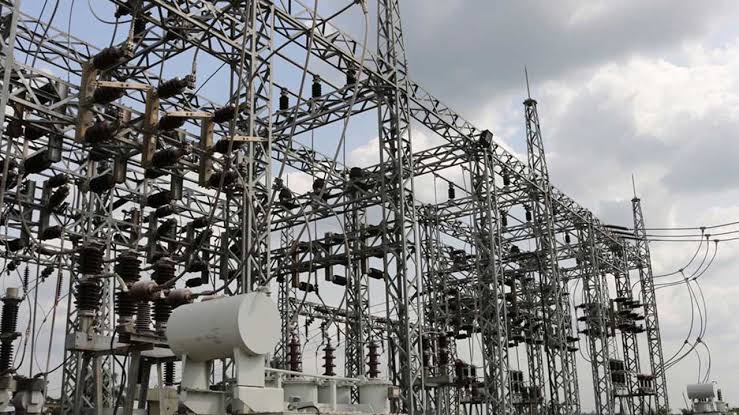

Electricity consumers across Nigeria paid a staggering ₦1.13 trillion to power distribution companies (DisCos) within a six-month period, even as complaints of erratic supply, prolonged blackouts, and estimated billing continued to dominate public discourse. This revelation is contained in the Nigerian Electricity Regulatory Commission’s (NERC) monthly performance data covering the second and third quarters of 2025, spanning April to September.
The figures have intensified debates around value-for-money in Nigeria’s power sector, particularly as many households and businesses report receiving far less electricity than they are billed for. During the same period consumers were making these payments, the national electricity grid suffered a total collapse, plunging large parts of the country into darkness. Power generation companies (GenCos) also disclosed that electricity output dropped significantly due to gas supply shortages, largely caused by mounting unpaid debts owed to gas suppliers.
According to the NERC report, the 11 electricity distribution companies billed customers a total of ₦706.61 billion in the third quarter of 2025, out of which ₦570.25 billion was successfully collected. This represents a collection efficiency of 80.70 per cent. In comparison, the second quarter of 2025 recorded total billings of ₦742.34 billion, with actual collections standing at ₦564.71 billion, translating to a lower collection efficiency of 76.07 per cent.
When combined, the two quarters show that consumers paid ₦1.13 trillion in electricity bills over six months. Despite a decline in total billing between the second and third quarters, DisCos still recorded a 4.63 percentage point improvement in overall collection efficiency, suggesting more aggressive revenue recovery efforts.
Related News
NISO Blames Gas Shortfall for Nationwide Drop in Electricity Supply
The Nigerian Independent System Operator says inadequate gas supply to thermal power plants has reduced national grid generation to about…
Ogun at 50: Review of Gbenga Daniel’s Electricity Reforms Revives Debate Over Missing Power Projects
As Ogun State marks its 50th anniversary, renewed attention has turned to former governor Gbenga Daniel’s ambitious electricity reforms, which…
DisCos Push Back Against Federal Government’s Free Electricity Meter Policy
Electricity distribution companies have raised strong concerns over the Federal Government’s directive mandating the free installation of prepaid electricity meters…
A closer look at individual DisCo performance reveals stark disparities. Ikeja Electricity Distribution Company recorded a collection efficiency of 100 per cent in the third quarter, the highest among all operators. Other DisCos that performed strongly include Eko DisCo with 88.74 per cent, Benin DisCo with 86.44 per cent, and Abuja DisCo with 81.60 per cent. At the other end of the spectrum, Kaduna DisCo recorded the lowest collection efficiency at 45.67 per cent.
Between the second and third quarters, several DisCos improved their collection efficiency, including Ikeja (+17.58 percentage points), Port Harcourt (+8.83 pp), Yola (+8.72 pp), Abuja (+5.24 pp), Jos (+4.90 pp), Eko (+0.94 pp), and Benin (+0.89 pp). However, others experienced declines, with Kaduna (-2.70 pp) and Ibadan (-1.34 pp) recording the sharpest drops.
Monthly revenue figures further highlight the scale of consumer payments. From April to June 2025, DisCos collected ₦564.67 billion, broken down into ₦197.08 billion in April, ₦188.70 billion in May, and ₦178.89 billion in June. In the third quarter, collections increased slightly to ₦570.28 billion, with ₦190.52 billion recovered in July, ₦187.47 billion in August, and ₦192.29 billion in September — the highest monthly collection during the period.
NERC attributed the improvement in collection efficiency partly to reduced energy offtake. According to the regulator, energy accounting efficiency improved by 1.37 percentage points in the third quarter, while collection efficiency rose by 4.63 percentage points compared to the second quarter. The commission noted an inverse relationship between energy offtake and collection efficiency, explaining that when DisCos receive less power, they tend to prioritise areas with historically better billing and payment records.
However, consumer advocacy groups argue that improved collections do not reflect improved service delivery. Many Nigerians, particularly those under lower tariff bands such as Bands C, D, and E, continue to complain about prolonged outages, transformer failures, and the widespread use of estimated billing due to lack of prepaid meters.
NERC acknowledged these challenges and reiterated that accurate metering remains critical to resolving billing disputes and improving transparency. The commission disclosed that under Tranche A of the Meter Acquisition Fund (MAF), which ended in June 2025, a total of 107,461 meters were installed for unmetered Band A customers. In September 2025, NERC approved the operationalisation of Tranche B of the MAF, allowing DisCos to utilise ₦28 billion to meter customers in Bands A and B.
Despite these interventions, the growing gap between what consumers pay and the electricity they actually receive continues to fuel public frustration, raising renewed questions about accountability, infrastructure investment, and the long-term sustainability of Nigeria’s power sector.