Falana Urges Military to Release or Arraign Officers Detained Over Alleged Coup Plot
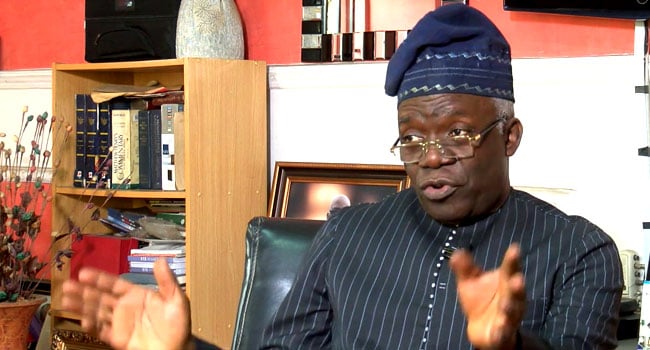

Senior Advocate of Nigeria and human rights lawyer, Femi Falana, has urged the Nigerian military authorities to immediately release officers reportedly detained over an alleged coup plot or, in the alternative, arraign them before a competent court martial if there is credible evidence against them. Falana’s demand comes amid lingering controversy surrounding reports of a foiled coup attempt in October 2025 and the subsequent detention of several military officers.
The controversy dates back to early October 2025, when the federal government abruptly announced the cancellation of the parade earlier scheduled to mark Nigeria’s 65th Independence anniversary on October 1. The unexpected decision sparked widespread speculation across the country, with unconfirmed reports suggesting that the cancellation was linked to security concerns and an alleged coup attempt within the military.
In response to the rumours, the Defence Headquarters (DHQ) publicly dismissed claims of a coup plot, insisting that the cancellation of Independence Day activities had no connection to any attempt to overthrow the government. The military high command also denied reports that several officers had been arrested in connection with a coup, describing such claims as unfounded and misleading.
However, on October 31, 2025, media reports emerged indicating that at least 16 military officers had been arrested earlier in the month over an alleged coup plot, with two others reportedly at large. These reports reignited public debate and raised questions about the apparent contradiction between official denials and information circulating in the public domain.
Related News

DSS Tells Court Kaduna Man’s Tweets Could Drag Nigeria into Israel–Iran Conflict
Nigeria’s domestic intelligence agency, the Department of State Services (DSS), has told a court that social media posts allegedly made…
Nigeria Begins Evacuation of Citizens from Iran Amid Escalating Middle East Conflict
The Nigerian government has started evacuating its citizens from Iran as tensions in the Middle East intensify.

Nigeria Surpasses India in Number of People Living in Poverty – Report
New data shared by Statisense suggests that Nigeria now has a higher number of people living below the poverty line…
Reacting to the situation in a statement issued on Monday, Falana said that despite repeated official denials by the military authorities, it had been confirmed that some officers were indeed being investigated over their alleged involvement in the rumoured coup attempt. According to him, the manner of their detention raises serious legal and constitutional concerns.
Falana disclosed that families and legal representatives of the detained officers have complained of being denied access to them for nearly three months. He described the situation as a violation of fundamental human rights, stressing that even military personnel accused of serious offences are entitled to due process under Nigerian law.
“It is pertinent to point out that the authorities are under a legal obligation to respect the human rights of the detained military officers, since they are presumed innocent until the contrary is proved by the state,” Falana said. He emphasized that prolonged detention without trial or access to lawyers contradicts both the Nigerian Constitution and international human rights standards to which Nigeria is a signatory.
While reiterating his firm opposition to any form of unconstitutional change of government, Falana argued that defending democracy must go hand in hand with strict adherence to the rule of law. He warned that arbitrary detention, even when justified under the guise of national security, risks eroding public confidence in democratic institutions.
The senior lawyer therefore called on the military authorities to take one of two lawful steps: either release the detained officers, conditionally or unconditionally, if there is no prima facie case against them, or promptly arraign them before special or general courts martial in line with the Armed Forces Act and the Constitution.
“If there is prima facie evidence that they had plotted to overthrow the government, they should be arraigned before the appropriate courts-martial,” he stated, adding that indefinite detention without formal charges is unacceptable in a constitutional democracy.
Falana’s intervention has sparked mixed reactions among Nigerians. While some argue that alleged coup plotters should face strict military discipline without public scrutiny, others maintain that the government and military must be transparent and consistent, especially after officially denying that any coup attempt occurred. Legal analysts note that the case highlights the enduring tension between national security considerations and the protection of civil liberties in Nigeria’s democratic journey.
As the debate continues, pressure is mounting on the military authorities to clarify the status of the detained officers and demonstrate commitment to due process, at a time when Nigeria remains sensitive to any suggestion of political instability or military interference in governance.