China Names $24.5 Billion Ogidigben Gas Industrial Park Top Belt and Road Recipient in 2025
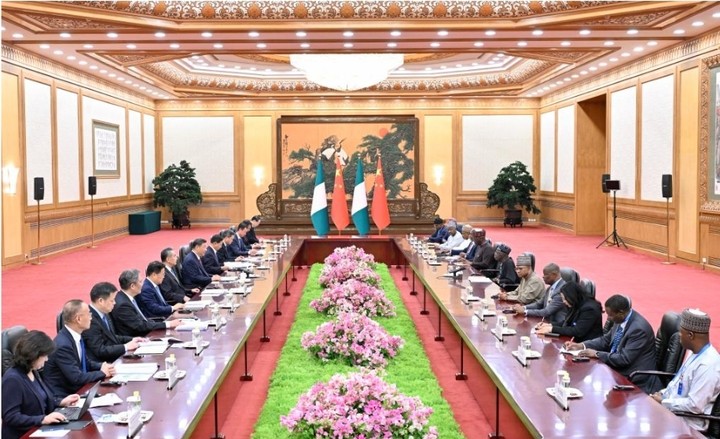

China has named Nigeria’s Ogidigben Gas Revolution Industrial Park (GRIP) as the largest single recipient of construction contracts under its Belt and Road Initiative (BRI) in 2025, with an estimated deal value of about $24.5 billion. The designation places Nigeria at the top of global BRI construction activity for the year, surpassing all other participating countries in total value secured.
The revelation is contained in a new report by Christoph Nedopil, a China energy and infrastructure expert at Griffith University. According to the report, Nigeria’s total BRI construction inflows surged dramatically from $1.8 billion in 2024 to $24.6 billion in 2025, largely driven by a $20 billion contract awarded to China National Chemical Engineering Corporation (CNCEC) for the development of the Ogidigben Gas Industrial Park in Delta State.
The Ogidigben project, long regarded as one of Nigeria’s most ambitious gas-based industrialisation efforts, accounts for the bulk of the country’s BRI gains this year. The report describes the park as a cornerstone project that significantly altered Nigeria’s position within China’s overseas infrastructure portfolio.
Globally, BRI construction contracts reached $128.4 billion in 2025, representing an 81 per cent year-on-year increase, while total BRI engagement stood at approximately $213.5 billion across about 350 deals. Energy projects remained a major driver of activity, with global energy-related BRI engagement rising to $93.9 billion. Although fossil fuel projects continued to dominate, investments in green and renewable energy also reached record levels.
Related News

DSS Tells Court Kaduna Man’s Tweets Could Drag Nigeria into Israel–Iran Conflict
Nigeria’s domestic intelligence agency, the Department of State Services (DSS), has told a court that social media posts allegedly made…
Nigeria Begins Evacuation of Citizens from Iran Amid Escalating Middle East Conflict
The Nigerian government has started evacuating its citizens from Iran as tensions in the Middle East intensify.
Nigeria Surpasses India in Number of People Living in Poverty – Report
New data shared by Statisense suggests that Nigeria now has a higher number of people living below the poverty line…
Nigeria’s growing prominence in China’s energy strategy is further reflected in cumulative figures. Since 2013, Nigeria’s total energy-related engagement with China is estimated at $28 billion, placing the country behind only Pakistan and Saudi Arabia globally. Analysts say this highlights Nigeria’s strategic importance in China’s long-term plans for energy security and infrastructure expansion across Africa and the Global South.
Africa as a whole recorded a sharp increase in BRI activity in 2025, with construction engagement on the continent rising to $61.2 billion, a 283 per cent increase compared to the previous year. Experts attribute this growth to changing global trade incentives and tariff structures that have made African countries more attractive destinations for export-oriented Chinese investments than some Asian markets.
The surge in BRI construction contrasts with broader global investment trends. Independent data cited in the report indicates that global foreign direct investment declined by three per cent in the first half of 2025, while greenfield renewable energy investments fell sharply from $147 billion in the first half of 2024 to $83 billion during the same period in 2025. Africa’s non-BRI foreign direct investment also reportedly dropped by 42 per cent, making Nigeria’s success with the Ogidigben project particularly notable.
In January 2025, a delegation from China National Chemical Engineering International Corporation Ltd reaffirmed its commitment to supporting the $20 billion Ogidigben Gas Project. CNCEC President Li Zhenyi stated that the company was prepared to engage through restructured funding models and strategic partnerships with Nigerian stakeholders, describing the project as a contribution to Nigeria’s industrialisation drive and economic growth agenda.
Despite its recent momentum, the Ogidigben project has faced significant challenges in the past. The initiative was delayed for years due to ethnic tensions between Ijaw and Itsekiri communities, security concerns, and investor uncertainty. During earlier administrations, reports of militant interference and demands for financial settlements disrupted progress, leading to the withdrawal of some foreign investors. In 2022, the Federal Government reconstituted a steering committee and technical working group to resolve bottlenecks and restore confidence, an intervention analysts say helped pave the way for renewed Chinese interest.
Spanning about 2,700 hectares, the Ogidigben Gas Industrial Park is designed as a tax-free industrial zone to host gas-based industries such as fertiliser, methanol, petrochemicals, and aluminium production. The project is expected to generate up to 250,000 direct and indirect jobs and is strategically located near major gas reserves and Nigeria’s Escravos–Lagos Pipeline System.
If fully implemented, the project could play a central role in Nigeria’s gas monetisation strategy, industrial development, and long-term economic diversification in the Niger Delta.