President Tinubu Returns to Nigeria After Türkiye State Visit, Reactions Trail His Arrival
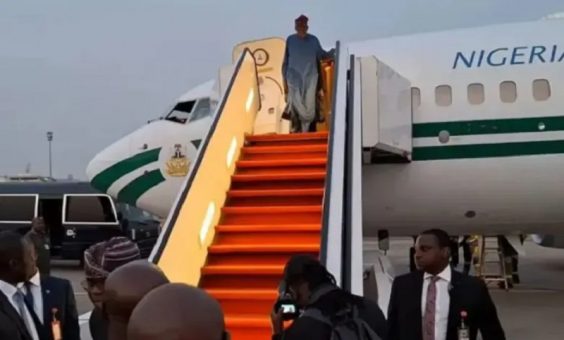

President Bola Ahmed Tinubu on Friday night returned to Nigeria after concluding a state visit to Türkiye, marking another leg of his administration’s ongoing diplomatic engagements abroad. The announcement of his return quickly sparked widespread reactions, particularly on online forums and social media platforms, where Nigerians expressed sharply divided opinions about both the visit itself and the president’s leadership.
Supporters of the president were quick to welcome him back, describing his return as a positive moment and praising his continued international engagement. Some hailed him as a trailblazer, noting that the visit added to Nigeria’s diplomatic visibility and strengthened bilateral relations with Türkiye. Messages of goodwill poured in, with loyalists offering prayers for his health and urging him to continue what they described as the “good work” of governance and reform.
Others framed the visit as a symbol of Nigeria’s relevance on the global stage, expressing hope that discussions held during the trip would translate into economic cooperation, investment opportunities, and strategic partnerships beneficial to ordinary Nigerians. For this group, state visits are seen as necessary tools of diplomacy, provided they eventually deliver measurable outcomes at home.
Related News
Presidency Spent ₦34.39bn on Forex for Foreign Travel and Official Obligations in Two Years
Findings from GovSpend, a public finance tracking platform managed by BudgIT, show that Nigeria’s Presidency spent at least ₦34.39 billion…

Presidency Explains Tinubu’s Brief Loss of Balance During Official Visit to Turkey
The Presidency has addressed public concern following a viral video showing President Bola Ahmed Tinubu briefly losing his balance during…
AFCON 2025: Tinubu Congratulates Super Eagles on Bronze Medal Finish, Describes Achievement as “Good as Gold”
President Bola Ahmed Tinubu has congratulated the Super Eagles of Nigeria for securing a bronze medal at the 2025 Africa…
However, the president’s return also reignited criticism from a significant section of the public. Detractors questioned the frequency of foreign trips amid persistent domestic challenges such as rising food prices, fuel costs, electricity shortages, and economic hardship. Some commenters sarcastically referred to the visit as a “vacation,” arguing that Nigerians are more interested in visible improvements to daily life than ceremonial diplomacy.
Particular attention was drawn to an incident during the Türkiye visit in which the president reportedly stumbled while descending aircraft stairs. While some Nigerians dismissed the episode as a minor and human moment that could happen to anyone, others used it to raise concerns about his health and physical fitness for office. The incident became a focal point for mockery, political jabs, and heated exchanges between supporters and critics, underscoring how even small moments can become politicized in Nigeria’s charged atmosphere.
Beyond the optics, several Nigerians emphasized that the true measure of the Türkiye visit would be its concrete outcomes. They argued that state visits should not be judged by photographs, handshakes, or official communiqués alone, but by policies and projects that reduce the cost of living, stabilize the economy, and improve infrastructure. As one widely echoed sentiment suggested, Nigerians are tired of diplomatic announcements that do not reflect in their daily realities.
The reactions also highlighted the broader polarization of Nigeria’s political discourse. While some celebrated the president’s return with enthusiasm, others described it in bleak terms, reflecting frustration, disillusionment, and a lack of trust in government promises. Exchanges between opposing camps often descended into insults and sarcasm, mirroring the tense mood of a country grappling with economic uncertainty and political fatigue.
In contrast, a smaller but notable group called for moderation and empathy, reminding others that leadership comes with human vulnerabilities and that personal attacks do little to address national problems. They urged Nigerians to focus on policy outcomes rather than personalities, stressing that the country’s progress depends on accountability, constructive criticism, and measurable results.
As President Tinubu resumes duties in Abuja, attention will likely shift from the journey itself to what follows. Expectations remain high, particularly among citizens eager to see whether engagements from the Türkiye visit will produce tangible economic or infrastructural benefits. For many Nigerians, the debate surrounding his return ultimately boils down to a familiar question: will foreign diplomacy translate into real improvements at home, or will it remain another headline in a long list of unmet hopes?