I Got ₦958m As Gifts, ₦374m As Salary And Allowances — Malami Tells Court
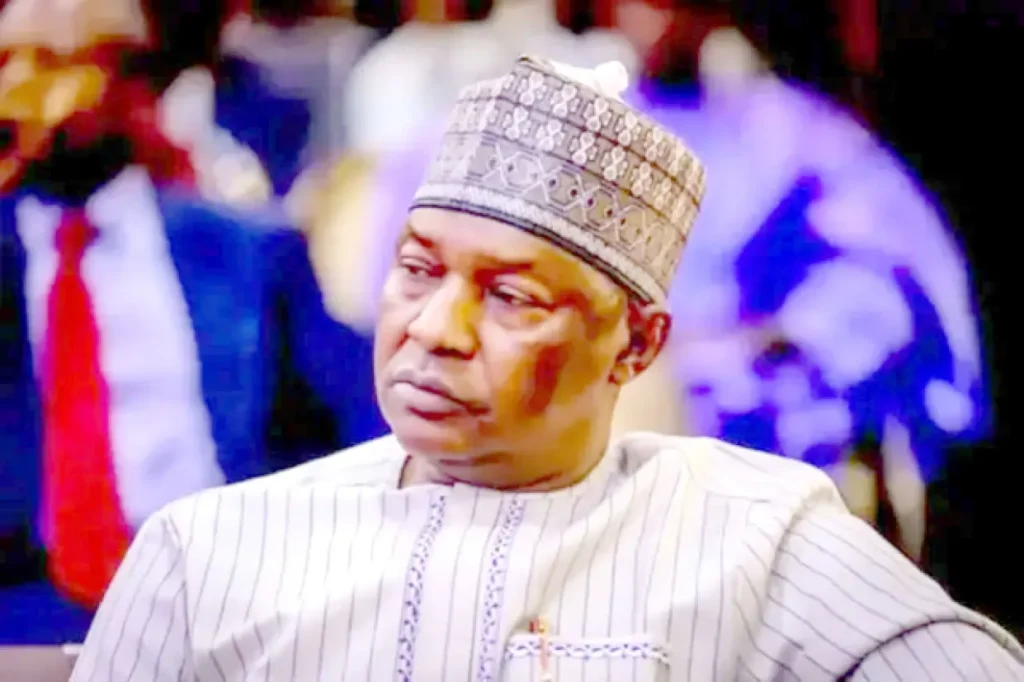

A former Attorney-General of the Federation (AGF), Abubakar Malami, has challenged the interim forfeiture of several properties allegedly linked to him and his family, insisting that the assets were acquired through legitimate income sources.
Malami made this assertion in a motion filed before the Federal High Court in Abuja, contesting an interim forfeiture order granted to the Economic and Financial Crimes Commission (EFCC) over 57 properties suspected to be proceeds of unlawful activities.
On January 6, Justice Emeka Nwite, ruling on an ex parte application filed by the EFCC, ordered the interim forfeiture of the properties, which the anti-graft agency alleged were linked to Malami and two of his sons, Abdulaziz Malami and Abiru Rahman Malami. The court held that the assets were reasonably suspected to have been acquired through unlawful means and directed that they be temporarily forfeited to the Federal Government.
The judge also ordered the EFCC to publish the forfeiture notice in a national newspaper, inviting interested parties to appear within 14 days to show cause why the properties should not be permanently forfeited.
However, in a motion on notice filed on January 27 and marked FHC/ABJ/CS/20/2026, Malami, through his legal team led by Joseph Daudu (SAN), accused the EFCC of suppressing material facts and misrepresenting information to obtain the interim order. He urged the court to dismiss the forfeiture proceedings, arguing that they violate his constitutional rights to property, presumption of innocence, and family life.
Malami specifically challenged the forfeiture of three properties listed as numbers 9, 18, and 48 in the EFCC’s application. These include Plot 157, Lamido Crescent, Nasarawa GRA, Kano, purchased on July 31, 2019; a bedroom duplex with boys’ quarters at No. 12 Yalinga Street, off Adetokunbo Ademola Crescent, Wuse II, Abuja, acquired in October 2018 for ₦150 million; and the ADC Kadi Malami Foundation Building, reportedly purchased for ₦56 million.
Related News
Supreme Court Affirms Seven-Year Jail Term for Former Senator Albert Bassey
The Supreme Court of Nigeria has affirmed the conviction and seven-year prison sentence of former senator Albert Bassey over a…
FIFA and UEFA Presidents Named in ICC Complaint Alleging Complicity in Settlement Activities
Presidents Gianni Infantino and Aleksander Ceferin have been accused of aiding war crimes in a complaint submitted to the International…

Court Sentences Cleric to Death Over Killing of University of Uyo Final-Year Student in Akwa Ibom
An Akwa Ibom State High Court has sentenced Prince Emmanuel Umoh, a cleric, to death by hanging for the 2020…
According to Malami, one of the properties is held in trust for the estate of his late father, Kadi Malami, and should not be subject to forfeiture.
In a 14-ground argument, his counsel stated that the EFCC failed to establish any prima facie link between the properties and specific unlawful activities. Daudu argued that the assets were duly declared in Malami’s asset declaration forms submitted to the Code of Conduct Bureau (CCB) in 2019 and 2023.
The senior advocate further outlined Malami’s declared sources of income, which he said included ₦374.63 million earned from salaries, estacodes, severance allowances, and other official entitlements while in office. He also disclosed that Malami declared ₦958 million as gifts received from personal friends, ₦574.073 million from the disposal of assets, and ₦10.017 billion as business turnover over several years.
Other sources of income listed include ₦2.522 billion loaned to businesses and ₦509.88 million realised from the launch and public presentation of a book authored by Malami titled “Contemporary Issues on Nigerian Law and Practice, Thorny Terrains in Traversing the Nigerian Justice Sector: My Travails and Triumphs.”
Daudu argued that these income streams sufficiently explain the acquisition of the disputed properties and that the interim forfeiture order was obtained without full disclosure to the court.
Proceedings in the matter could not continue on January 27 as the case was not listed on the court’s cause list. The matter, which was handled during the court’s vacation, has since been returned to the Chief Judge for reassignment.
Malami is currently facing a money laundering charge filed by the EFCC and is also being detained by the Department of State Services (DSS) over a separate allegation related to terrorism financing.
Meanwhile, legal experts have weighed in on the matter, noting that Nigerian law places strict limits on gifts received by public officers. Lawyers cited provisions of the 1999 Constitution, the Code of Conduct for Public Officers, and the Corrupt Practices and Other Related Offences Act, which prohibit public officials from accepting gifts that could influence official duties.
Civil society organisations have also called for stricter enforcement of anti-corruption laws, arguing that large gifts received while in public service raise serious accountability concerns.