FIFA and UEFA Presidents Named in ICC Complaint Alleging Complicity in Settlement Activities
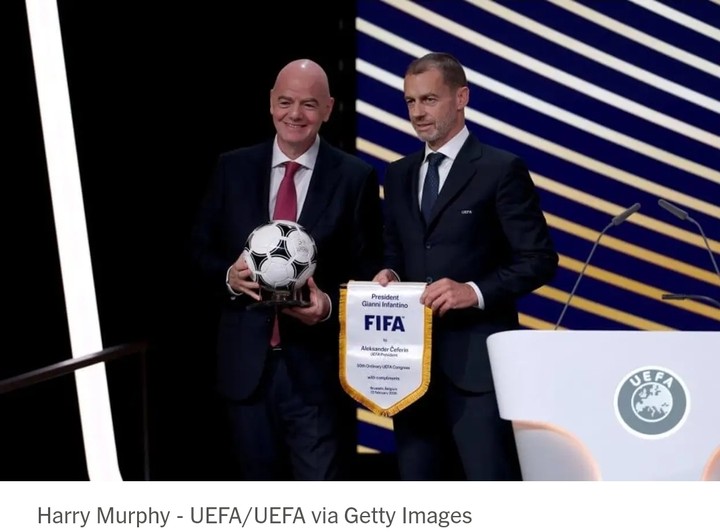

A coalition of advocacy organizations has filed a formal complaint with the International Criminal Court (ICC) accusing the presidents of world football’s governing bodies of aiding alleged war crimes and crimes against humanity in the occupied Palestinian territory.
The complaint names Gianni Infantino, president of FIFA, and Aleksander Ceferin, president of UEFA. According to a joint statement from the submitting groups, the 120-page filing was delivered to the ICC’s Office of the Prosecutor on February 16.
The advocacy coalition includes Irish Sport for Palestine, Scottish Sport for Palestine, Just Peace Advocates, Euro-Med Human Rights Monitor, and Sport Scholars for Justice in Palestine. The submission is also backed by Palestinian footballers, clubs, landowners, and a human rights organization based in Palestine.
At the center of the complaint is the participation of Israeli football clubs located in settlements in the occupied West Bank. The groups allege that FIFA and UEFA allow these clubs to compete in leagues organized by the Israel Football Association and to host matches on land they describe as unlawfully seized from Palestinians.
The complaint argues that by permitting settlement-based clubs to participate in official competitions and by providing financial and structural support, the governing bodies are contributing to what the coalition characterizes as the normalization of settlement activity. It further alleges that such actions may contravene provisions of the Rome Statute, the treaty that established the ICC, including prohibitions related to the transfer of civilian populations into occupied territory.
Related News

UK Prime Minister Keir Starmer Defends Decision Not to Join US-Israel Strikes on Iran
UK Prime Minister Keir Starmer has defended his government’s decision not to participate in initial US-Israel strikes on Iran, insisting…

Supreme Court Affirms Seven-Year Jail Term for Former Senator Albert Bassey
The Supreme Court of Nigeria has affirmed the conviction and seven-year prison sentence of former senator Albert Bassey over a…

Court Sentences Cleric to Death Over Killing of University of Uyo Final-Year Student in Akwa Ibom
An Akwa Ibom State High Court has sentenced Prince Emmanuel Umoh, a cleric, to death by hanging for the 2020…
Israel disputes claims by the United Nations and the International Court of Justice (ICJ) that all settlements in the occupied West Bank violate international law. The issue of settlements remains one of the most contentious aspects of the Israeli-Palestinian conflict.
In a statement responding to the allegations, UEFA described the accusations against its president as “sensational” and “unsubstantiated.” The organization said it stands for sport and humanity rather than politics and indicated it would not provide further comment beyond formal institutional channels.
FIFA had not issued a public response at the time of publication.
The ICC, headquartered in The Hague, investigates and prosecutes individuals — not organizations — accused of crimes such as genocide, crimes against humanity, war crimes, and the crime of aggression. While institutions like FIFA and UEFA cannot be prosecuted directly, senior officials may, in principle, face scrutiny if prosecutors determine there is sufficient evidence of individual criminal responsibility.
The filing follows previous pressure on football authorities over Israel’s participation in international competitions. In October, Amnesty International sent an open letter urging FIFA and UEFA to suspend the Israel Football Association until settlement-based clubs are removed from its leagues. UEFA also faced calls from some member associations to hold a vote on Israel’s participation in European competitions but did not proceed with such a vote following a ceasefire agreement brokered in late September.
In a recent interview with Sky News, Infantino stated that banning national teams due to the actions of political leaders represents “a defeat,” adding that he would explore potential amendments to FIFA statutes to limit the possibility of future suspensions of member associations.
The ICC’s Office of the Prosecutor will now conduct a preliminary assessment to determine whether the complaint meets the threshold for further investigation. Such examinations typically involve reviewing jurisdictional questions, admissibility, and whether there is a reasonable basis to proceed.
The development adds to ongoing debates about the intersection of sport, politics, and international law, particularly in contexts involving territorial disputes and armed conflict. While football governing bodies have historically emphasized neutrality, critics argue that organizational decisions can carry political and legal implications in contested regions.