Nnamdi Kanu Appeals Conviction, Challenges Terrorism Trial and Life Sentences
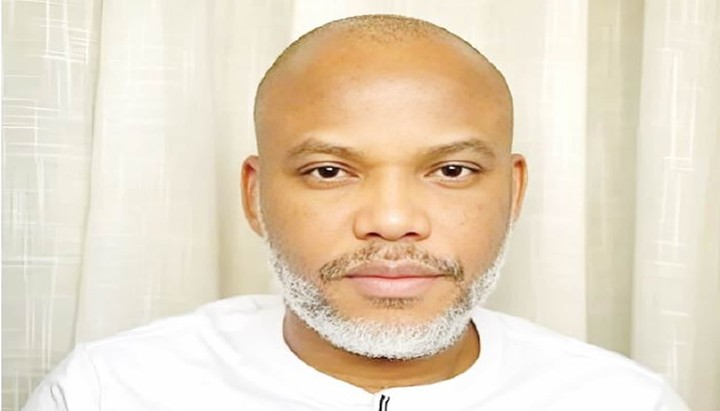

The detained leader of the Indigenous People of Biafra (IPOB), Nnamdi Kanu, has formally filed a notice of appeal challenging his conviction and multiple prison sentences handed down by the Federal High Court in Abuja. Kanu insists that the trial which led to his conviction was flawed and constituted a miscarriage of justice.
In a notice of appeal dated February 4, 2026, Kanu stated that he was contesting his conviction on seven counts, including terrorism-related offences. He received five life sentences alongside additional prison terms after the Federal High Court delivered its judgment on November 20, 2025.
The IPOB leader expressed dissatisfaction with both the conviction and sentencing, stating in the appeal document that he was challenging the legality of the entire trial process. He argued that fundamental legal errors occurred during proceedings and asked the Court of Appeal to review the case comprehensively.
Kanu was previously convicted on charges including committing acts preparatory to terrorism, making broadcasts allegedly intended to intimidate the public, and being a leader and member of IPOB, which has been proscribed by the Nigerian government. Justice James Omotosho of the Federal High Court in Abuja delivered the judgment that resulted in multiple life sentences, a 20-year prison term for leading a proscribed organisation, and an additional five-year sentence for importing a radio transmitter without a licence.
Related News
Supreme Court Affirms Seven-Year Jail Term for Former Senator Albert Bassey
The Supreme Court of Nigeria has affirmed the conviction and seven-year prison sentence of former senator Albert Bassey over a…

FIFA and UEFA Presidents Named in ICC Complaint Alleging Complicity in Settlement Activities
Presidents Gianni Infantino and Aleksander Ceferin have been accused of aiding war crimes in a complaint submitted to the International…

Court Sentences Cleric to Death Over Killing of University of Uyo Final-Year Student in Akwa Ibom
An Akwa Ibom State High Court has sentenced Prince Emmanuel Umoh, a cleric, to death by hanging for the 2020…
In his appeal, Kanu argued that the trial court failed to address what he described as a “foundational disruption” of the legal process following a 2017 military operation at his residence in Afara-Ukwu. He maintained that this event affected the continuity and competence of the original trial and should have been resolved before further proceedings continued.
He also contended that the trial court delivered judgment while several preliminary objections remained unresolved. According to the appeal documents, Kanu had filed objections challenging the competence of the proceedings, but the court allegedly did not determine them before delivering judgment.
Additionally, Kanu argued that his bail application was still pending at the time judgment was delivered, which he claims compromised the fairness of the process. He further alleged that he was convicted under a law that had already been repealed before the judgment was issued. Specifically, he claimed that the Terrorism Prevention (Amendment) Act, 2013, under which he was convicted, had been replaced by the Terrorism (Prevention and Prohibition) Act, 2022, prior to the court’s decision.
The IPOB leader also raised concerns about double jeopardy, asserting that he was retried on issues that had earlier been nullified by the Court of Appeal. He argued that this violated constitutional provisions protecting individuals from being tried twice for the same offence.
Another key argument in the appeal is the allegation that he was denied fair hearing. Kanu claimed he was not given the opportunity to file or present a final written address before the court delivered its judgment, which he believes undermined his right to defend himself fully.
Among the reliefs sought from the appellate court, Kanu is requesting that his conviction and sentences be quashed and that he be discharged and acquitted of all charges. He also notified the court of his intention to be physically present during the appeal hearing, indicating he may choose to conduct parts of the appeal himself.
Kanu is currently being held at a correctional facility in Sokoto State. His earlier request to be transferred to a facility in either Niger or Nasarawa State was reportedly denied. The case is expected to proceed at the Court of Appeal in the coming months, where the legal arguments surrounding the conviction and trial process will be reviewed.
The development has continued to generate public debate across Nigeria, reflecting the broader political and legal significance of the case as it moves into the appellate stage.