Kasi Cloud Begins Construction of Nigeria’s First 100MW AI Data Centre Campus in Lagos
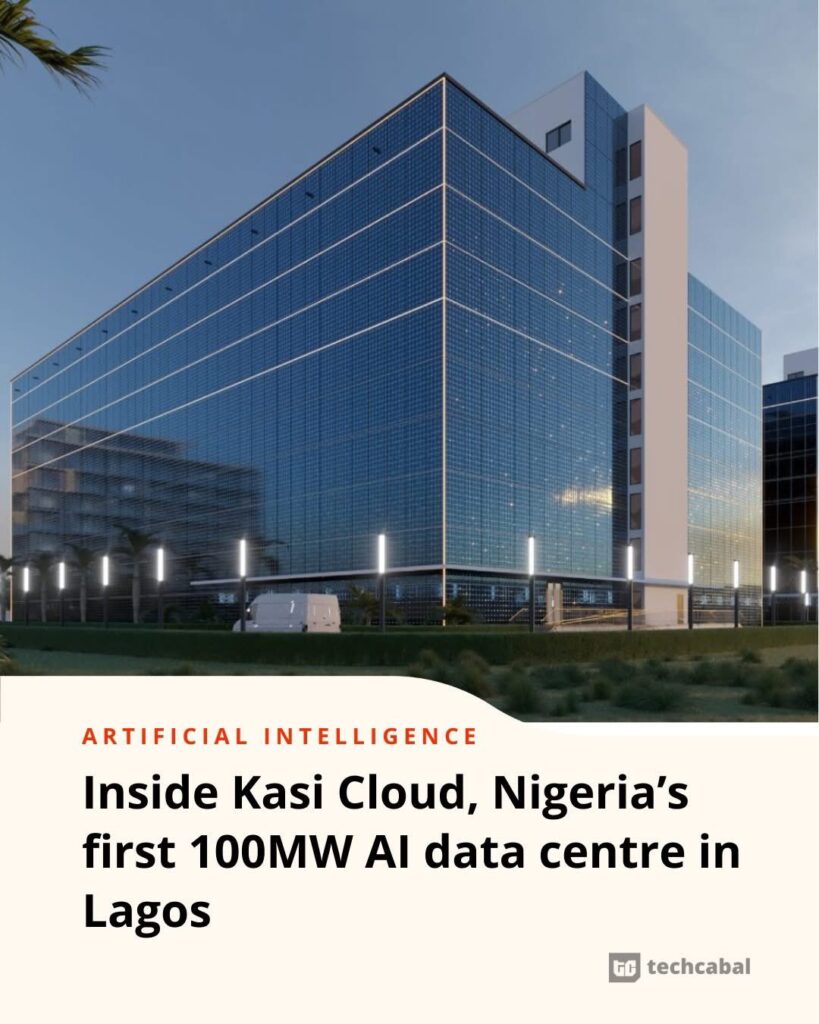

Kasi Cloud, a technology infrastructure company, has commenced development of what is projected to become Nigeria’s first hyperscale artificial intelligence (AI) data centre campus in Lagos. Located along the Atlantic coastline near the Lagos–Calabar coastal road, the project represents a significant investment in the country’s digital infrastructure and is being positioned as a long-term bet on Nigeria’s technological future.
Spread across approximately 42 hectares in Lekki, the facility is being built as a purpose-designed campus capable of supporting high-performance computing and AI workloads. According to company officials, the project will ultimately deliver up to 100 megawatts (MW) of power capacity when fully completed, far exceeding the capacity of existing data centres in Nigeria.
Industry estimates indicate that Nigeria currently has about 17 operational data centres, with most facilities operating below 20MW capacity. By comparison, hyperscale AI data centres globally often target capacities between 50MW and 100MW or more due to the substantial power requirements of modern graphics processing unit (GPU) infrastructure and advanced computing systems.
Kasi Cloud’s founder and chief executive officer, Johnson Agogbua, stated during a site tour in January 2026 that the facility has been designed specifically for AI from its inception rather than adapted from existing infrastructure. Construction on the project began after the company broke ground in April 2022, with major building works commencing in the second quarter of 2023.
Related News

Lagos Government Asked Landlord to Pay ₦400,000 to Unseal Her House Despite Having Complete Documents
A Lagos landlord shared a shocking experience after returning home to find her newly built house sealed by officials despite…
Lagos Ready for State Police, Says LNSA Chief Ifalade
Lagos State has declared its readiness for the establishment of state police in Nigeria, with the leadership of the Lagos…

Lagos State Holds Nigeria’s Largest Subnational Domestic Debt at ₦1.05 Trillion, Data Shows
New data from Nigeria’s Debt Management Office indicates that Lagos State holds the largest domestic debt among all states, standing…
The first phase of the development includes a six-storey building with four floors dedicated to data halls. Each floor is engineered to support up to 8MW of capacity, giving the structure a total potential output of 32MW. The company expects to complete an initial 5.5MW of operational capacity by April 2026, with commercial operations scheduled to begin in the second quarter of the year.
Government permits have been secured to construct multiple similar facilities within the campus. Although each building is designed to deliver around 32MW, the broader site infrastructure is configured to support up to 100MW of sellable power once fully developed. Company representatives indicated that the final configuration may include three or four buildings depending on how power distribution is optimized across the campus.
The facility is being engineered to support significantly higher rack densities than traditional Nigerian data centres, with the capability to handle workloads ranging from 10 kilowatts to as much as 100 kilowatts per rack. Such capacity is considered essential for modern AI systems, which rely heavily on GPU-intensive computing and advanced cooling technologies.
Power infrastructure is a central feature of the design, with the data centre incorporating multiple independent high-voltage feeds to ensure redundancy and operational resilience. The campus will also feature advanced cooling systems, fibre connectivity infrastructure, and reinforced structural elements to support high-density computing equipment.
Globally, the expansion of AI and cloud computing has driven demand for hyperscale data centres capable of handling increasingly complex workloads. Analysts note that Africa currently accounts for a small share of global GPU computing capacity, and infrastructure limitations have been cited as a barrier to the continent’s participation in the AI economy.
Kasi Cloud executives say the Lagos project aims to help close this gap by providing local hosting capacity for cloud services and AI development. The company also emphasized the importance of data sovereignty, noting that domestic hosting infrastructure can reduce reliance on foreign data centres and lower operational costs for Nigerian businesses and developers.
Beyond its core infrastructure, the campus is expected to attract telecommunications operators, cloud providers, and other digital service companies, potentially creating a broader technology ecosystem around the facility. Supporting infrastructure such as roads, drainage systems, and community engagement initiatives are also underway as part of the development.
While the first building remains under construction, the project’s scale and ambition reflect growing interest in Nigeria’s digital economy and its potential to serve as a regional technology hub for West Africa. Further expansion of the campus will proceed in phases as demand for AI and cloud computing infrastructure continues to grow.